 look news india

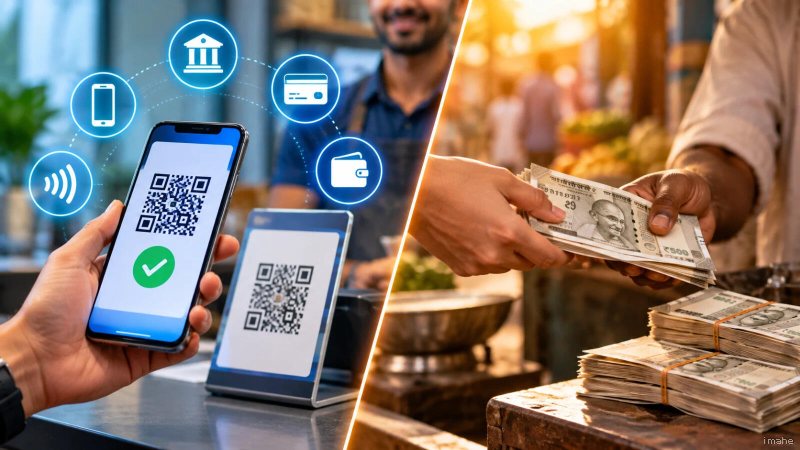
India’s Unified Payment Interface (UPI), which has created its own identity in the world in terms of digital payments, has today become an essential part of the everyday life of every Indian. From small tea shops to big malls and showrooms, people everywhere are transferring money in a jiffy by scanning through PhonePe, Google Pay or Paytm. Meanwhile, a huge discussion has erupted within the country regarding the possible charges on UPI transactions and the earnings from it. There is a constant question in the minds of the general public whether paying through UPI is going to be expensive now? Amidst all these speculations and questions, the head of National Payments Corporation of India (NPCI) has come forward and exposed this entire matter and has placed the full account of every penny in front of the public.
Big statement of NPCI Chief and reality of UPI charge
After the recent statements and reports regarding UPI payments, top officials of NPCI have clarified what things are being considered to make the digital payment ecosystem financially strong and sustainable. NPCI Chief, in his recent address, explained in detail the total revenue expected to be generated if any kind of fee or merchant discount rate (MDR) is implemented on transactions in future. Officials have also assured that peer-to-peer (P2P) payments will remain completely free for common citizens and small retail shopkeepers, so that there is no brake on the pace of digital revolution in the country.
The need for accurate calculation of income and financial stability.
Along with the increasing number of digital payments, the cost of maintaining technical infrastructure, increasing server capacity and strengthening cyber security is also continuously skyrocketing. The NPCI Chief emphasized that this huge system, which processes crores of transactions every day in the country, requires huge investment to run it smoothly. If banks, fintech companies and payment gateways associated with the payment system continue to suffer losses, problems like technical disruptions or server downfall may increase in the future. To maintain this financial balance, it is being calculated how much revenue can be generated if a fixed fee is imposed on large merchant transactions and commercial payments.
Where and how will this money be used? the biggest question
The biggest question in the mind of the general public is that if any charge is levied on UPI or digital transactions related to it, then where will that money be used. On this, the leadership of NPCI has clarified that every single rupee received from this process will be used to fully modernize the digital public infrastructure, make data security impenetrable and develop advanced technology to combat cyber fraud and online fraud. Apart from this, a part of this fund will also be spent on promoting digital literacy and lack of internet connectivity in remote and rural areas of the country, so that every citizen of the country can avail the benefits of digital banking in a secure manner.
What will be its impact on small traders and common consumers?
There was a fear in the minds of small shopkeepers, street vendors and common middle class consumers of the country that the era of free UPI was about to end. However, NPCI and banking experts have made it clear that the government and regulatory bodies are fully sensitive to the fact that the habit of digital payments in the country should not be allowed to decline under any circumstances. For small merchants, payments through QR codes will remain as easy and affordable as before. The rules are being rationalized only in the scope of large and high-volume merchant transactions or corporate payments, which will not put any additional burden on the common man’s pocket.
Future and global model of Indian digital economy
Today India’s UPI model has become an example for the whole world and many developed countries are also signing agreements with India to adopt it in their countries. To make this success sustainable in the long term, financial discipline is essential. This complete account given by NPCI Chief is proof that the Government of India and the payments regulator are moving forward with transparency. In the coming times, as India touches new milestones in the field of Fintech, such policy changes will make the country’s economy more strong and secure, thereby fully realizing the dream of Digital India.