 look news india

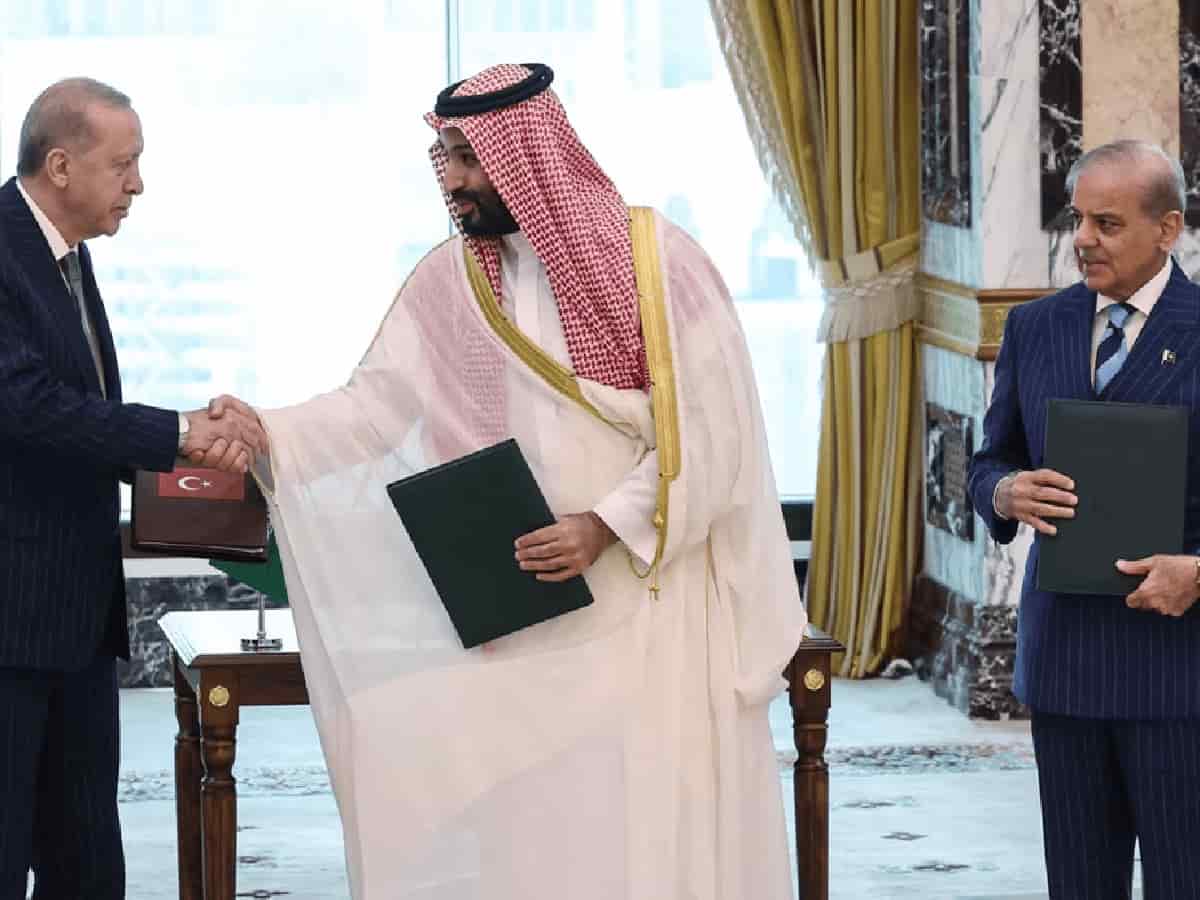
These days, there is a lot of discussion in international politics and diplomatic circles about a new defense agreement between Pakistan, Saudi Arabia and Turkey. The top leaders of these three countries gathered in the holy city of Mecca in Saudi Arabia have approved this historic defense agreement. The biggest and special thing about this agreement is that under it, if there is an external attack on any one of the three countries, then it will be considered a joint attack on all three countries. Ever since this provision came to light, analysts are comparing it with the military alliance of Western countries ‘NATO’, which has been named ‘Islamic NATO’ in the media. Similarity of Mecca Pact and NATO’s ‘Article 5’ According to a statement by Turkish Foreign Minister Hakan Fidan, this Mecca Defense Agreement has been technically prepared on the lines of the famous ‘Article 5′ of the Western countries’ military organization NATO. This clearly means that if the security of any one nation in the alliance is threatened, the other two countries will come into the field to protect it. The Turkish Defense Ministry has also informed that under this agreement, the three countries will conduct large-scale joint military exercises by combining their Army, Navy and Air Force. Along with this, to smoothly operate this military alliance, a ‘General Secretariat’ will be established in Saudi Arabia, which will promote strategic and military cooperation. What is the reality of ‘Islamic NATO’ in the eyes of defense experts? Even though on paper this agreement is being described as very strong and equivalent to NATO, but many defense experts in India and abroad believe that it would be too early to give it the status of ‘NATO’ right now. The biggest reason behind this is the huge lack of interoperability between the armies of these three countries. For example, Turkey itself is a member of the US-led NATO and uses weapons of Western standards, while Pakistan is largely dependent on Chinese technology and weapons for its defense needs. In contrast, Saudi Arabia depends primarily on the US for its security and weapons. According to Aishwarya Sonawane, researcher at Takshashila Institute, these countries currently do not have a strong institutional structure like NATO and the technical capacity to easily coordinate with each other’s weapons. Can Asim Munir get a bigger role as Commander? In the reports coming out about this new alliance, it is also being claimed that Pakistan’s military chief Field Marshal Asim Munir may get a very big and important responsibility in this group. According to a statement issued by the Turkish Defense Ministry, the governing body overseeing the ‘Mecca Joint Defense Agreement’ will include the defense and foreign ministers of the three countries as well as their army chiefs, in which Asim Munir can also be seen in the role of commander of ‘Islamic NATO’. However, despite all the political statements and claims, the success of this alliance at the ground level will depend on bridging its mutual contradictions and technical gaps.