 look news india

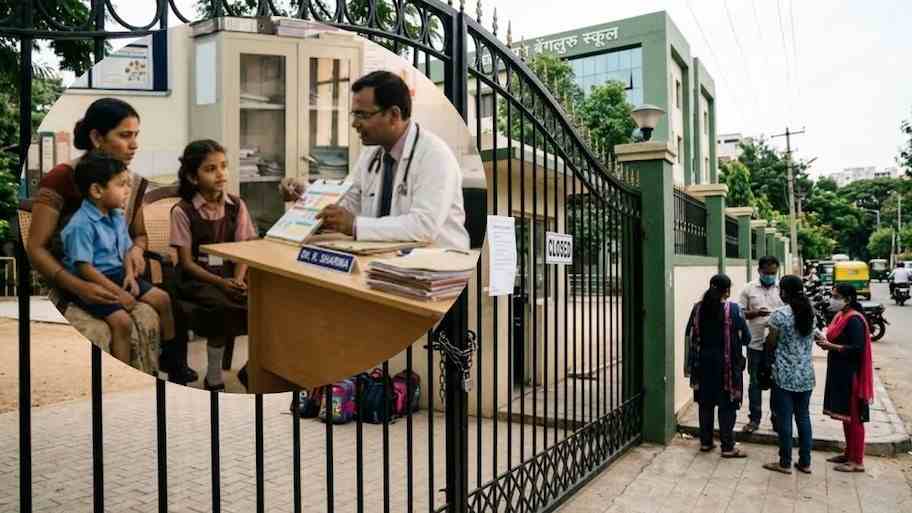
The spread of seasonal flu and H1N1 (swine flu) infection in a prestigious private school in Bengaluru, the capital of Karnataka, has created an atmosphere of great concern among the education world and parents. In the famous ‘Clarence High School’ located in Richards Town (Pottery Road), Bengaluru, suddenly more than 500 students and 21 staff members have been affected by severe flu-like symptoms (high fever, cough, cold and body ache). At least two of the sick children have tested positive for the H1N1 influenza virus following lab tests, while a school staff member has been admitted to the city’s Baptist Hospital after his condition worsened. In view of the rapid increase in infection, the school management has postponed offline classes and temporarily closed the entire campus for sanitization and deep cleaning.
How the infection suddenly spread in the campus: 20% students absent together
According to the official information released by the school administration, a total of more than 2,500 students study in the school, out of which more than 20 percent children became absent from school due to complaints of high fever, cough and body pain simultaneously. Initially, more than 137 children complained of ill health at the school’s first-aid centre, after which many children were immediately sent home and some were kept under observation.
Sensing the seriousness of the situation, the school management has completely closed primary and Montessori classes, while online classes have been arranged for the students of classes 6 to 12 to ensure that their studies are not disrupted. Along with this, the school management has written a letter to the Municipal Corporation (BBMP) and the Health Department demanding immediate action regarding unhygienic street food vendors operating illegally near the school boundary, open garbage and waterlogging.
What is H1N1 influenza and why does it spread so rapidly among children?
H1N1, commonly known as swine flu, is a highly contagious strain of the influenza A virus. It mainly affects the respiratory system i.e. lungs and windpipe. When an infected person coughs, sneezes or talks, tiny droplets spread into the air.
In places like schools, day-cares and playgrounds, children stay together in closed rooms for hours, sharing tiffins, water bottles, toys and desks. Children often touch their nose, eyes and mouth without washing hands, due to which the virus spreads very quickly from one child to another. According to pediatricians, the infected child is able to spread the virus from a day before symptoms appear for the next 5 to 7 days, making it a ‘super-spreader’ situation.
Common symptoms of H1N1 and seasonal flu in children
Parents should keep a close eye on these sudden symptoms in their children:
-
Sudden high fever of 101°F to 104°F and chills.
-
A dry, persistent, harsh cough and severe sore or pain in the throat.
-
Runny nose, blocked nose and frequent sneezing.
-
Severe pain in muscles, stiffness in waist and legs and headache.
-
Extreme lethargy, weakness and the child not feeling like getting out of bed.
-
Complaints of stomach ache, vomiting and mild diarrhea can also be seen in some children.
Red Flag Warning: When to take your child to the hospital without delay?
Pediatricians and pulmonologists say that most children recover in 4 to 7 days with adequate rest and liquid diet. If the child shows any of the following serious ‘red flag’ symptoms, he or she should immediately seek emergency medical attention instead of trying to manage it at home:
-
Severe difficulty in breathing, shortness of breath or rapid movement of ribs.
-
Light blue or yellow color of lips, tongue or face (indicating lack of oxygen).
-
Severe dehydration—not urinating for more than 8 hours, having completely dry mouth, or not having tears in the eyes while crying.
-
The child may lose consciousness, become extremely confused (Altered Sensorium) or not respond normally.
-
Seizures or very high fever (higher than 104°F) that is not relieved by common medications.
-
Fever and cough go away first and then suddenly return 24-48 hours later with high fever and severe shortness of breath.
Important safety guidelines for parents: What to do and what not to do at home?
Never make the mistake of sending a sick child to school: If the child has even a mild cold or mild fever, do not send him to school at all. Keep the child at home until he is completely fever-free for 24 hours without medication.
Provide plenty of fluids and nutrition: Give lukewarm water, ORS solution, homemade fresh veg or chicken soup, coconut water and fresh fruit purees to prevent dehydration.
Avoid giving antibiotics arbitrarily: H1N1 is a viral infection, on which antibiotics have no effect. Do not give any strong antibiotic or cough syrup to the child without a doctor’s prescription. Never give ‘Aspirin’ to children, because there is a risk of a life-threatening condition like ‘Reye’s Syndrome’.
Early window for antiviral medicines: If the child falls in a high-risk group (such as asthma, diabetes or weak immunity), consult a doctor within 48 hours of the onset of symptoms and consult an antiviral medicine like ‘Oseltamivir’ (Tamiflu).
Isolation and sanitization at home: Keep the sick child’s room separate, separate his utensils, towels and bedding from other family members. Disinfect frequently touched surfaces in the home—like door handles, switch boards, and TV remotes.
Habit of hand washing and mask: Teach the child to keep a handkerchief/tissue on the mouth while coughing or sneezing and wash hands with soap and water for at least 20 seconds.
Do all 500 children have H1N1? Why no need to panic?
Health experts have clarified that the absence of more than 500 children does not mean that all 500 children are suffering from swine flu. Common adenoviruses, rhinoviruses and respiratory syncytial virus (RSV) also cause similar symptoms during monsoon and weather changes.
Not every child needs an expensive RT-PCR test for H1N1. The Health Department is maintaining complete monitoring of the situation and adequate steps are being taken to prevent any widespread spread. Instead of panicking, parents need to be alert, take care of children’s hygiene and consult a pediatrician in time if the symptoms become severe.