 look news india

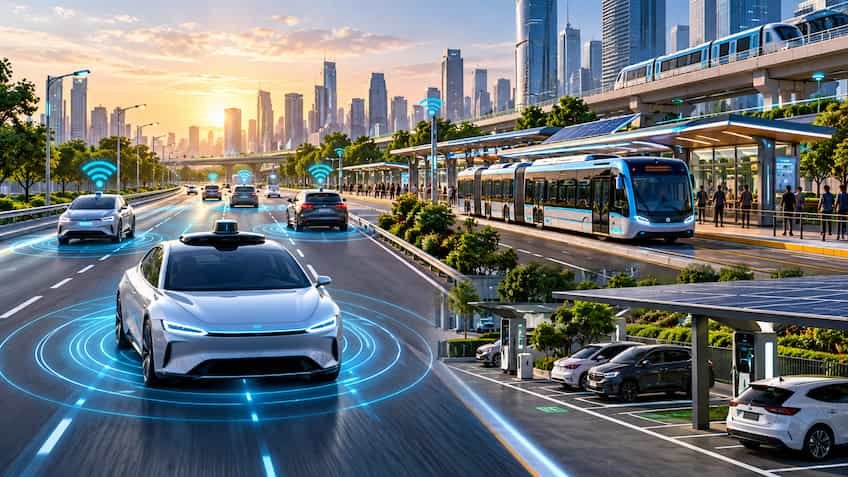
Amidst the challenges of the pace of urbanization, increasing traffic jams and road accidents in India, the transport system is standing on the verge of a historic change. In the coming few years, not only modern electric and connected vehicles will be seen running on Indian roads, but the movement of driverless i.e. autonomous vehicles is also going to become a common reality. Automation and artificial intelligence-based transportation systems are expanding rapidly around the world, but safely rolling out driverless vehicles in a diverse geographical location and mixed traffic roads like India is considered a very complex task. Sensing this need, the country’s national standards body Bureau of Indian Standards (BIS) has prepared a comprehensive technical framework to make smart transportation and autonomous mobility safe, streamlined and integrated. These new standards prepared by BIS will work to integrate public transport, traffic signal system, parking management and logistics network from small towns to metropolitan cities of the country into a modern Intelligent Transport System (ITS) framework.
The Bureau of Indian Standards has officially notified three major national standards keeping in mind the different sizes of cities in the country and their specific geographical needs. The first of these standards IS 18312 Which is specifically designed for the smart transportation needs of Tier-2 and Tier-3 i.e. smaller cities. The objective of this standard is to implement modern traffic sensors, GPS tracking and digital public transport networks in a cost-effective manner in small cities with limited resources and narrow roads. Second important standard IS 18311 It is designed to establish ‘Smart Rapid Transit’ connectivity between large metropolitan areas and their suburban and satellite cities. This standard ensures real-time data sharing and bottleneck-free movement between vehicles operating on high-speed bus corridors, regional rapid rail and expressways. third standard IS 17546 Which sets a system of ‘Smart Parking Lot Allocation’ to deal with the acute shortage of parking in modern cities. Through this standard, there will be coordination between the sensors installed in the vehicles and the central traffic server of the city, so that the driver will be able to get accurate information about vacant parking slots and advance booking directly on the mobile screen or car dashboard.
It is not enough to just create domestic standards, but it is equally important to create a harmony between the new automobile technologies being developed globally and the automation tools being imported or manufactured in India. BIS has worked on adapting three very important standards of the International Organization for Standardization (ISO) to the Indian transport system. the most prominent of these ISO 34503 Which sets the global standard for safety testing and testing scenarios of Automated Driving Systems (ADS) i.e. driverless vehicles. This standard determines how any self-driving car will decide when a pedestrian, cyclist or cattle suddenly appears on the road and how quickly its algorithm will apply emergency brakes. Other than this ISO 21217 The standard defines the communication architecture of intelligent transportation systems, so that cars can share data directly with roadside traffic signals, surveillance cameras and other vehicles. There itself ISO 23354 The standard creates a business framework for end-to-end visibility of freight and logistics flows, enabling accurate tracking of automated trucks carrying goods from the warehouse to the end consumer.
The real backbone of this future smart transport system is V2X i.e. Vehicle-to-Everything communication technology. Under the standards being set by BIS, the vehicles running on Indian roads are now being designed in such a way that they become part of a connected digital network rather than just being a stand-alone vehicle. Under Vehicle-to-Vehicle (V2V) technology, when a vehicle in front suddenly brakes, all vehicles following it will receive a warning message within milliseconds, which will completely prevent collisions between vehicles on the expressway due to fog or high speed. Similarly, with Vehicle-to-Infrastructure (V2I) technology, vehicles will automatically slow down or speed up their speed by sensing the time of red light and green light in advance, which will drastically reduce fuel and battery consumption. With the implementation of these standards, India’s entire road network will be transformed into a ‘living digital grid’ where every vehicle will be aware of its surroundings about its position, speed and direction.
Implementing driverless and autonomous technology in India is considered more challenging than in Western countries. In foreign countries, there is lane discipline and well-organized traffic rules, whereas in India, auto-rickshaws, e-rickshaws, two-wheelers, heavy trucks and pedestrians move together on the same road. Keeping this reality in mind, the country’s leading research institutes like IIT Hyderabad have created India’s first dedicated testbed under ‘Technology Innovation Hub on Autonomous Navigation’ (TiHAN), where autonomous vehicles running on both land and air are being tested in real Indian conditions. AI powered driverless buses based on indigenous technology are already running successfully in the campus of IIT Hyderabad, which have provided safe travel to thousands of passengers. Automotive Research Association of India (ARAI) and International Center for Automotive Technology (ICAT) are also finalizing lab and on-road testing of Advanced Driver Assistance Systems (ADAS) and autonomous driving features in the country based on these BIS standards.
As soon as these standards of BIS come into force, there will be vast improvements in the daily lives of common citizens. The first and most direct benefit will be in road safety; Since more than 80 percent of road accidents occur due to human errors, speeding, drunk driving or drowsiness, technologies like autonomous emergency braking and lane departure warning will minimize the loss of life and property. The second major change will be seen in the form of reduction in travel time. In real time, smart traffic signals will automatically increase the duration of green light in the lane where there is more traffic, thereby avoiding long traffic jams at intersections. With this, punctuality in public transport will increase and people will be able to see the exact arrival time of their bus or cab in seconds on the mobile app. The country’s logistics sector will also benefit hugely, as the use of automated systems in loading-unloading of goods in ports, airports and warehouses and long-distance freight transportation will bring logistics costs closer to global standards of GDP.
Although this technology is very revolutionary and exciting, it also faces many challenges related to legal and cyber security. If an accident occurs due to a driverless vehicle, then the legal responsibility will be on the car manufacturer, the software developer or the owner of the vehicle. New provisions are being discussed in the Motor Vehicle Act regarding this. Along with this, to deal with the threat of cyber attacks or hacking on connected cars, BIS and the automotive industry have set rules for strong data encryption and Cyber Security Management System (CSMS). In the coming time, as 5G and 6G networks expand, India’s transport infrastructure will become completely smart. These robust standards formulated by BIS are not only laying a strong foundation towards making India a global leader in future mobility, but are also ensuring that high-tech travel on Indian roads is completely safe, eco-friendly and within the reach of the common man.