 look news india

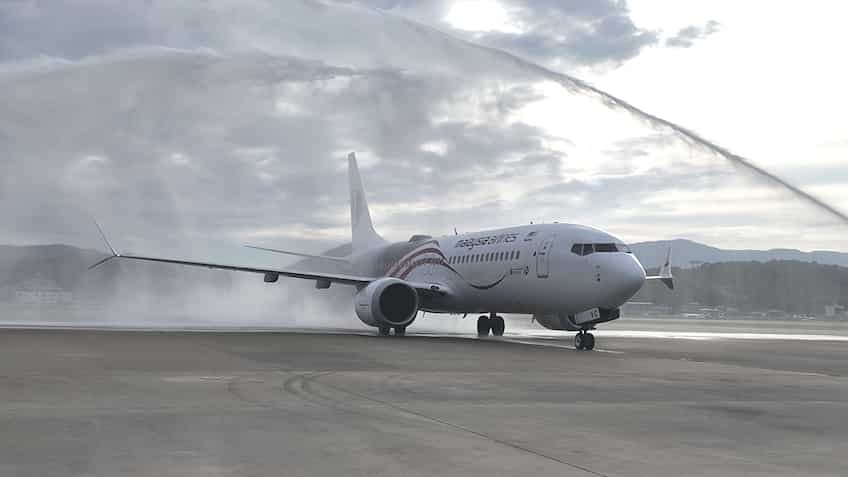
There was chaos in a commercial passenger plane flying at an altitude of thousands of feet when the right engine (engine number 2) of the plane suddenly stopped working. There were a total of 186 passengers including crew members on board the aircraft. A few minutes after takeoff, when the aircraft was moving towards cruising altitude, a warning of technical failure of engine number 2 (Engine Snag / Low Oil Pressure) flashed on the instrument panels in the cockpit.
The pilots immediately tried to control the situation by following the emergency checklist, but considering the abnormal vibration of the engine and deterioration in parameters, it was decided to shut down the engine as per Standard Operating Procedure (SOP) without taking any risk. Soon after this the plane was diverted back to the nearest international airport.
The cockpit crew immediately gave ‘PAN-PAN’ to Air Traffic Control (ATC) and then an emergency call considering the seriousness of the situation. As soon as the information was received, the airport management immediately ‘Full Emergency’ Protocol implemented.
Under standard security protocols:
-
Fire engines, foam tenders and quick response teams of Airport Fire Fighting and Rescue (ARFF) were deployed in alert mode at both ends of the runway.
-
More than a dozen ambulances and medical teams were deployed parallel to the runway to deal with any untoward situation.
-
Local police, CISF security wing and trauma centers of nearby hospitals were put on alert.
-
All other flights in the airspace were put into holding pattern or diverted to other nearby airports on priority basis and the main runway was completely cleared for this aircraft.
For the 186 passengers on board the plane, they were going to hold their breath for 20 to 25 minutes. The cabin crew instructed passengers to remain calm, fasten seat belts and prepare for emergency landing position (brace position). However, modern commercial twin-engine aircraft are capable of taking off and landing safely using only one engine (single-engine operation).
The Chief Pilot and First Officer in the cockpit handled the aircraft’s weight, fuel and glide slope displaying excellent professional skill and composure. The aircraft touched the main runway of the airport without any incident and landed safely. As soon as the wheels of the plane touched the runway, the passengers sitting in fear in the cabin heaved a sigh of relief and appreciated the wisdom of the pilots.
After a safe landing, the aircraft was brought from the runway via taxiway to the isolation bay, where pre-prepared engineers and ground staff inspected the aircraft. Airport authority officials confirmed that all 186 passengers and crew on board the plane were safe and no one was injured.
Passengers were disembarked normally at the terminal building, where refreshments and alternative flights were arranged for them. The airline’s technical team has started a detailed investigation into the cause of the failure in engine number 2. Preliminary investigation suggests leakage in the fuel line or sudden drop in oil pressure as the possible cause of the failure.
Taking cognizance of this serious incident of mid-air engine shutdown, the Directorate General of Civil Aviation (DGCA) and the Aircraft Accident Investigation Bureau (AAIB) have ordered a formal technical investigation.
The investigation team will analyze data from the aircraft’s digital flight data recorder (DFDR – black box) and cockpit voice recorder (CVR) to determine at what stage the engine failure began and whether there were any prior lapses in the aircraft’s maintenance log. The aircraft concerned has been grounded (AOG – Aircraft on Ground) until the detailed technical report comes.
| Description | Brief description of the incident |
| number of passengers | 186 (including passengers and crew members) |
| type of fault | Technical failure / in-flight shutdown of engine number 2 |
| airport status | Full Emergency Declared |
| landing position | Safe Single-Engine Landing |
| passenger safety | Everyone safe, no casualties |
| testing agency | DGCA and Technical Engineering Wing |