 look news india

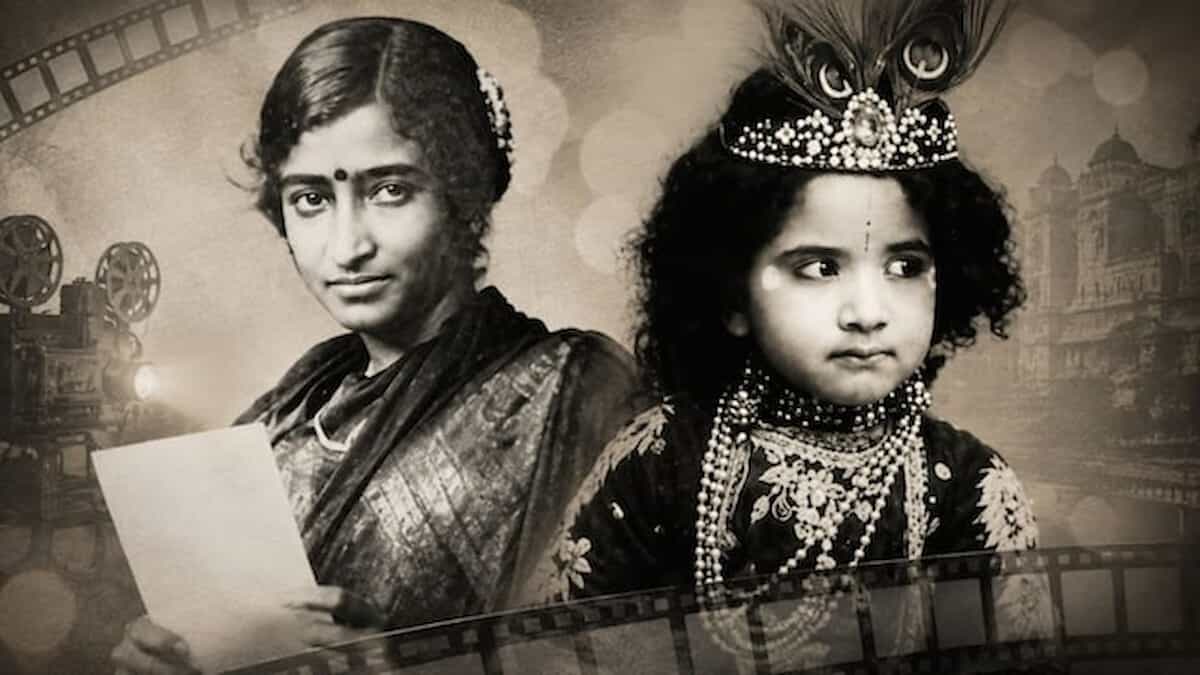
Whenever the history of Indian cinema and its fathers [दादा साहेब फाल्के] When the contribution of (Dadasaheb Phalke) is mentioned, the era of silent films (Silent Era) floats in the mind when theaters were taking new shapes in the name of means of entertainment. Even though today films are full of child actors and child artists, but do you know who was the great personality who entered the Indian film industry as a child artist for the first time and spread the magic of her art on the silver screen. This is the story of the first child artiste of Indian cinema. [Mandakini Phalke] (Mandakini Phalke), who has made a very unique and historic contribution in building the Indian film industry. In the early days of cinema, when acting was not considered a good profession in the society and women coming on screen was a distant thing, then this small artist had immortalized her name forever in the pages of history with her acting.
What was the deep family and professional relationship with Dadasaheb Phalke?
Mandakini Phalke, the first child artiste of the Indian film industry, was directly related to Dadasaheb Phalke, who is called the father of Indian cinema. Mandakini Phalke is none other than Dadasaheb Phalke’s own beloved daughter. [Daughter of Dadasaheb Phalke] Were. When Dadasaheb Phalke was busy shooting his historic silent film ‘Raja Harishchandra’ and the mythological films that followed, due to the acute shortage of child artistes, he took the bold decision of casting his own daughter in films. At that time, due to conservative social restrictions, no family allowed their daughters to work in front of the camera, but Dadasaheb went out of the way and proved that art does not need any restrictions. By bringing his daughter in front of the camera, he took a revolutionary step that opened the doors of Indian cinema to future generations and ushered in a new era in film production.
How did the historical role of Lord ‘Krishna’ and the miracle of the screen come about?
The historic opportunity that Mandakini Phalke got to act for the first time in Indian cinema was the film [‘कालिया मर्दन’] (Kaliya Mardan 1919). In this silent film, as a child artiste, Mandakini brought alive the childhood exploits and character of Lord Shri Krishna on screen. When asked how he got this iconic role of Lord ‘Krishna’, the pages of history reveal that his innocence, agility and facial expressions as child Krishna were a perfect fit for the character. Mandakini’s acting had given life to the beauty with which Dadasaheb Phalke had depicted the story of Krishna and Kaliya Nag on the screen in his film. When the film was released in theatres, the audience was stunned to see this little girl as Krishna on screen. At that time, people used to come from far and wide in bullock carts to watch this silent film and looked at Mandakini with reverence, considering it to be the darshan of Lord Krishna on the screen.
Unheard stories of tough struggle and shooting of the era of silent films
Today’s Modern Digital Age and VFX [VFX] In comparison to the films made today, a century ago i.e. around the year 1919, making a film used to be as difficult a task as winning a war. When Mandakini Phalke shot ‘Kalia Mardan’, there were neither any modern studios nor any system of artificial lighting. The entire shoot was done under natural sunlight and open sky. To shoot the Kaliya Nag scene of Lord Krishna, many times dangerous stunts and scenes had to be filmed amidst water, which this little girl completed with great courage without any complaint. Dadasaheb Phalke was a strict director as well as a father, but on the sets he also made his daughter work like a professional artiste. This was the reason that even though the films made by him were technically silent, there was such a wave of emotions in them that directly touched the hearts of the audience.
The foundation of Indian cinema and an inspiration for future generations
This journey of Mandakini Phalke was not limited to just acting as a girl, but it was the foundation stone of Indian cinema on which today this huge Bollywood worth thousands of crores of rupees is built. [Bollywood] And the regional cinema world has emerged. In the era in which she faced the camera, acting was considered a huge social risk for women and children. Her indomitable courage and dedication broke the conservative walls of the society and later paved the way for other women to enter films. Today, when we remember with pride the journey of more than a hundred years of Indian cinema, along with Dadasaheb Phalke, the name of his daughter Mandakini Phalke should also be taken with equal respect and reverence. This unheard and inspirational story of his reminds us which great personalities had put in their blood and sweat to create the modern entertainment that we enjoy today.