 look news india

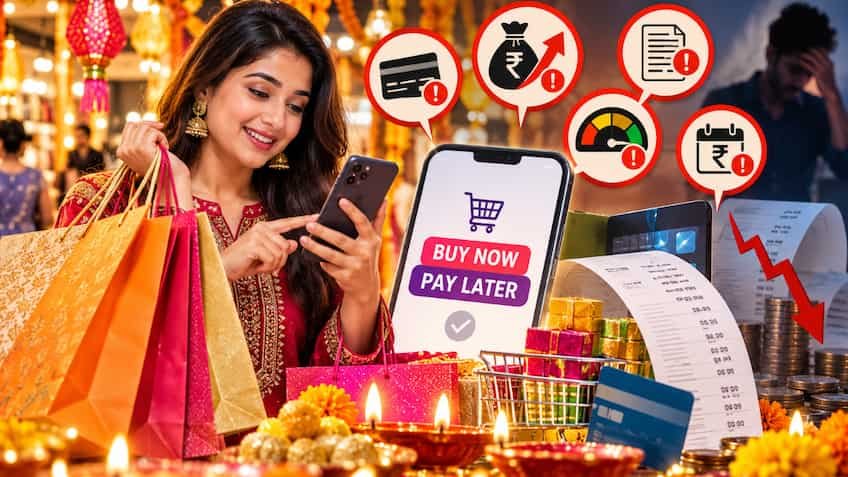
As soon as the holy festive season of Dhanteras and Diwali arrives, the markets are flooded with offers and bumper discounts. Everyone is turning to the market or e-commerce platforms to buy electronics, jewellery, new clothes and home furnishings. In today’s digital era, the most attractive option during shopping checkout is ‘Buy Now Pay Later’ (BNPL i.e. ‘Buy Now, Pay Later’). This facility of making huge purchases without paying immediately or without a credit card seems very attractive and a relief at first sight. But do you know how this small short-term loan available in one click can become a big headache for your financial future? Financial experts are warning that if BNPL is used without thinking in the festive spirit, you could end up in huge debt once the Diwali lights are over.
This option promoted by fintech companies and e-commerce sites appears to be ‘zero cost’, but it is actually a structured unsecured personal loan. During the festive season, companies influence customer behavior with attractive advertisements like ‘No Cost EMI’ and ‘Repay after 30 days’. This psychological freedom to make purchases despite having no money in the pocket provokes a person to spend more than his actual capacity. If you too are planning to shop through BNPL in this festive season, then it is very important for you to understand the 5 serious risks hidden behind it.
The first and foremost danger of BNPL is that it completely disappears the immediate pain of spending money from the consumer’s mind. When you pay cash from your pocket or see your bank account balance being deducted through UPI, there is an alertness in your mind about how much is left in the budget. In contrast, in BNPL, the goods are delivered to your home at the push of a button and the payment date is postponed by 15 to 30 days.
Due to this psychological relaxation, consumers often add non-essential items to the cart that they do not actually need. In Dhanteras and Diwali sales, people buy expensive smartphones, big TVs or luxury lifestyle products only because they feel that ‘the money has to be paid next month’. But when the bills of several BNPL platforms come out simultaneously in the next month, the entire monthly household budget gets shattered and even essential expenses are left without a trace.
It is often said in the advertisement that BNPL is a completely interest-free (0% interest) service, but this facility remains free only as long as you repay every penny before the stipulated last date. As soon as there is a delay of even one day in the payment from the due date, fintech companies start charging huge late fees and penalties.
This penalty is not just limited to the fixed late fee, but also adds a hefty annual interest rate (APR) ranging from 24% to 40% on the outstanding amount, which is much more expensive than a normal personal loan. Many companies add delay charges on a daily basis. If you bought an item worth Rs 5,000 and are not able to pay the bill on time, then adding late fees and GST, that bill can double in a few weeks.
Most of the young and first time buyers are under the misconception that BNPL is just a digital wallet or easy credit line which has nothing to do with their credit bureau record. The reality is that every BNPL platform works in partnership with some non-banking financial company (NBFC) or bank. As soon as you activate BNPL, a new loan account in your name is registered with the credit bureaus (CIBIL, Experian etc.).
If you miss even a single BNPL bill due to busy festive season or lack of funds, the NBFC immediately reports it to CIBIL. A single default can drop your credit score by 50 to 100 points. A bad CIBIL score has a direct impact on your big goals in the future; When you apply for a home loan, car loan or education loan in the future, banks may reject your application outright or charge you extremely high interest rates.
Many such terms and conditions are hidden in the fine print of BNPL agreements claiming ‘no cost’, which common consumers hastily tick on ‘I Agree’ without reading. Many platforms deduct additional money on every transaction in the name of ‘convenience fee’, ‘platform usage charge’ or ‘account maintenance fee’.
Additionally, if you have converted BNPL into 3 or 6 month installments (EMI), a one-time processing fee and 18% GST is charged separately. If you have set up auto-debit (e-NACH or UPI Auto-Pay) and there is not sufficient balance in your bank account on the due date, then not only will the BNPL company levy a penalty, your originating bank will also deduct a hefty bounce charge of Rs 300 to 500 for auto-debit bounce. In this way, on a small item, you suffer additional financial injury from many sides.
Nowadays, there are dozens of BNPL apps available in the market. As soon as the credit limit of one app is exhausted, the consumer creates an account on another app. In the excitement of Diwali, people take loans from 4-5 different platforms (like clothes from one, electronics from another, grocery from the third and food delivery from the fourth). When different due dates of all these companies come in November and December, the consumer does not understand which one to pay first.
Caught in this situation, many people make the most fatal mistake of taking a new loan from another loan app to pay the bill of one platform. This cycle gradually becomes a serious ‘debt trap’. Besides this, constant calls from recovery agents, threats and mental stress completely take away the happiness and peace of the family.
The real joy of festivals lies in celebrating as per one’s capacity, and not in burdening one’s head with debts to show off to others. If you want to stay safe and stress-free this festive season, set a strict budget limit before shopping. Spend only as much money as is already in your bank account.
If for some unavoidable reason you have to use BNPL, mark the repayment date in capital letters in your diary or calendar and pay the entire bill at least three days before the due date. Do not ‘accept’ any service without reading its terms and conditions completely. Remember that festivals come once a year, but the stress of uncontrolled debt haunts you for months and years. Spend wisely and have a safe, prosperous and debt-free Diwali with your family.