 look news india

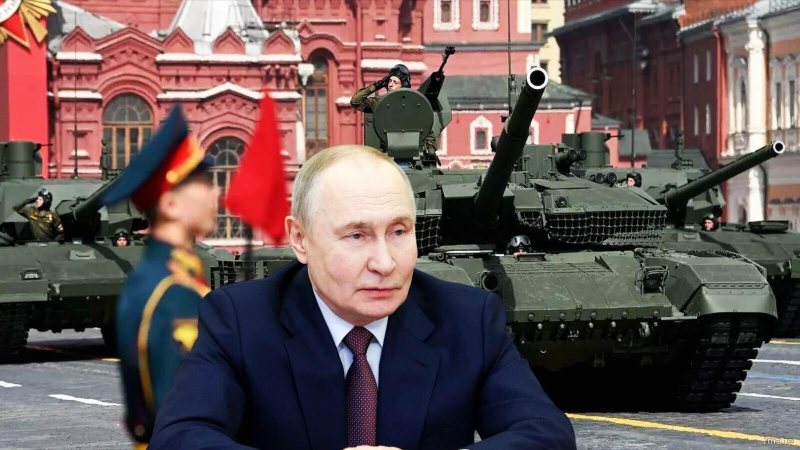
Amidst the international defense market and modern military strategies, a shocking development has come to light regarding Russia’s most talked about fourth generation T-14 Armata Main Battle Tank. The tank which Russia had declared as its biggest ‘game changer’ weapon in the difficult conditions of the Ukrainian battlefield, has proved to be a miserable failure on the technical and practical front in the actual war. The Hitex armored vehicle, manufactured by Russian defense industries, suffered from serious engine problems, highly complex electronics systems and exorbitant maintenance costs on the battlefield. This was the reason why Russian President Vladimir Putin and his top military commanders clearly avoided fielding this tank on a large scale in the frontline battlefields of Ukraine. Russia’s own army also admitted that from the economic and operational point of view, this tank has not yet met the reliability that is expected from such an expensive project.
When Russia’s own military is hesitant in deploying the T-14 Armata in combat, the question is bound to arise as to why Moscow is offering it to its most trusted defense partner like India? Russia’s well-thought-out diplomatic and economic strategy is hidden behind this. Russia’s defense industry and research budget is facing a huge financial crisis due to stringent economic sanctions imposed by Western countries. After pouring billions of dollars into this ambitious tank project, Russia now desperately needs a big and capable partner to share its financial burden. India is looking for Next-Generation Main Battle Tank (NGMBT) to replace its aging T-72 tank fleet. Taking advantage of this opportunity, Russia is making an attractive offer to India for local production, technology transfer (ToT) and joint development of T-14 Armata under the ‘Make in India’ initiative so that the project can be saved from sinking.
The modernization agenda of the Indian Army places a huge demand for modern armored vehicles to deal with future multi-dimensional battlefields. This new proposal given by Russia states that major changes can be made in the basic platform of T-14 Armata according to the geographical and strategic requirements of the Indian Army. The unmanned turret system and crew protection capsule of this tank are considered technologically advanced. However, considering its poor record in the Ukraine war, Indian defense experts and the Army are adopting a very cautious approach. Indian strategists believe that even if this tank is to be included in the Indian Army, it will be mandatory to use indigenous anti-drone system, Indian thermal imagers, active protection system and powerful indigenous engine, so that it can work without interruption in the bone-chilling heights of Ladakh and the scorching desert of Thar.
This aggressive defense proposal by Russia is not just a trade deal, but it is a move to affect the balance of power in South Asia and the global defense market. If India considers this project, it can give a new lease of life to Russia’s defense exports, but there are many big technical and diplomatic challenges associated with it. Many sensitive parts of the T-14 Armata have been dependent on foreign components, the supply of which has been affected due to global sanctions. Additionally, India already has the experience of indigenous ‘Arjun’ tanks and a successful track record of large-scale manufacturing of T-90 ‘Bhishma’ tanks. In such a situation, the Indian Defense Ministry and the scientific community are closely evaluating this Russian proposal technically, so that there is no compromise with the country’s security priorities and the resolve of ‘self-reliant India’.