 look news india

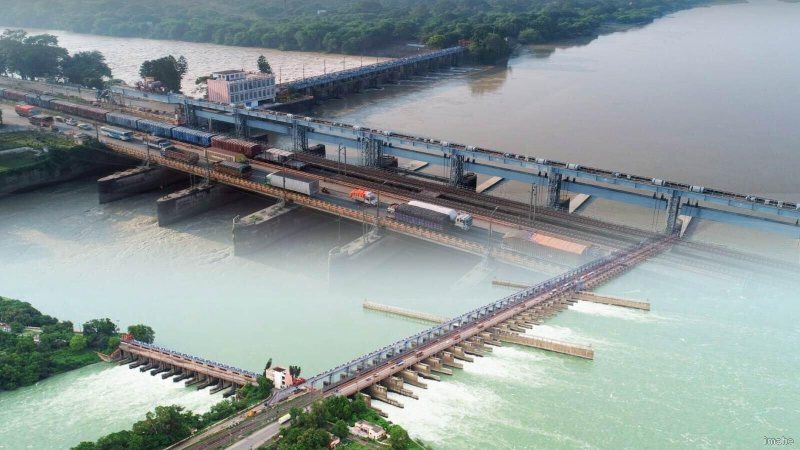
The diplomatic stir between India and Bangladesh regarding river water sharing and infrastructure projects has once again intensified. Recently, environmentalists and water experts have raised serious concerns regarding the Ganga Barrage project within Bangladesh. Experts have warned the Bangladeshi rulers in clear words that they should not repeat the mistakes of India like the historic Farakka Barrage. After this warning, a new debate has erupted on the politics of South Asia and the issue of transboundary water sharing i.e. inter-country river management. Experts believe that building big barrages or dams at the cost of ecology and environment can prove to be a long-term disaster for the country.
What is the controversy of Farakka Barrage and the argument of Bangladeshi experts?
Farakka Barrage, located in West Bengal, India, has a decades-old history and has always been an important issue in bilateral talks. Now that the Ganga Barrage project is under consideration within Bangladesh, the country’s water resources experts have warned of its negative impacts. Experts say that taking a lesson from the Farakka experience, Bangladesh should understand how large barrage structures can destroy the natural flow of the river, sediment flow and soil fertility of the delta region. These experts argue that the immediate benefits of flood control or irrigation seen from such mega projects pale in comparison to the environmental devastation they will cause in the years to come.
Serious crisis looming on environment and river ecosystem
Any river has its own living ecosystem, which includes aquatic animals, vegetation and the livelihood of millions of people living on the river banks. Experts believe that if another big barrage is built on the Ganga, the natural flow of the river will be disrupted. This can lead to adverse conditions like excessive waterlogging during monsoon and severe drought in summer. Stopping the accumulation of sediment i.e. silt in the delta region of Bangladesh can deteriorate the health of the soil, which will have a direct impact on agricultural production. This concern of environmentalists is completely based on scientific facts and principles of river science, ignoring which could prove costly in the future.
India-Bangladesh water diplomacy and need for mutual cooperation
Rivers recognize no political boundaries and the rivers shared between India and Bangladesh are the lifeline of the economies of both the countries. In such a situation, transparent communication between the two neighbors on any decision regarding water management is very important. This warning from experts in Bangladesh is not only for its internal leadership, but it is also an indication that water security issues in South Asia should not be viewed only through a political lens. In this era of climate change, when the water crisis is deepening due to melting glaciers and monsoon uncertainty, both the countries will have to jointly adopt scientific and sustainable water management policies.
Lessons for the future and the path to sustainable development
In conclusion, it can be said that this warning given by Bangladeshi experts is a wake-up call for the policy-makers of the South Asian region. Striking a balance between development and environment has become the biggest challenge of today’s times. Only by learning from the mistakes of the past can the foundation of a safe and prosperous society of the future be laid. If the natural nature of the river system is not respected in time, future generations may have to suffer serious consequences. What is needed is that before giving the green signal to big infrastructure projects, a comprehensive Environmental Impact Assessment (EIA) should be conducted and regional sustainability should be kept paramount.