 look news india

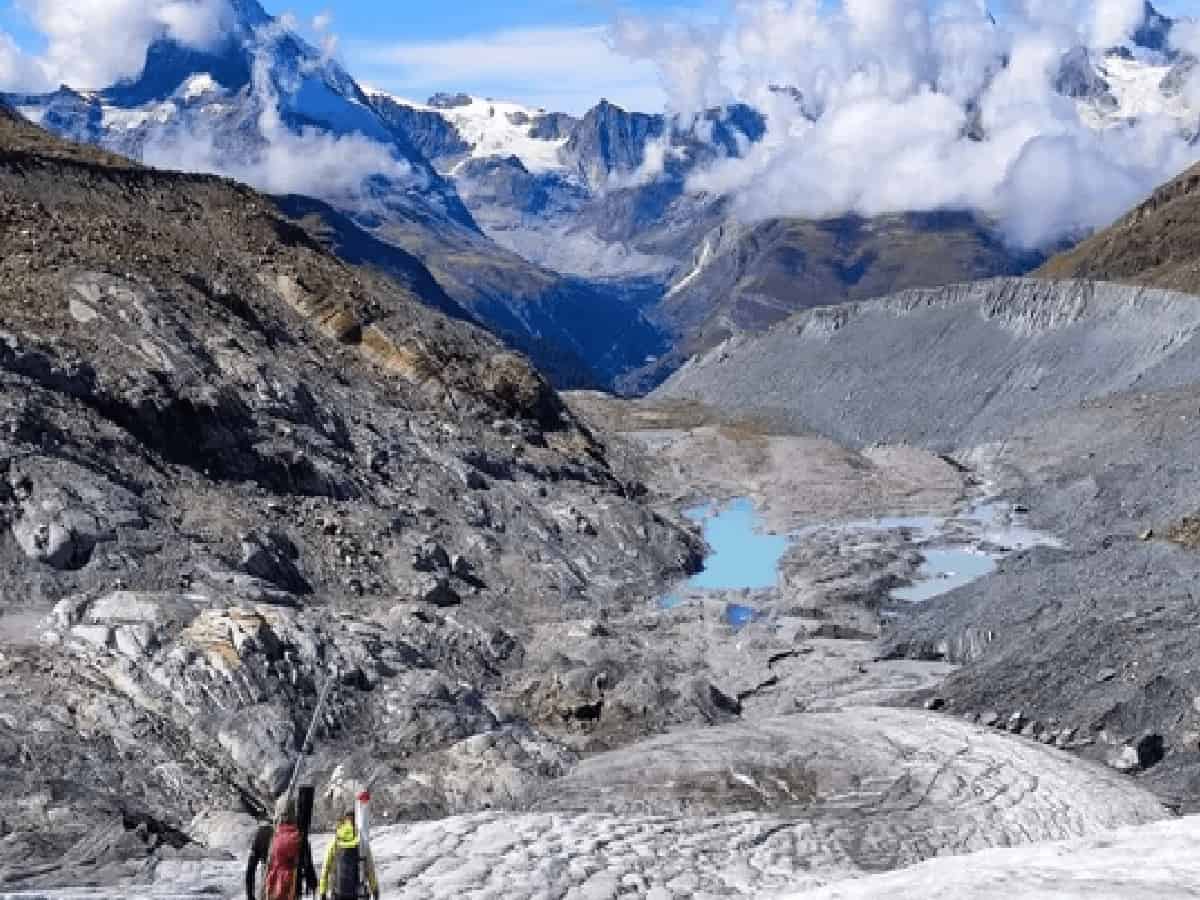
The effects of climate change in Europe and around the world are now becoming dire. Nearly a fifth of Switzerland’s glaciers have receded within the last five years, according to a fresh and shocking report released by Swiss researchers and scientists. This is clear and irrefutable evidence that the European continent is among the fastest warming regions in the world. The study warns that if this situation continues, alpine glaciers may completely disappear in the future.
According to the report, more than five percent of Switzerland’s ice has completely disappeared during the year 2026 alone. After much less snowfall than usual in the winter season, severe and record-breaking heat waves in the summer have made the situation worse. Swiss scientists have said that due to this severe melting, many small glaciers have already completely lost their existence.
The Swiss Glacier Monitoring Network and scientists who continuously document changes in the cryosphere of the Alps have stated clearly that the long-term survival of Alpine glaciers is no longer likely given current environmental conditions.
Expressing concern over this serious situation, Matthias Huss, head of the Swiss Glacier Monitoring Network, has said that human activities are entirely responsible for this unprecedented and shocking increase in global temperatures in the last few years. He said that the increase in global temperature that we are currently facing is 100 percent due to anthropogenic climate change.
Responding to this, Bethan Davis, Professor of Glaciology at Newcastle University, Britain, said that the melting of glaciers so rapidly is a big warning for the entire mankind. This crisis is becoming a serious problem not only for the glaciers but also for the millions of people living in the mountainous areas around them.
Researchers say that this continuous melting of glaciers and reduction of snow is creating serious dangers in the mountainous areas. Melting of huge amounts of snow and glaciers has made high mountain slopes extremely unstable, resulting in a huge increase in landslides, floods and other devastating natural disasters across the world. Environmentalists believe that if stringent steps are not taken at the global level in time, the consequences could be more dire in the coming decades.