 look news india

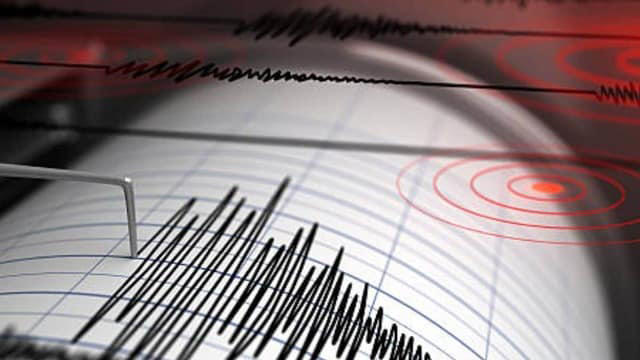
Late last night i.e. Sunday, June 7, 2026, strong earthquake tremors were felt in Bhutan, the neighboring country situated in the Himalayan region. According to the report of the German Research Center for Geosciences (GFZ) and international news agency Reuters, the intensity of this earthquake has been measured at 5.6 on the Richter scale. It is a matter of relief that despite such high intensity, there has been no news of any loss of life or property or any casualty.
But this earthquake, which occurred late at 11:06 pm, completely frightened the people living in the Indian states and areas bordering the border.
The main center was in Bhutan, the threat was felt till India and Bangladesh
According to meteorological and geological reports, the epicenter of this earthquake was located at a depth of about 10 kilometers from the ground in Punakha area of Bhutan. This region falls just above the northern part of the Indian state of West Bengal. This was the reason why the direct and rapid impact of this shock was seen on a large scale in the north-eastern states of India and neighboring country Bangladesh.
-
Condition of Sikkim: In many hilly areas of Sikkim, including the capital Gangtok, people felt the shaking of the ground and houses for a few seconds. A senior official of Sikkim State Disaster Management Authority said that the situation is completely under control and the administration is keeping a close watch on every movement. As a precaution, people immediately came out of their homes and buildings to safe open spaces.
-
Panic in North Bengal: People were frightened due to this earthquake in Siliguri city of West Bengal as well as in Cooch Behar, Jalpaiguri and Alipurduar districts bordering Bhutan. Due to sudden shaking of fans and utensils at night, people woke up from their sleep and came to the streets. The local administration has confirmed that no untoward incident or damage to property has been reported from anywhere in these border areas of North Bengal.
Scientific viewpoint: Why and how do earthquakes occur?
The occurrence of earthquakes is a completely natural and geological process. Our Earth may look like a solid ball from above, but changes are constantly taking place inside it.
With the help of the scientific diagram given above, we can understand how this whole game works under the ground:
-
Movement of Tectonic Plates: The outermost layer of the Earth is divided into many huge pieces, which we call tectonic plates. These plates always keep sliding, colliding or moving away from each other at a very slow speed.
-
Convection Currents: Due to the extreme heat present in the Earth’s womb (mantle), convection waves, i.e. convection currents, arise in the lava, which work to move these huge plates.
-
Release of tension and energy: When two plates collide, enormous pressure and stress accumulates over years at their boundaries. When this pressure exceeds a limit, rocks suddenly break or break along fault lines (fault) slips with the help of.
-
Focus & Epicenter: The exact place inside the Earth from which this energy first emerges is called the focus (Focus) or called hypocenter. The point on the earth’s surface just above this focus is called the center or epicenter of the earthquake.Epicenter) They say.
When this trapped energy suddenly comes out, it forms waves (Wave Fronts) spreads all around, causing the buildings and ground on the surface to tremble rapidly. The north-eastern part of India and the entire Himalayan belt (which includes Bhutan, Nepal and Sikkim) are located in the main collision zone of two such large plates, due to which earthquakes are seen frequently in these areas.