look news india

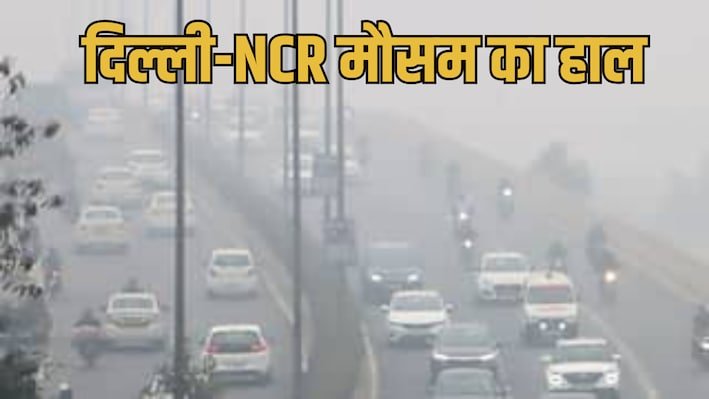
New Delhi: With the arrival of the last week of November in the country’s capital Delhi, the twin crisis of weather and pollution has deepened. On one hand, the cold winds coming from the mountains have increased the chill in the capital, while on the other hand, due to the slowing down of wind speed, the climate of Delhi has once again become ‘poisonous’. According to the latest data from the Central Pollution Control Board (CPCB) and Delhi Pollution Control Committee (DPCC), the average air quality index (AQI) of Delhi has increased to 278 on Saturday morning, which falls in the ‘Poor’ category. However, it is a matter of concern that the pollution level in more than 23 major areas of the capital has reached ‘Very Poor’ category. In crowded areas like Chandni Chowk, ITO, Punjabi Bagh and Sirifort, AQI has crossed 350, due to which morning walkers and office goers are facing burning sensation in eyes, sore throat and severe difficulty in breathing.
If we look at the data of 57 out of 59 air quality monitoring stations installed in different parts of the capital, the air of Central, North and West Delhi remains the most polluted. According to the latest bulletin on Saturday morning, Sirifort recorded the highest AQI of 368. Immediately after this, the air quality index in historic Chandni Chowk has reached 364, in DTU and Commonwealth Sports Complex 362, while in North Campus and Punjabi Bagh the AQI has reached a dangerous level of 359. AQI has been recorded at 354 at the capital’s major traffic junction ITO, 353 at CRRI Mathura Road and Pusa, 333 at Burari Crossing, 326 at Nangloi and 324 at Anand Vihar. Apart from this, the air in Wazirpur (321), Vivek Vihar (318), Talkatora Garden (318), Patparganj (309), IIT Delhi (307) and Bawana (305) also remains in ‘very poor’ category. The air is in ‘moderate’ category only in a few green areas like Lodhi Road (167) and Cantonment area (116).
Meteorologists and environmental experts believe that the change in weather conditions is the main reason behind the sudden increase in pollution in Delhi. The morning temperature in the capital has dropped to around 15 to 16 degrees Celsius and the humidity level in the air is being recorded up to 90 percent. Along with this, due to the speed of surface winds being almost zero (0 meters per second), vehicle smoke, dust from construction works and micro pollutant particles (PM2.5 and PM10) emanating from local sources are not able to rise into the atmosphere. According to Air Quality Early Warning System data, PM2.5 remains the major pollutant at 48 monitoring stations in Delhi. As the cold increases, a thick layer of smog (a mixture of fog and smoke) has engulfed the entire Delhi-NCR, due to which visibility is also being affected in the morning.
The provisions of Graded Response Action Plan (GRAP) are implemented by the Commission for Air Quality Management (CAQM) in Delhi-NCR, under which instructions have been given for dust control, water sprinkling and monitoring of construction sites. However, in many areas, local pollution is not reducing due to open burning of garbage, dust flying on the roads and heavy traffic jams. According to the analysis of the Early Warning System, along with local factors, polluted winds coming from the surrounding areas of NCR are a major contributor to Delhi’s total pollution. In view of this ‘double attack’, health experts and doctors have advised the elderly, small children, pregnant women and patients suffering from asthma or heart disease to take special precautions. Doctors say that avoid leaving the house in the morning and late evening, use N-95 mask compulsorily while going out and do not allow dehydration in the body.