 look news india

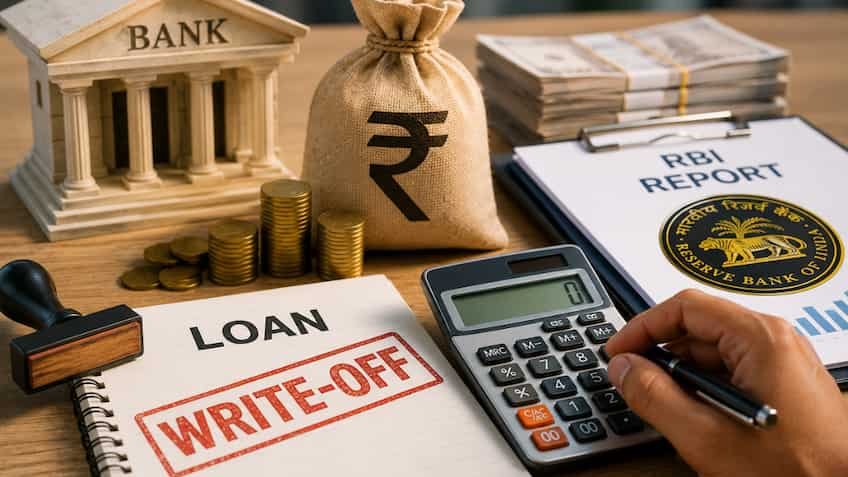
Whenever it comes to Non-Performing Assets (NPA) and bad loans in the Indian banking system, the term ‘Loan Write-Off’ often comes up in discussions and controversies. The general public, social media and sometimes even the borrowers themselves fall prey to the misconception that if the bank has ‘written-off’ their loan, it means that the loan has been completely waived off and now they will not have to repay the money.
However, as per Reserve Bank of India (RBI) guidelines and banking laws, the reality is just the opposite. Loan write-off does not at all mean loan waiver. This is merely a statutory accounting process to clean up the balance sheets of the banks, after which the banks are legally free to recover every single rupee.
What is the basic difference between loan write-off and loan waiver?
It is extremely important to understand the difference between these two financial concepts:
-
Loan Waiver/Waive-Off: This is legally and practically the total elimination of debt. Loan waivers mainly occur through government policy announcements (such as agricultural debt relief schemes) or under special circumstances. When a loan is ‘wave-off’, the borrower is completely released from legal liability and the bank cannot make any future recovery from it.
-
Loan Write-Off / Technical Write-Off: This is purely a process of cleaning the accounting books of the bank. When a borrower does not pay EMI for more than 90 consecutive days and the loan remains unrecovered even for several years after becoming NPA, the bank removes it from its active asset book. However, the legal obligation on the borrower to repay the loan remains the same.
Why do banks write-off loans? Know the provisioning rules of RBI
As per the Prudential Norms of Reserve Bank of India (RBI), banks have to take the following steps to maintain their financial health transparent and strong:
-
Rule of 100% provisioning: When a loan remains NPA for many years and its recovery becomes uncertain, the bank has to keep aside 100% provisioning i.e. security amount equal to that bad loan from its profits.
-
Cleaning the Balance Sheet: If banks continue to show bad loans as ‘assets’ on their balance sheets, their financial position will look weak and they will be unable to disburse new loans. By doing write-off, the gross NPA of the bank is reduced on paper.
-
Benefits of tax exemption: By writing off bad debts under income tax laws, banks are able to legally optimize their tax liability.
How and under what laws does the recovery of banks continue after write-off?
As per RBI rules, written-off accounts are not closed, but are transferred to a separate internal ledger (Off-Balance Sheet Recovery Ledger). Banks continue their recovery process aggressively through the following legal forums and weapons:
-
SARFAESI Act, 2002: Under this, banks recover their money by attaching the mortgaged property (house, land, factory) of the defaulter and auctioning it without going to court.
-
Debt Recovery Tribunal (DRT): Banks file cases in DRT against large defaulters of more than ₹20 lakh.
-
Insolvency and Bankruptcy Code (IBC, 2016): In case of corporate debtors, an application for resolution or liquidation of the company is filed in the National Company Law Tribunal (NCLT).
-
Lok Adalat and Settlement: In cases of small loans, settlement is achieved through Lok Adalat.
-
Transfer to Asset Reconstruction Companies (ARC): Banks sometimes sell their bad loan portfolio at a discount to recovery agencies or ARCs (like NARCL), who then recover from the borrowers.
What is the impact of loan write-off on the CIBIL score and credit profile of the borrower?
If a person’s loan is written off by the bank, it has a serious and negative impact on his financial life:
-
‘Written-Off’ stamp on CIBIL report: Banks report to the Credit Information Bureau (CIBIL, Experian, CRIF) that the account has been ‘Written-Off’.
-
Huge drop in CIBIL score: The credit score immediately drops into the poor 500 to 600 range.
-
Stop getting loans and credit cards in future: Unless the borrower clears the entire dues or settlement amount and obtains the ‘No Dues Certificate’ (NOC), no bank or NBFC in the country will issue him a home loan, car loan, personal loan or credit card in future.
-
Impact on passport and foreign travel: If a Look-Out Circular (LOC) is issued against big willful defaulters, they may also be banned from leaving the country.
Loan write-offs should under no circumstances be confused with free loan waivers or a ‘free pass’. This is an internal accounting decision of the banks, whereas by law the bank retains its right to every penny given to the borrower till the end. Whenever the bank detects any new assets or income source of the defaulter, recovery through the legal process is immediately expedited. Maintaining financial discipline and paying EMIs on time is the safest way for any borrower to safeguard his credit reputation.