 look news india

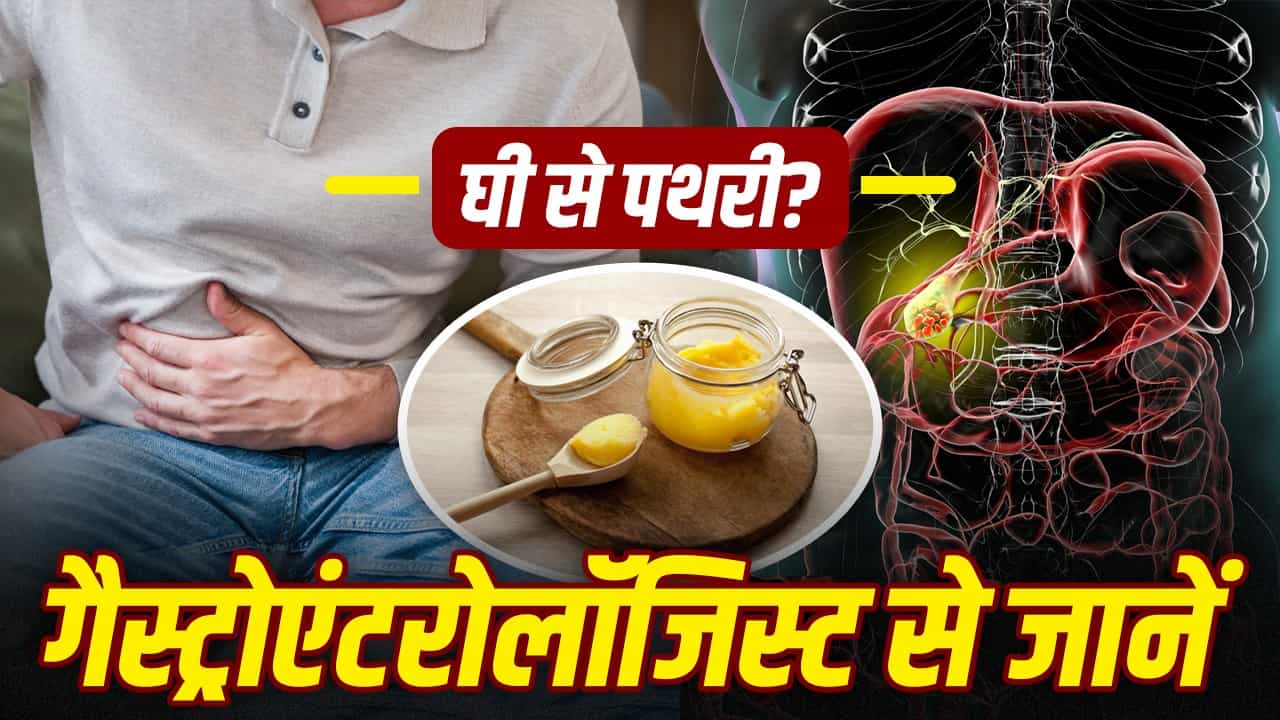
Desi ghee has traditionally been considered an elixir for strength, digestion and overall health in Indian kitchens. Be it tadka in dal or greasing on rotis, Indian thali is considered incomplete without ghee. But as soon as gallstones are detected in a person’s ultrasound, the first finger in the family is raised on desi ghee and oil.
This question is often asked whether eating too much desi ghee daily causes stones to form in the gall bladder? According to gastroenterologists, the answer is not just ‘yes’ or ‘no’; Rather, behind it lies a deep biological science of the balance of liver, cholesterol and bile.
The gall bladder is a small pear-shaped sac located just below our liver. Its main function is to produce digestive juices made by the liver i.e. Bile To store and release fat in the food into the small intestine to digest it.
-
Formation of cholesterol stones: About 80% of gall bladder stones are ‘cholesterol stones’. Bile contains a certain proportion of cholesterol, bilirubin and bile salts.
-
When the amount of cholesterol in the body increases so much that the bile juice is unable to dissolve it, the excess cholesterol starts accumulating in the form of small crystals.
-
With time these crystals join together and take the form of pebbles or stones.
According to gastroenterologists, Desi Ghee in itself is not a direct cause of kidney stones, but excessive and uncontrolled quantity of it can increase the risk manifold:
-
High levels of saturated fat: Desi ghee contains more than 60% saturated fatty acids. If you are eating more than 4-5 spoons of ghee in a day and have zero physical activity, then it increases the level of LDL (bad cholesterol) in the blood and liver.
-
Oversaturation of bile: When the liver starts secreting excessive cholesterol within the bile, cholesterol starts accumulating rapidly in the gall bladder, increasing the risk of stones.
-
Biliary Stasis: If a person eats very fatty foods for a long time or, on the contrary, goes on very strict dieting/crash fasting, the gall bladder may not empty completely in time. Stones also start forming due to stagnation of old bile in the sac.
Experts make an important distinction—Formation of stones and pain due to gall bladder attack are two different things:
-
If someone already has a ‘silent stone’ (painless stone) in his gall bladder, and he suddenly eats heavy desi ghee, puri or fried food, the gall bladder contracts rapidly to digest the fat.
-
Due to this contraction, the stones present in the sac get stuck at the mouth of the cystic duct, causing unbearable pain, vomiting and jaundice in the upper right part of the stomach.
According to doctors and nutritionists, there is no need to completely exclude desi ghee from the diet as it contains butyric acid and fat-soluble vitamins (A, D, E, K) which are good for the intestines. But it is imperative to take care of the quantity:
-
Healthy and active adults: Daily 1 to 2 teaspoons (about 10 to 15 ml) Pure desi ghee is considered safe and healthy.
-
Sedentary Lifestyle (people with less physical activity): Do not take more than 1 teaspoon.
-
Those who already have gall stones, fatty liver or high cholesterol: Such patients should completely avoid ghee and any type of heavy fatty diet without doctor’s advice.
-
Increase fiber intake: Include green leafy vegetables, pulses, whole grains and fruits in your diet. Soluble fiber binds excess cholesterol and removes it from the body.
-
Do not lose weight rapidly: Crash dieting causes the liver to release excessive cholesterol, which increases the risk of gallstone formation.
-
Drink enough water: Drinking 2.5 to 3 liters of water throughout the day reduces the thickness of bile.
-
regular exercise: Walking or exercising for 30 to 45 minutes daily keeps the metabolism healthy and reduces the pressure of fat on the liver.