 look news india

Researchers in Oxfordshire, southern England, have announced an extraordinary discovery. Where workers have found more than 200 dinosaur footprints during the excavation of a limestone mine. While workers were digging, they noticed unusual pits and called the team, who discovered they were dinosaur tracks. The area dates back to the Middle Jurassic period and is approximately 166 million years old.
Tracks of sauropods and megalosaurus found
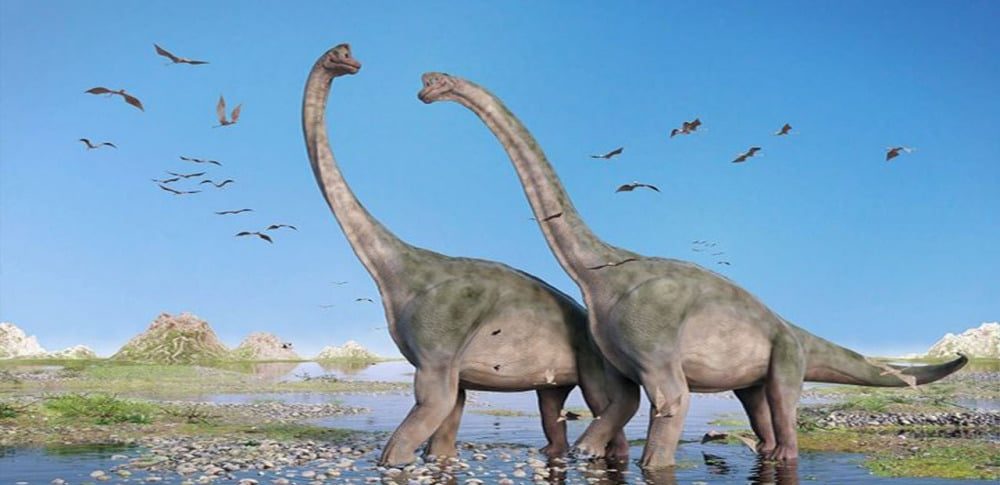
The extraordinary discovery of dinosaur footprints was made at the Devers Farm Quarry, where excavations yielded five tracks. 4 of these tracks belong to sauropods, large, long-necked herbivorous dinosaurs, while the 5th track belongs to Megalosaurus, a 9-meter-long predatory dinosaur.
According to researchers, the sauropod trackways may belong to a dinosaur called Cetiosaurus, which was about 60 feet long. Three claw marks can be clearly seen in the tracks of Megalosaurus, which is the identity of this predator. This particular discovery is important to scientists, as Megalosaurus was the first dinosaur to be scientifically named two centuries ago.
Footprints were found in this area even 30 years ago
Researchers at the Universities of Oxford and Birmingham believe the discovery provides important information about the lives of dinosaurs and their environment. Christy Edgar, Professor of Micropalaeontology at the University of Birmingham, said: “These footprints give amazing information about the time of dinosaurs. Even 30 years ago, 40 pairs of dinosaur legs were found in this area, which were considered very important from the scientific point of view. However, limited photographic evidence existed at the time due to the lack of technical means.
It will be displayed in a new exhibition at the Oxford University Museum of Natural History
This time scientists working at the site took more than 20,000 digital images and used drones to create 3-D models. This technique will help in future studies and provide more information about the size of dinosaurs, their speed and gait. According to scientist Duncan Murdoch of Oxford Museum, “The preservation is so detailed that we can see how the dinosaur’s legs moved in and out. “This discovery recreates the muddy lagoon environment in which these dinosaurs walked.”
The discovery will now be displayed in a new exhibition at the Oxford University Museum of Natural History. A documentary about the footprints and lives of dinosaurs will also be broadcast, providing more information about these amazing animals.
A documentary on the life of dinosaurs will be broadcast