 look news india

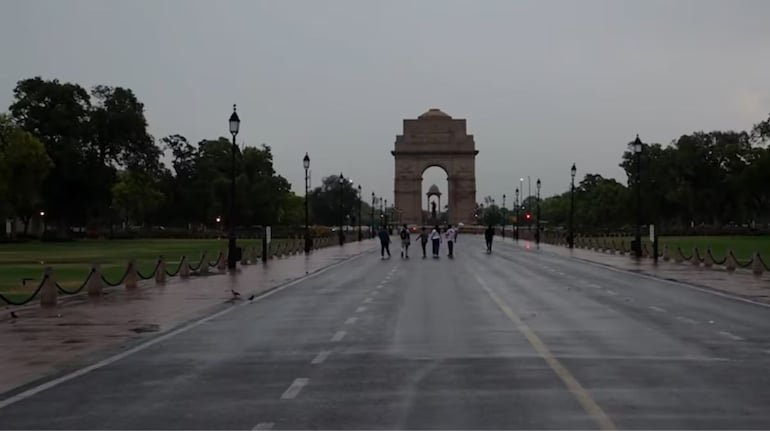
As the process of official departure of south-west monsoon from the capital Delhi and National Capital Region (NCR) begins, the mood of the weather has started changing rapidly. The relief of clear blue sky and fresh air that the people of Delhi were feeling due to continuous rains for the last few weeks is now gradually coming to an end. According to the Indian Meteorological Department (IMD), the rainy season has completely stopped due to the retreat of the monsoon trough and the activation of north-westerly dry winds. With the rain stopping, due to the moisture present in the atmosphere and the strong sunlight during the day, the effect of mild, humid heat is visible in the afternoon, while on the other hand, the temperature in the morning and late night has started falling. But with this seasonal change, the biggest challenge of every year for Delhi-NCR i.e. air pollution has once again started looming.
According to the data of the Meteorological Department, the sky will remain mainly clear and the weather dry in Delhi during the coming week. The maximum temperature is expected to remain around 34 degrees to 36 degrees Celsius, while the minimum temperature may drop to 23 to 24 degrees Celsius.
The wind direction has now started changing from south-eastern to north-western. This direction of north-westerly winds comes towards the national capital through the plains of Punjab, Haryana and Rajasthan. The sun will remain bright during the day till the beginning of October, but as the nights become cooler, this difference in temperature will slow down the wind speed, due to which a situation of ‘Thermal Inversion’ will start forming in the atmosphere.
A combination of meteorology and seasonal activities mainly work behind the deterioration of Delhi’s air between the departure of monsoon and the onset of winter:
-
Decrease in wind speed: During the rainy season, strong monsoon winds carry away dust and smoke particles, but after departure the surface wind speed becomes very slow (calm or subdued). Due to lack of wind, the smoke coming out locally gets stuck at one place.
-
Fall of mixing height: Due to fall in mercury at night, the lower surface of the atmosphere cools down and the expansion of air stops. This is called the mixing height phenomenon of the atmosphere, due to which pollution particles get trapped like an invisible sheet just a few hundred meters above the ground.
-
Stubble burning season: In Punjab, Haryana and Western Uttar Pradesh, stubble burning starts in the fields after harvesting of paddy. North-westerly winds pull this smoke directly into the atmosphere of Delhi.
-
Local Pollution Sources: Road dust from construction work, vehicle emissions and pollutants from burning garbage start poisoning the air in the absence of rain.
At present, the average Air Quality Index (AQI) of Delhi is being recorded in the range of ‘Moderate’ to ‘Poor’ i.e. 100 to 150. At hotspots like Anand Vihar, Wazirpur, Mundka, Bawana and Jahangirpuri, PM2.5 and PM10 levels have started being recorded twice the normal limit.
According to the air quality forecast of SAFAR and Central Pollution Control Board (CPCB), Delhi’s AQI may enter ‘Poor’ (above 200) category by the first fortnight of October and ‘Very Poor’ (above 300) category by the end of October. Anticipating the situation worsening, the Commission for Air Quality Management (CAQM) is preparing to implement the first phase of the Graded Response Action Plan (GRAP), under which dust control and use of anti-smog guns is made mandatory.
Due to poor air quality in the coming days, children, elderly and people suffering from respiratory diseases (asthma and bronchitis) will have to take special precautions. Avoid outdoor jogging or heavy exercise in the morning when the smog layer is closest to the ground. Start using an N95 mask when going out of the house and keep the windows of the house closed during heavy traffic times. Drink enough water to avoid allergies caused by dust particles deposited in the throat and lungs.