 look news india

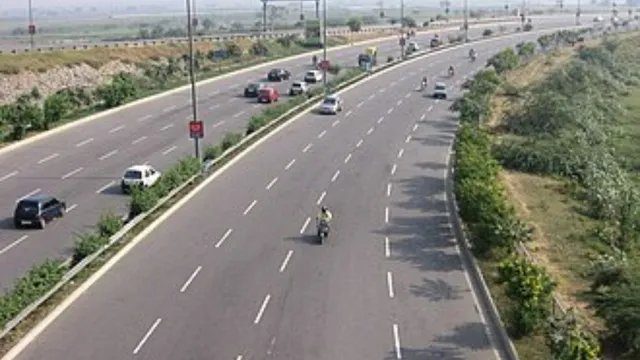
The Central Government and the National Highways Authority of India (NHAI) have created an unprecedented ‘highway network’ of expressways to directly and seamlessly connect the country’s capital Delhi with Eastern India’s financial capital Kolkata. Whereas earlier it used to take a huge time of 28 to 32 hours for the passengers traveling on the historic Shershah Suri route i.e. Grand Trunk (GT) Road and the old National Highway-19 to travel the long distance of more than 1400 kilometers from Delhi to Kolkata, now through the new Greenfield Expressway network, this distance will be reduced to just 16 to 17 hours. This massive expressway corridor, being developed under the Bharatmala Project and PM Gatishakti Master Plan, will not only halve the travel time between North India and East India, but will also forever change the entire equation of logistics and freight movement in the country.
This massive high-speed expressway network connects five major states of India—Delhi (NCR/Haryana), Uttar Pradesh, Bihar, Jharkhand and West Bengal. Starting the journey from Delhi, trains travel directly to Chandauli and Varanasi in eastern Uttar Pradesh via Yamuna Expressway or Eastern Peripheral Expressway, Agra-Lucknow Expressway and then Purvanchal Expressway. From here begins the Varanasi-Kolkata 6-lane access-controlled greenfield expressway, passing through Kaimur, Rohtas, Aurangabad and Gaya in Bihar and entering Chatra, Hazaribagh, Ramgarh and Bokaro in Jharkhand. After this, this corridor passes through Purulia, Bankura and Hooghly districts of West Bengal and meets Uluberia and Dankuni near Kolkata. This link built between five states is proving to be the longest uninterrupted expressway grid in the country.
The real gamechanger of this 16-17 hour journey is the approximately 610 km long ‘Varanasi-Kolkata Expressway’ (NH-319B), which is being constructed at an estimated cost of around Rs 35,000 crore. The biggest problem on the old GT Road was the densely populated towns, countless traffic signals, narrow roads and severe traffic jams caused by local vehicles. The new Greenfield Expressway will pass completely outside the urban areas. This is a completely 6-lane access-controlled road, on which vehicles will be able to speed at a speed of 100 to 120 kilometers per hour. With the commissioning of this new expressway alone, the journey from Varanasi to Kolkata is being reduced from 14-15 hours to just 6 to 7 hours, which provides superfast connectivity to the traffic coming directly from Delhi.
The Government of India aims to reduce the logistics cost in the country from 14-16 percent of the Gross Domestic Product (GDP) to single digit i.e. 8-9 percent. Delhi-Kolkata Expressway Mahanaal is going to prove to be the most revolutionary step in this direction. Agricultural products, manufacturing goods, automobiles and consumer electronics from North India can be transported to Kolkata Port and Haldia Port in very short time and minimum fuel cost. On the other hand, raw materials from coal, steel, cement and mineral industries of Jharkhand and West Bengal will reach the industrial areas of Uttar Pradesh, Delhi and Punjab without any hindrance. By doubling the turnaround speed of trucks, there will be a huge reduction in freight charges, which will directly benefit the common consumers in the form of cheaper goods.
This expressway is not only beneficial for long distance commuters, but it is also emerging as a lifeline for the districts which were cut off from mainstream economic development for decades. Tourist places like Bihar’s Aurangabad and Sasaram (Tomb of Sher Shah Suri), world famous Buddhist pilgrimage site Bodhgaya, Jharkhand’s Parasnath (Jain pilgrimage site), Hazaribagh National Park and West Bengal’s Bankura and Bishnupur, famous for terracotta art, will now be directly and superfast connected to the National Highway network. Due to the huge surge in religious and historical tourism, new direct and indirect employment opportunities are being created for lakhs of youth at the local level through hotels, dhabas, logistics parks, warehousing hubs and petrol pumps.
This high-speed corridor has been designed as per world class safety standards. Modern ‘Wayside Amenities’ have been installed every 40 to 50 kilometers on the entire expressway, where hygienic food courts, modern washrooms, electric vehicle (EV) fast charging stations, trauma centers and children’s play parks have been set up for the passengers. Additionally, high-definition PTZ cameras, overspeeding sensors, weather monitoring system and Automatic Number Plate Recognition (ANPR) cameras have been installed under Advanced Traffic Management System (ATMS) along the entire route. 24-hour deployment of ambulances and highway patrolling vans has been ensured to provide immediate assistance in case of any accident.