 look news india

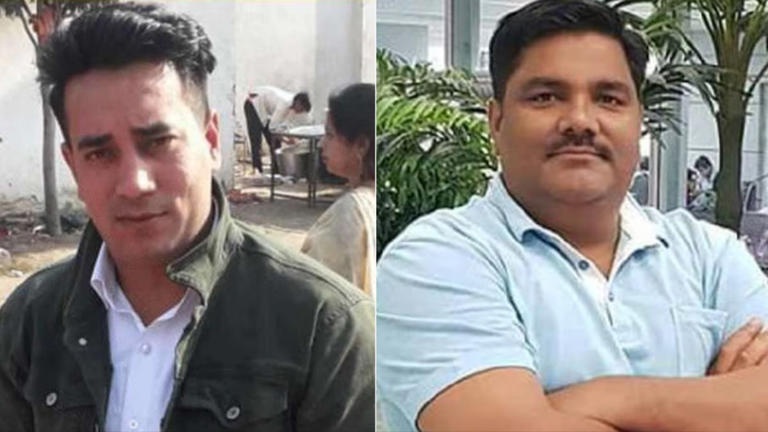
Five accused, including former Aam Aadmi Party (AAP) councilor Tahir Hussain, have been convicted by the court in the murder case of Intelligence Bureau (IB) officer Ankit Sharma, who was involved in one of the most heinous and high-profile cases of the North-East Delhi riots of 2020. Delhi Police’s long, well-planned and scientific evidence-based investigation played the most important role in this big decision. Despite extraordinary challenges like the fear of the Covid-19 pandemic, poor CCTV footage at the crime scene and frightened witnesses, the investigation team gathered infallible evidence which made the prosecution’s case strong in the court.
It was a big challenge to bring the witnesses safely amid the epidemic and fear.
According to Amleshwar Rai, the investigating officer of this very sensitive case, this riot took place at a time when the entire country was in the grip of the Corona epidemic. On one hand, the police was faced with the challenge of restoring law and order, on the other hand, it was very difficult to maintain the pace of investigation amid the pandemic. The biggest problem was to find and win the trust of the eyewitnesses who lived in the same riot-affected area and whose employment was also related there. In the environment of fear and social pressure in front of an influential name like Tahir Hussain, ensuring the cooperation of the witnesses till the court proved to be the most difficult task for the police.
After bad CCTV footage, police wove a web of technical evidence
During the investigation, the team suffered another major setback when it was discovered that footage from several CCTV cameras installed around the incident site was either not available or had been tampered with by the rioters. In such a situation, the special team of Delhi Police did not accept defeat. The police linked together state-of-the-art forensic tools, call detail records (CDR), confidential statements of eyewitnesses and other available electronic evidence created by the common people during the riots and created a link-by-link of the entire incident.
Secret revealed by viral video: All 11 accused related to Khajuri drain
The biggest and decisive success of this prompt police investigation came from the viral video in which the horrifying scene of Ankit Sharma being thrown in the Khajuri drain after his brutal murder was captured. The police conducted a thorough digital investigation of the video and identified the person who first circulated it on social media and the suspects seen in the video. On the basis of these solid links, the police reached out to all the 11 accused including the main conspirator Tahir Hussain and sent them one by one behind the bars.
648 pages of charge sheet and 6 supplementary documents decided the punishment of the culprits.
To complete the court proceedings, Delhi Police had filed a very detailed and accurate charge sheet of 648 pages in the court on 2 June 2020. After this, as the scientific investigation progressed, the police also presented 6 supplementary charge sheets before the court. These supplementary documents included new forensic evidence, statements of witnesses recorded under Section 164 and other corroborative material. As a result of this scientific and evidence based investigation, the court taught a tough lesson to the culprits, which proves that even the biggest criminal cannot escape in front of professional investigation.