 look news india

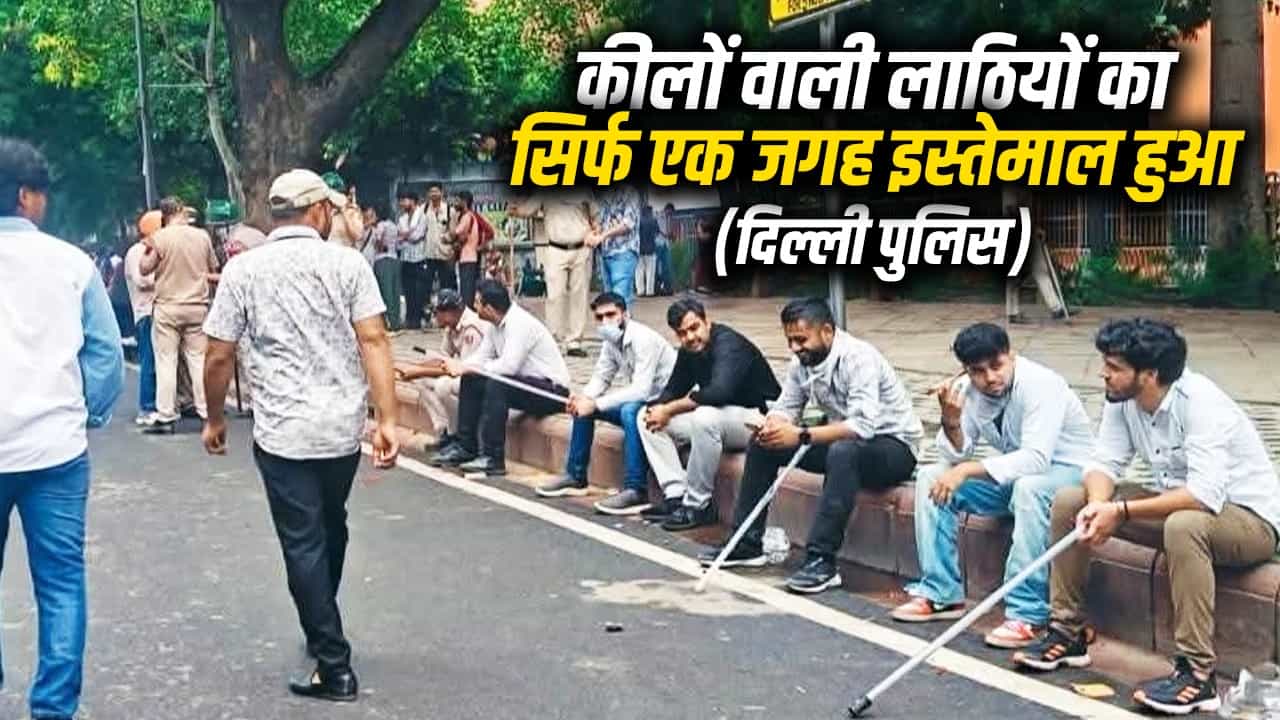
Delhi Police has filed an important and detailed affidavit in the Supreme Court regarding the much-discussed dispute and midnight uproar at Jantar Mantar, the historical protest site of the capital Delhi. The police has clarified its official position on the serious allegations made by the protesters and petitioners, who claimed that during the police action, some unknown and outsiders in civilian clothes had entered the protest site and indulged in violence and misbehavior. In its reply filed in the country’s top court, Delhi Police made it clear that all the persons present in plain clothes on the spot were authorized soldiers and officers of the police department, who were deployed for surveillance and security on the basis of special intelligence input and sensitivity of law and order. After this statement, all those claims have been put to rest in which the protesters were being attacked by outside goons.
On behalf of the petitioners, it was alleged in the Supreme Court that during the ongoing dharna at Jantar Mantar, some people who were not wearing official police uniform arrived late at night and pushed and misbehaved with the protesters, especially the women protesters. The petition demanded a high-level independent investigation by the police to identify these unknown people, register an FIR against them and involve outside elements. Along with this, allegations were also made that some policemen deployed at the protest site were under the influence of alcohol, due to which the entire matter became a topic of discussion at the national level.
Affidavit of Delhi Police in Supreme Court: Clarification given on presence of soldiers in plain clothes and security protocol
Delhi Police clearly stated in its affidavit that Special Staff, Crime Branch and Intelligence Unit personnel in plain clothes are deployed as per the Standard Operating Procedure (SOP) to deal with any kind of emergency situation in the law and order and VIP security area. The police told the court that after heavy rain that night, the protesters were trying to bring a large number of folding beds, waterproof tent material and additional loudspeakers inside the protest site without any prior administrative permission. When the security personnel on duty stopped them at the barricades, the situation became tense and some people tried to jump the barricades.
The police also argued before the court that the responsibility of the soldiers deployed in plain clothes is mainly to identify anti-social elements hiding in the crowd, give prior information of possible violence and control the situation. The police also refuted the allegations in the affidavit which claimed that the policemen were under the influence of alcohol. The police department clarified that immediately after the dispute, medical examination of the concerned officers and soldiers was conducted in the government hospital, in which consumption of any kind of drug or alcohol was not confirmed.
Delhi Police assured the Supreme Court that the right of any citizen to hold democratic and peaceful protests in the capital is fully respected, but bringing heavy structural material without permission or breaking security barricades cannot be allowed in the high-security Lutyens Zone. The police appealed to the court to dismiss the petitioners’ allegations of unlawful use of force by the police force.
The Supreme Court will hear the case further, taking cognizance of the police affidavit and the arguments of the petitioners. This case has become an important precedent not only for the security management of protests at Jantar Mantar but also for the dress code, identification of security forces and the legal scope of plainclothes policing during protests in the country.