 look news india

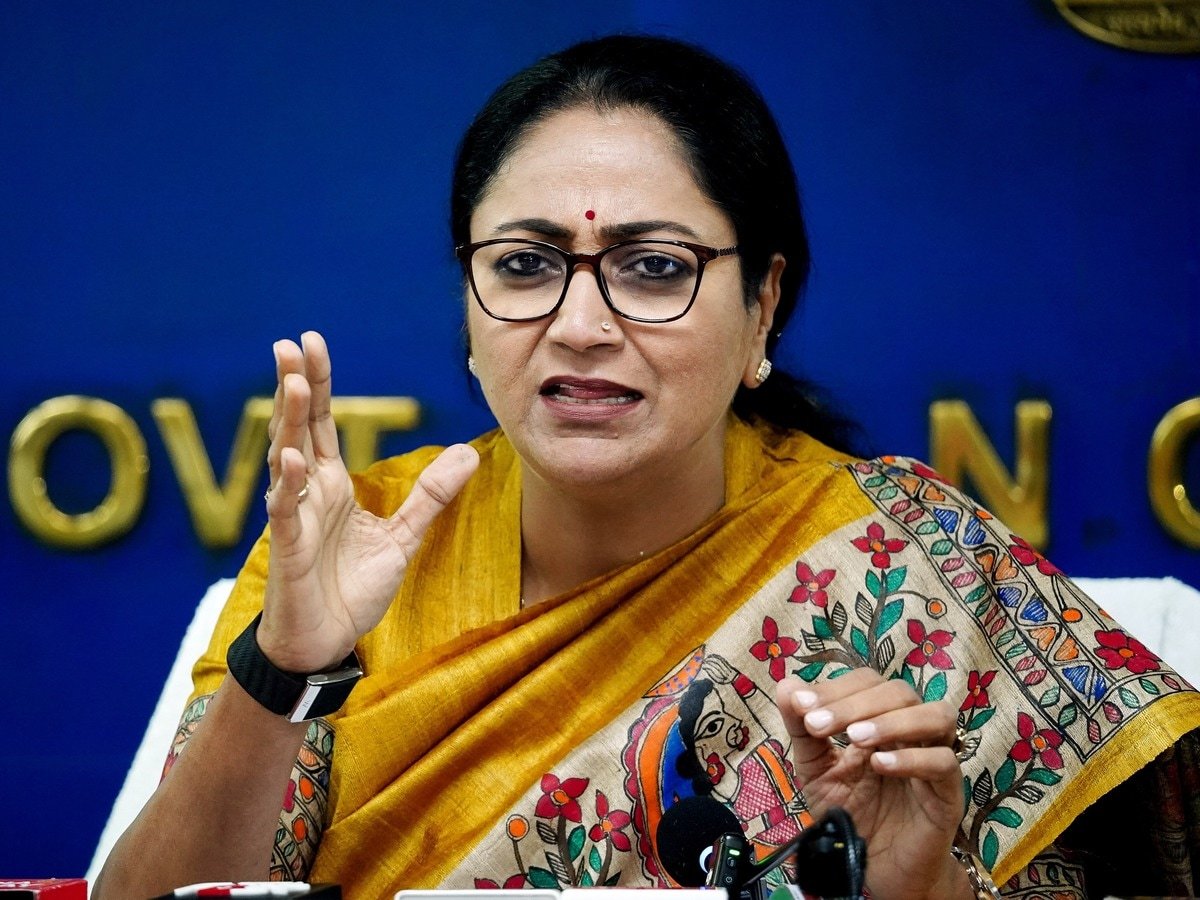
A big and much awaited good news has emerged for ASHA (Accredited Social Health Activist – ASHA) daughters and workers, who are considered to be the strong backbone of primary health services in the country’s capital Delhi. In the important meeting of the Council of Ministers (Cabinet) held under the chairmanship of the Chief Minister in the Delhi Secretariat, the historic proposal to directly double the Fixed Monthly Incentive of Asha workers has been unanimously approved. After this decision, the fixed honorarium received by every registered ASHA worker of Delhi every month will directly increase from Rs 3,000 to Rs 6,000. This step of the government has brought a wave of happiness on the faces of women health workers who have been struggling with low honorarium and rising inflation for a long time. This revised allowance will be applicable with immediate effect to the Asha workers working in all the 11 revenue districts of Delhi, which will result in a direct increase of 100% in the fixed monthly income coming into their bank accounts.
According to the official data of the Department of Health and Family Welfare, Government of Delhi, at present a total of 6,725 Asha workers are actively serving in the urban villages, rehabilitation colonies and JJ clusters of the National Capital Region. The health system in any metro city does not run only within the four walls of big hospitals or dispensaries, but its real foundation rests on the daily visits of these women workers. According to the standards set by the Health Department, on an average an ASHA worker in Delhi is directly involved with about 400 families or a population of about 2,000 citizens. This simply means that the responsibility of providing first aid consultation, care of newborns and government schemes to more than 1.25 crore common citizens of the capital rests on the shoulders of these 6,725 women. The government has clarified that this increase in monthly allowance is not just a financial aid, but an official recognition of the tireless work and dedication of these women guards who knock door to door in the sun, cold and rain 24 hours a day.
The most important nuance of this decision is that this increased honorarium of ₹ 6,000 is only ‘Fixed Monthly Incentive’. The Cabinet has clarified that apart from this, ‘task-based’ (work-based) incentive allowances of various national health programs given to Asha workers will continue as before.
ASHA workers get separate incentives for several specific tasks on a daily basis:
-
Maternal and Child Health (MCH): Fixed incentive amount to be given to pregnant women for timely antenatal registration (ANC), regular checkup and institutional delivery in government hospitals.
-
Infant Immunization Campaign: Allowance for complete vaccination of children aged zero to five years and regular administration of pulse polio drops.
-
National Health Programme: Remuneration for identification of TB patients, monitoring of DOTS drugs, leprosy survey and special campaigns against communicable diseases.
-
Special Duty and Traveling Allowance: There has also been no reduction in the TA/DA allowance received when sent on any special mission or training outside Delhi.
Thus, including the fixed honorarium of ₹6,000 and average work-based allowances of ₹3,000 to ₹4,500, the total monthly earnings of active ASHA workers in Delhi will now be in the range of ₹9,000 to ₹10,500 per month.
During the worst phase of the Corona epidemic, when people were closing the doors of their homes due to fear of infection, the same Asha workers were conducting surveys in the narrow streets of Delhi wearing PPE kits or simple masks without caring for their lives. These women workers fought at the forefront by delivering medicine packets in containment zones, checking oxygen levels with oximeters, monitoring the elderly and motivating lakhs of people to get the Covid vaccine in record time.
Even on normal days, an ASHA worker’s daily routine is extremely hectic and challenging:
-
Door-to-Door Health Visit: To regularly visit 400 houses in their allotted area and take stock of the health and nutritional status of newborns, lactating mothers and adolescent girls.
-
Health and Nutrition Day (VHND): Successfully organizing Health and Nutrition Days in Anganwadi Centers and Local Primary Health Centers (PHC/AAMCs).
-
Participation in institutional delivery: As soon as any pregnant woman starts labor pain, call an ambulance overnight and take her to the hospital and stay with her till the delivery is completed.
-
Health Survey and Record Keeping: Preparing digital health records of the local population and assisting in making ABHA ID.
Till now, the fixed honorarium given to ASHA workers in the national capital Delhi was in a very disappointing condition compared to other major states of the country. While Delhi is the most expensive metropolitan city in the country, the fixed incentive here was only ₹3,000 per month, which was at par with smaller states like Uttarakhand and Odisha.
If we look at the fixed honorarium of Asha workers in other states across the country:
-
Maharashtra and Sikkim: Offering the highest fixed honorarium of around ₹10,000 per month.
-
Kerala and Puducherry: They pay a fixed honorarium of approximately ₹7,000 per month.
-
Haryana and Punjab: They offer packages ranging from ₹6,000 to ₹7,500 including various perks.
-
Uttar Pradesh and Bihar: The central government’s National Health Mission (NHM) works at a base slab of ₹2,000 to ₹3,000.
With the Delhi government increasing it from ₹3,000 to ₹6,000, the capital has now joined the ranks of the select top states in the country that are providing relatively better and respectable basic honorarium to their community health workers.
This increase in honorarium of Asha workers in Delhi has not been a part of any spontaneous process, rather there has been years long struggle and solidarity of these women workers behind it. Under the banner of Delhi Asha Kamgar Union, hundreds of Asha workers had from time to time held large protests outside Jantar Mantar, Lieutenant Governor Secretariat and Delhi Secretariat for their demands.
The main demands of the workers have included not only increasing the honorarium but also several basic labor rights:
-
They should be given the status of formal ‘Government Employees’ instead of ‘Honorary Volunteers’.
-
Their monthly remuneration should be brought at par with the minimum wage of an unskilled or skilled worker in Delhi (which is more than ₹20,000).
-
Legal cover of social security like 6 months paid maternity leave, 20 days casual and medical leave and ESI-PF should be provided.
-
There should be a provision of monthly pension and gratuity of at least ₹ 10,000 for living after retirement.
Although the government has not yet declared them as regular employees, but by doubling the fixed allowance, the government has definitely provided a big interim relief to their long struggle.
If seen from social and economic point of view, this increase in the honorarium of ASHA workers is a direct and practical example of women empowerment. Most of the women working as ASHAs come from lower-middle-class or economically weaker backgrounds, who contribute equally to the maintenance of their families. When a fixed and respectable amount of money reaches their hands regularly, their morale and dedication towards work will increase manifold.
Despite the presence of doctors and nurses in Delhi’s primary health centres, mohalla clinics and urban community health centres, if the ASHA workers who bring patients to hospitals remain dissatisfied, the entire health system could collapse. This fixed allowance of ₹6,000 will now give ASHA workers the opportunity to establish deeper communication with each family in their area instead of being busy in just completing tasks. This will give tremendous strength to the mission of the Delhi Government to bring down the Maternal Mortality Rate (MMR) and Infant Mortality Rate (IMR) to the lowest level in the capital, ensure 100% institutional deliveries and make routine vaccination of children successful.