 look news india

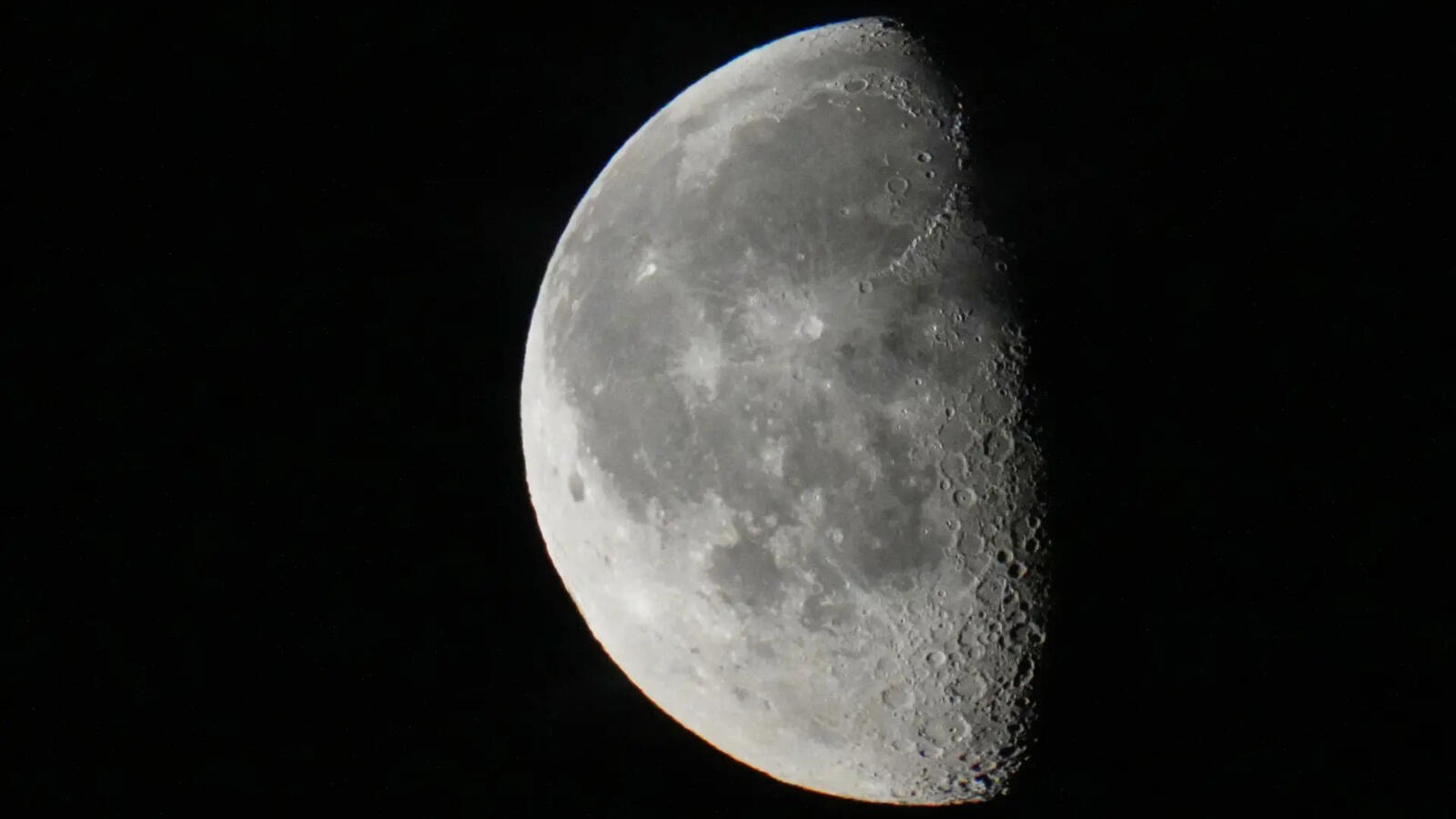
Whenever we see the moon shining in the night sky, a feeling of its beauty and peace comes to our mind, but do you know that during the Cold War, the world’s superpowers hatched a dangerous conspiracy to turn this peaceful satellite into a dreaded nuclear war base? The US Air Force had prepared a secret project under which a powerful nuclear bomb was to be detonated on the surface of the Moon. This secret and sensational plan was named ‘Project A119’, about which the world did not know anything for decades. The main objective of this plan was to give a mental and psychological message to the Soviet Union (USSR) in the Space Race about how powerful and aggressive America is militarily and technologically.
This story takes place in the late 1950s when the Cold War between America and the Soviet Union was at its peak. The Soviet Union created history by successfully launching the world’s first artificial satellite ‘Sputnik 1’ into space on October 4, 1957. This one incident gave sleepless nights to American scientists and Pentagon strategists, because America started fearing that it was lagging behind its biggest enemy in technical matters. To regain its lost prestige and break the psychological dominance of the Soviet Union, the US Air Force thought of doing something that no one had even imagined. The Pentagon thought that if a nuclear bomb was detonated on the Moon, its light and explosion would be clearly visible from the Earth, which would establish America’s fear and supremacy in the entire world.
The official name of ‘Project A119’ was “Study of Lunar Research Flights”, but in reality it was a blueprint for detonating a nuclear weapon on the Moon. To work on this secret project, a special team of scientists was formed under the leadership of famous physicist Leonard Reiffel of the University of Chicago. This team also included Carl Sagan, a veteran of astrophysics and a young scientist at that time, who was entrusted with the responsibility of calculating the spread of clouds of dust and gas arising from a nuclear explosion on the surface of the Moon. Scientists had planned to drop a bomb on the part of the Moon that was shining in the sunlight, so that the people on Earth and Soviet scientists could see that terrible explosion with their open eyes.
After working for a long time on this very dangerous and ambitious project, American officials finally decided to cancel it. There were many big scientific, technical and ethical reasons behind closing this project, the biggest threat of which was the adverse effects it would have on the Earth. Scientists had warned that if due to some technical fault this nuclear missile got lost on the way before reaching the Moon or returned back to Earth, then it could prove to be a great disaster for humanity. In addition, there was a great risk of radioactive fallout spreading on the Moon’s surface, which would forever affect future scientific study of the Moon and space exploration. America was also afraid that if this experiment failed, it would be criticized all over the world and it would have to face heavy moral condemnation.
For decades, the files of ‘Project A119’ remained buried among the most confidential documents of the US military and government and the general public had no knowledge of them. In the early 2000s, when research was being done to write a biography of Carl Sagan, the documents of this secret project became public and the world came to know that mankind had narrowly escaped from a very big threat. After this incident, strict rules were made at the international level to keep space peaceful. In the year 1967, the ‘Outer Space Treaty’ was signed by the United Nations, under which the testing or deployment of any type of nuclear weapon on the Moon and other celestial bodies was completely illegal and banned so that the sanctity and security of the universe is maintained.