 look news india

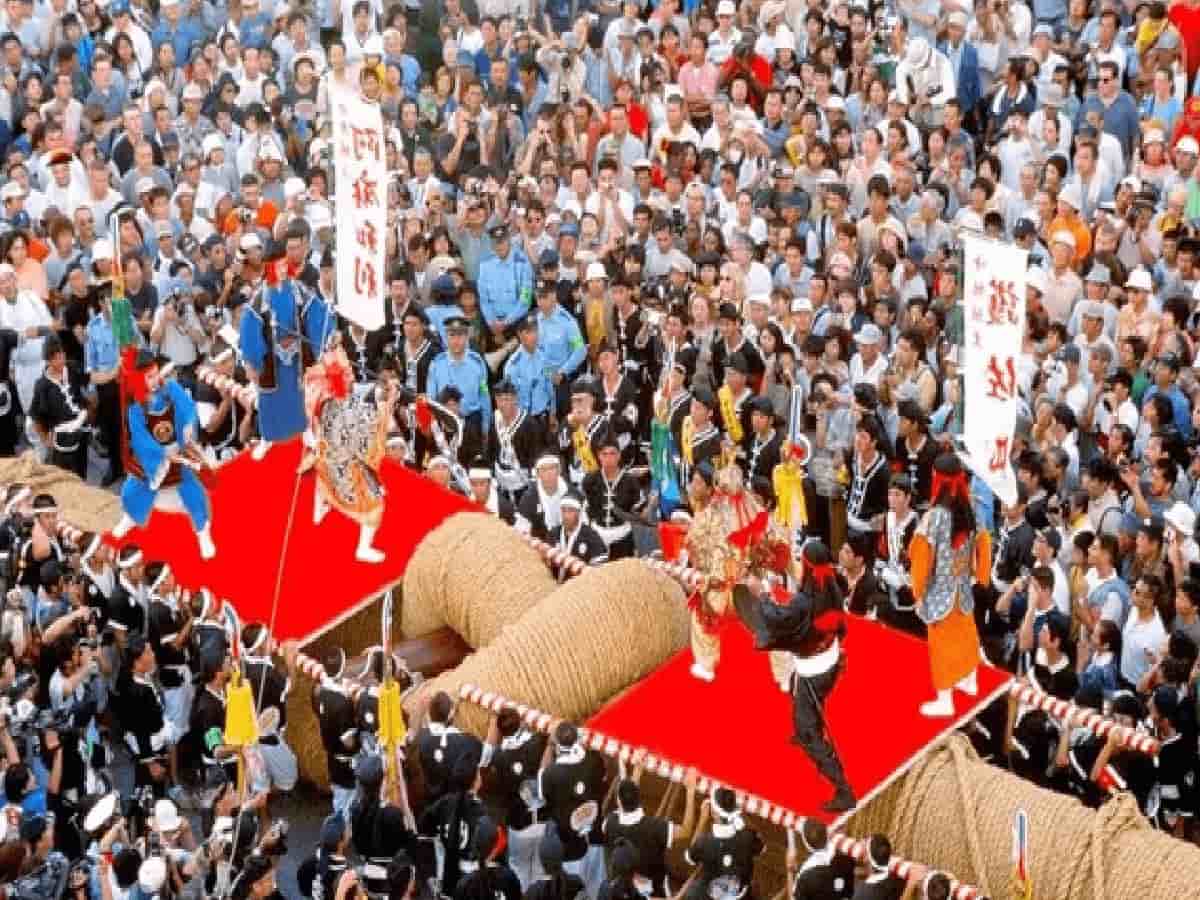
An astonishing and huge cultural spectacle was seen on the streets of Naha, the capital of Okinawa province of Japan, which attracted the attention of the whole world. In this country which cherishes centuries old vibrant culture, the traditional ‘Great Tug-of-War’ (Naha Great Tug-of-War Festival) competition was organized grandly. Thousands of local citizens and foreign tourists took to the streets to participate in this historic contest and try their best. The main attraction of this unique competition was not an ordinary rope, but a rope about 160 meters long and more than 30 tonnes heavy, to pull which the crowd divided into two big groups.
This giant tug-of-war game held in Naha is not just a medium to display strength, but its history is deeply linked to the ancient Ryukyu Kingdom of the 15th century. Since ancient times, through this unique festival, the local community has been praying for good harvest in the coming season, good health, prosperity for all the people of the society and happiness of children in the families. According to tradition, the crowd participating in this great match is divided into two historical teams called ‘East’ and ‘West’. There is such an unprecedented struggle of power, balance and unity between the two sides that is rarely seen anywhere else in the world.
The rules of this historical competition are also very interesting and challenging. According to the rules of tug of war, for any team to be declared the winner, it is mandatory to pull the rope weighing 30 tonnes in its direction for a distance of at least 5 meters. If no team is able to pull the rope to the prescribed distance of 5 meters, then at the end of the 30 minutes time period, the team which has pulled the rope to a greater distance than the opposing camp is declared the winner. This year also the competition between the two teams started with great excitement and enthusiasm. In this tough and exciting fight that lasted for about 10 minutes, both the sides kept trying to overpower each other, but ultimately the match ended in a draw and it was declared a draw. Another special tradition of the competition is that after the tug of war is over, the participants and spectators cut small parts of this sacred rope and take it to their homes, which is considered to bring good luck, safety and happiness throughout the year.
Japan also has a rich military and folk story of these types of tug-of-war events. The name of the famous warrior Shimazu Yoshihiro of Satsuma (which is currently part of Kagoshima Prefecture) is behind the beginning of big events like ‘Sendai Otsunahiki’. According to historical documents, he started this military tradition of pulling huge ropes with the aim of increasing the morale and coordination of his soldiers just before the famous fierce battle of Sekigahara in the year 1600. In the modern era, this has become an unbreakable identity of Japanese culture. This is the reason why the Government of Japan has given this historical event the official status of a very important and protected ‘Intangible Folk Cultural Heritage’ of the country.