 look news india

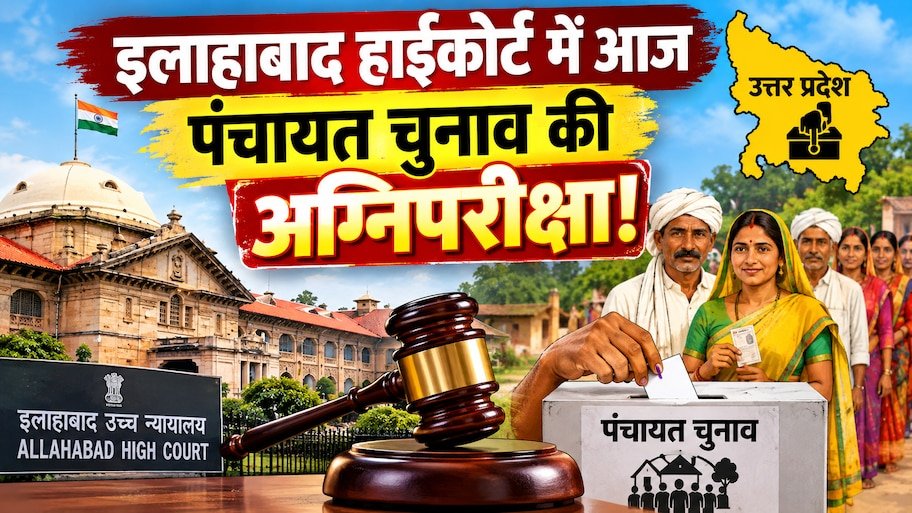
Political and administrative turmoil has intensified in the rural areas of Uttar Pradesh regarding the three-tier Panchayat elections. A very important hearing is going to be held in Allahabad High Court today on the petitions filed regarding timely elections of Gram Pradhan, Area Panchayat (BDC) and District Panchayat members, appointment of administrators and reservation rotation process. The eyes of future candidates, existing village representatives and political parties across the state are fixed on this action of the court. The petitioners argue that under Article 243E of the Indian Constitution, it is a constitutional obligation to conduct elections before the end of the tenure of the Gram Panchayats, while there is uncertainty about the possible dates of the election schedule due to the administrative preparations, delimitation and revision of the voter list by the government and the State Election Commission.
If elections are not held on time after the completion of the 5-year tenure of Panchayat representatives, then under the Panchayati Raj Act, the government appoints Assistant Development Officers (ADO) or administrative officers as administrators. The petitions have sought intervention from the court, terming this ‘administrator’s rule’ as against the basic structure of democracy. It has been said in the petitions that when the command is in the hands of the administrators, the development work of the villages comes to a halt and the rights of the elected representatives of the people go to the bureaucracy. A heated debate is expected in the court today on whether the government should be given a binding direction to issue the notification within a specific time frame or the interim administrative arrangement should be allowed to continue for some more time in view of the current circumstances.
Along with the determination of dates in UP Panchayat elections, the biggest legal and administrative problem is the reservation formula of seats. For the reservation of Other Backward Classes (OBC), the reservation of wards and gram panchayats is to be decided afresh on the basis of ‘Triple Test’ and Rapid Survey data made mandatory by the Supreme Court. Apart from this, there has been a change in the number of seats due to many Gram Panchayats joining urban local bodies (Municipal Corporation or Municipality) after delimitation. Only if the court agrees to a clear timetable for the reservation process or revision of the voter list will the State Election Commission be able to issue the official notification for the election.
Uttar Pradesh State Election Commission is already engaged in the process of revision of voter list, printing of ballot papers and physical verification of polling stations. The Commission’s stand is clear that as soon as the final list of reservations is submitted by the government and the green signal is received from the court, voting can be conducted in four to five phases within a process of 30 to 45 days. After the possible order of the High Court, it will become clear whether the electoral battle cry of democracy will ring in the villages of UP immediately or the candidates and voters will have to wait for a few more weeks for the new dates.