 look news india

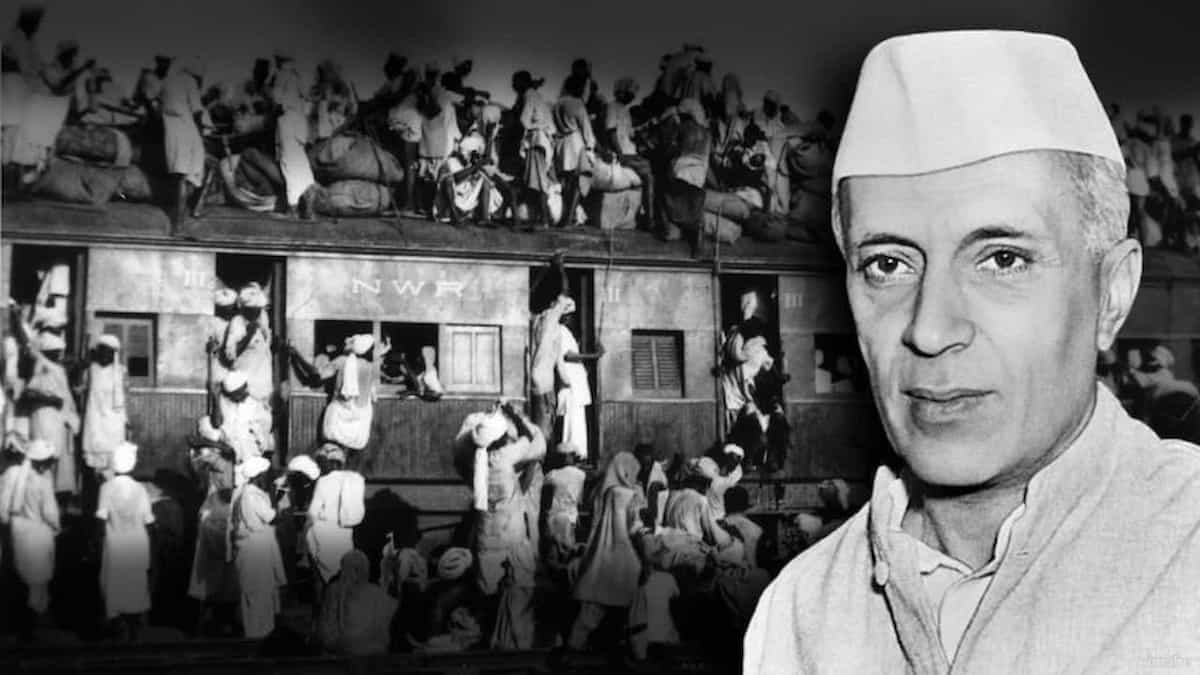
Whenever the pages of the history of the Indian subcontinent are turned, the wounds of partition and border disputes always remain in the headlines. Recently, once again the discussion has intensified in the political and strategic circles that if India had taken a different stand regarding Balochistan in 1947, would the picture have been different today? Would Balochistan have been a part of India today and Pakistan would have been forced to remain within its geographical boundaries? This debate between experts and historians has redefined the entire narrative of ‘Gwadar Port’ and ‘India-Pakistan relations’.
Balochistan and the geopolitical chessboard of 1947
The issue of Baluchistan was quite complex during 1947. At that time, Khan of Balochistan had expressed his desire for an independent existence separate from India and Pakistan. Strategists believe that if the Indian leadership of that time had shown more proactivity regarding the merger of Balochistan with India, the situation could have been very different today. The geographical position of Balochistan places it at the mouth of the Arabian Sea, which is extremely important from the security and trade point of view. Experts say that if Balochistan was with India, the tricolor would have been flying at Gwadar port today, which would have increased India’s maritime power and economic reach manifold.
Why is Balochistan a pain for Pakistan?
The way Pakistan is struggling today with allegations of internal rebellion and human rights violations in Balochistan, historians see it as a link to this historical mistake. For Pakistan, Balochistan is not only a province but also its strategic weakness. The people of Balochistan have been demanding their freedom and rights for a long time. If Balochistan had merged with India, India’s borders would have directly connected with Iran and Afghanistan, which would have changed the entire geopolitics of South Asia and Pakistan’s influence would have been quite limited.
Gwadar Port and strategic importance
Today Gwadar Port is the hub of the China-Pakistan Economic Corridor (CPEC) and is considered a part of China’s ‘String of Pearls’ strategy. Indian strategic experts argue that if this region belonged to India, India’s influence in the Indian Ocean region would be completely undisputed. This would not only secure India’s trade routes, but also make India’s ‘Blue Water Navy’ position in the Arabian Sea even more aggressive and strong. The existence of Balochistan is no less than a game-changer for India.
Questions arising on the pages of history
This debate has often been raised on the decisions of the Nehru era as to under what circumstances India did not stake its claim on Balochistan at that time. However, at that time India’s entire focus was on the horrors of partition, preventing communal riots and unification of the princely states. Despite this, today when Pakistan continuously tries to interfere in the internal affairs of India, the question arises again and again whether India’s ‘courage’ at that time on the issue of Balochistan would have been enough to keep Pakistan in its place? This question still remains a diplomatic puzzle, which can only be confirmed by future historians.