 look news india

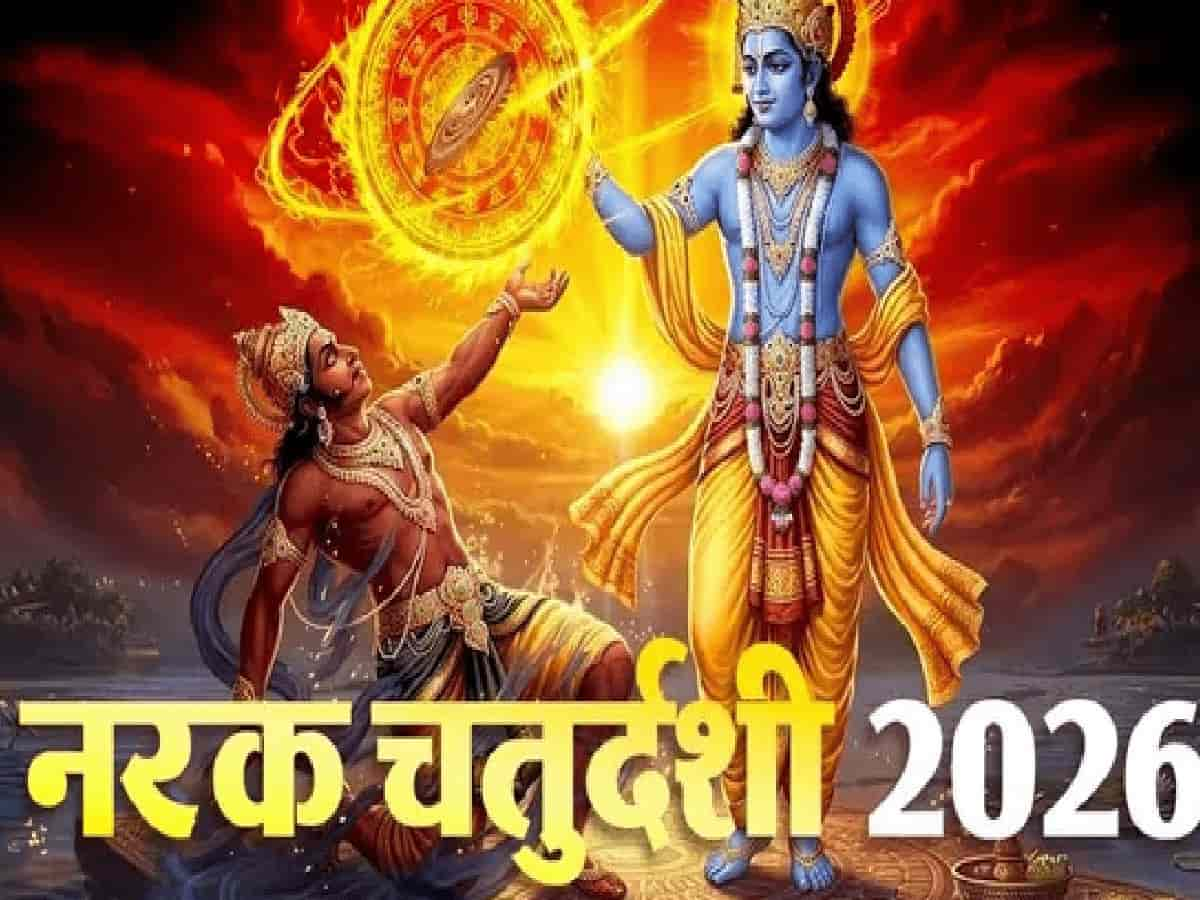
In Hindu religion, the five-day festival of Deepotsav has special spiritual and cultural significance. This great festival has started with the holy festival of Dhanteras and now the devotees are busy preparing for the very important festival ‘Narak Chaturdashi’ to be celebrated on the second day. This holy date is also known with reverence by the names of Chhoti Diwali, Roop Chaudas and Yam Chaturdashi among the people. Usually this festival comes just a day before the main Diwali, but this year due to mathematics and variations in the dates, there was confusion in the minds of the devotees regarding its exact date. According to the precise calculations of the Panchang, the Chaturdashi date of Krishna Paksha of Kartik month is starting from 10.47 am on Saturday, 7 November 2026, which will remain in effect till 11.27 am the next day on 8 November.
According to the rules of Vedic astrology and religious scriptures, in the festival where bathing during moonrise and sunrise is the main ritual, the coordination of Udaya Tithi and Purvaviddha Chaturdashi is given priority. On this basis, the main festival of Narak Chaturdashi is being celebrated formally on 7th November 2026. It is mentioned in the scriptures that the devotees who wake up in Brahma Muhurta on the day of Narak Chaturdashi and take Abhyanga bath with medicinal decoction and sesame oil, get freedom forever from the fear of untimely death and hell. Along with this, worship and donation done with true heart on this day helps in destroying the accumulated sins and positive energy starts flowing in life.
Bathing on the day of Narak Chaturdashi is not just a normal daily ritual but is considered a sacred physical ritual. According to religious scriptures, the bath taken at the time of moonrise on Chaturdashi Tithi by massaging with sesame oil and applying medicinal decoction is called ‘Abhyanga Snan’. According to almanac calculations, the best and auspicious time for taking Abhyanga bath on 7th November will start from 5.41 am in the morning and will last till 6.38 am. In this way, the devotees are getting a total of 57 minutes of auspicious time period for this holy bath. On this day, the time of moonrise is also recorded at 5.41 am, which further confirms the correctness of this Muhurta.
Both the scientific and spiritual dimensions of Abhyanga bath are extremely important. There is a mythological belief that on this auspicious day, Goddess Lakshmi resides in sesame oil and Gangaji resides in all types of water. Therefore, applying sesame oil and medicinal paste on the body before sunrise makes the skin glow, provides protection from seasonal infections and brings amazing beauty to the body, due to which it is called ‘Roop Chaudas’. There is also a tradition of putting Apamarg (Chirchita) leaves in bathing water and passing it over the head thrice and letting it flow, which destroys negative powers and mental troubles. Wearing pure, clean and new clothes after taking bath is considered very auspicious.
The day of Narak Chaturdashi is dedicated to both spiritual purification and external cleanliness. There is a special rule of waking up in Brahma Muhurta on this day; Sleeping till after sunrise is prohibited in the scriptures on this day. After waking up early in the morning, one should first take oil massage and abhyanga bath, after which water is offered to Lord Sun and new or clean washed clothes are worn. To prevent the entry of negative energy into the house, every corner of the house is cleaned and the environment is made pure by removing old, unused items.
In the evening, the tradition of lighting earthen lamps at the doorstep of the house and in temples is followed. On this day, one should avoid any kind of dispute, harsh words or anger at home. Instead, all the family members should spend time together in cleanliness, lighting lamps and meditating before the deities. Remembering Lord Shri Krishna, Mother Lakshmi and the trouble-shooter Hanuman ji in the evening is considered especially beneficial, because on this day Lord Shri Krishna had saved Narakasura and reestablished religion.
There is a classical tradition of performing the main puja of Narak Chaturdashi in the evening i.e. twilight. For this, purify the north-east corner of the house or the regular place of worship by sprinkling Ganga water. Create a beautiful and auspicious Swastika with ground rice or wheat flour on the ground of the place of worship. After this, set up a clean wooden stool and spread a pure red colored cloth on it. Install the idol or picture of Goddess Lakshmi, the first revered Lord Shri Ganesha, Sankatmochan Hanuman ji and Lord Shri Krishna with devotion at this post.
Light a main lamp of pure cow’s ghee on the right side of the chowki and offer roli, sandalwood, akshat and flowers to all the deities. After this, add mustard oil to 14 earthen lamps and light them, decorate them in front of the post and light them. These 14 lamps are considered symbols of 14 Yamdoots and fourteen Manvantars. Sprinkle water on all these lamps thrice from a water vessel and ache them and after washing hands for the fourth time, offer incense, lamp, naivedya, seasonal sweets and especially jaggery and roasted gram to the Lord.
At the conclusion of the puja, these 14 lamps are placed at the main places of the house like Tulsi square, kitchen, water place, main door and terrace. After this, at the end, a four-faced big earthen lamp is filled with mustard oil and lit, which is dedicated to Dharmaraj Yamraj, the god of death. This lamp is kept at a safe place outside the main door facing the south direction of the house. By donating this Yama lamp, the fear of untimely death of any member of the family is removed forever and the entire family is blessed with longevity and health.