 look news india

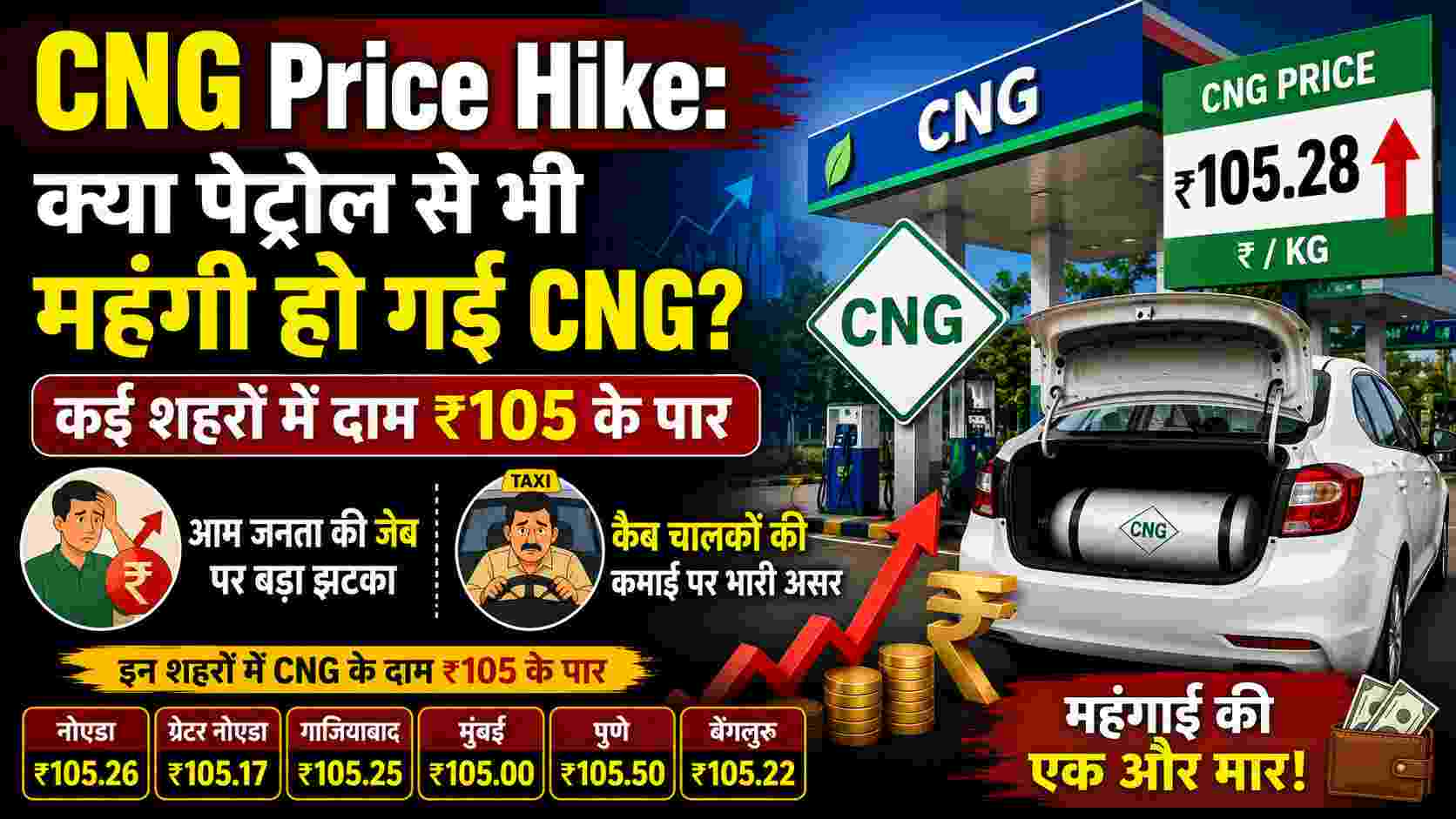
Compressed Natural Gas (CNG) prices are touching the figure of ₹100 to ₹105 per kg in many major cities of the country and have even crossed it in some areas. CNG, once considered the cheapest and most economical option for middle class and commercial drivers, is now giving direct competition to petrol prices. Those people who had spent lakhs of rupees to get CNG kits installed or bought CNG vehicles to avoid the huge expense of petrol, are now finding themselves in a state of confusion.
Why the continuous rise in CNG prices? Know the complete mathematics
This historic increase in retail prices of natural gas is mainly due to fluctuations in gas prices in the international market and changes in policies at the domestic level. India imports a major part of its total natural gas requirement. When the prices of LNG and crude oil change at the international level, it directly impacts the costs of local gas distribution companies.
Apart from this, the quota of domestic APM (Administered Price Mechanism) gas given by the government has been reduced and the City Gas Distribution (CGD) companies are having to depend on expensive imported gas. As a result, gas distribution companies have passed the entire burden of increased input costs directly onto the pockets of end consumers.
Petrol vs CNG: Is there still scope for savings?
If seen comparatively, the current prices of petrol remain between ₹94 to ₹106 per liter in most of the states of the country. Whereas in many states and far-flung districts, CNG is being sold at the level of ₹ 95 to ₹ 105 per kg.
On paper, the mileage of CNG is a few kilometers per kilogram more than that of petrol, but when the difference in the retail prices of both almost ends, the total savings of the vehicle owner remains negligible. After adding in the routine maintenance of CNG kit, lack of boot space (dicky), cost of hydro testing and hours of time spent in long queues to fill gas, the deal no longer looks as profitable as it used to be.
Direct attack on livelihood of auto and cab drivers
The most severe impact of this price hike has been on app-based taxis like Ola, Uber, auto-rickshaw drivers and small goods vehicle owners. Drivers who make a living by driving cabs in metros say that about 50 to 60 percent of their daily earnings are spent only on filling fuel.
On the other hand, fares and passenger fares of aggregator companies have not increased in that proportion. Due to this, the daily profit of drivers has reduced to half. Transport unions in many cities have also warned of starting protests demanding increase in fares or reduction in fuel tax.
Double whammy of VAT and tax: Fuel outside the scope of GST
Tax structure is also a major reason for the high prices of CNG. Like petrol and diesel, CNG has also not yet been brought under the purview of Goods and Services Tax (GST). Due to this, both the excise duty of the central government and the value added tax (VAT) imposed by different states together make its final price very high.
For example, in Delhi-NCR, where VAT rates are relatively balanced, CNG ranges from around ₹80-₹84 per kg, but in many cities of Uttar Pradesh, Maharashtra, Madhya Pradesh and Rajasthan, the rate goes up to ₹95-₹105 per kg after adding VAT and additional transportation logistics. This wide variation in prices between states directly reflects provincial tax policies.
What do automobile and energy experts say?
Analysts in the automobile sector believe that if CNG prices do not stabilize, there could be a huge decline in the sales of CNG vehicles. In the last three years, many car manufacturers had bet big on factory-fitted CNG vehicles by discontinuing diesel models.
Now if the customer does not see a significant difference in the operating expenses of petrol and CNG, then they will turn to petrol hybrids or directly to electric vehicles (EV) instead of CNG. However, the EV charging infrastructure in the country is still under development, posing a major challenge to the common consumer in terms of affordable travel.
Way forward: Is there hope for relief from the government?
The eyes of the public are now fixed on the central and state governments. Energy experts suggest that CNG should be immediately brought under the ambit of GST, so that a uniform and rational tax system can be implemented across the country. Also, city gas distribution network should be given higher priority in domestic gas allocation and subsidy or tax exemption should be given, so that public transport and middle class can be protected from this double shock of inflation.