 look news india

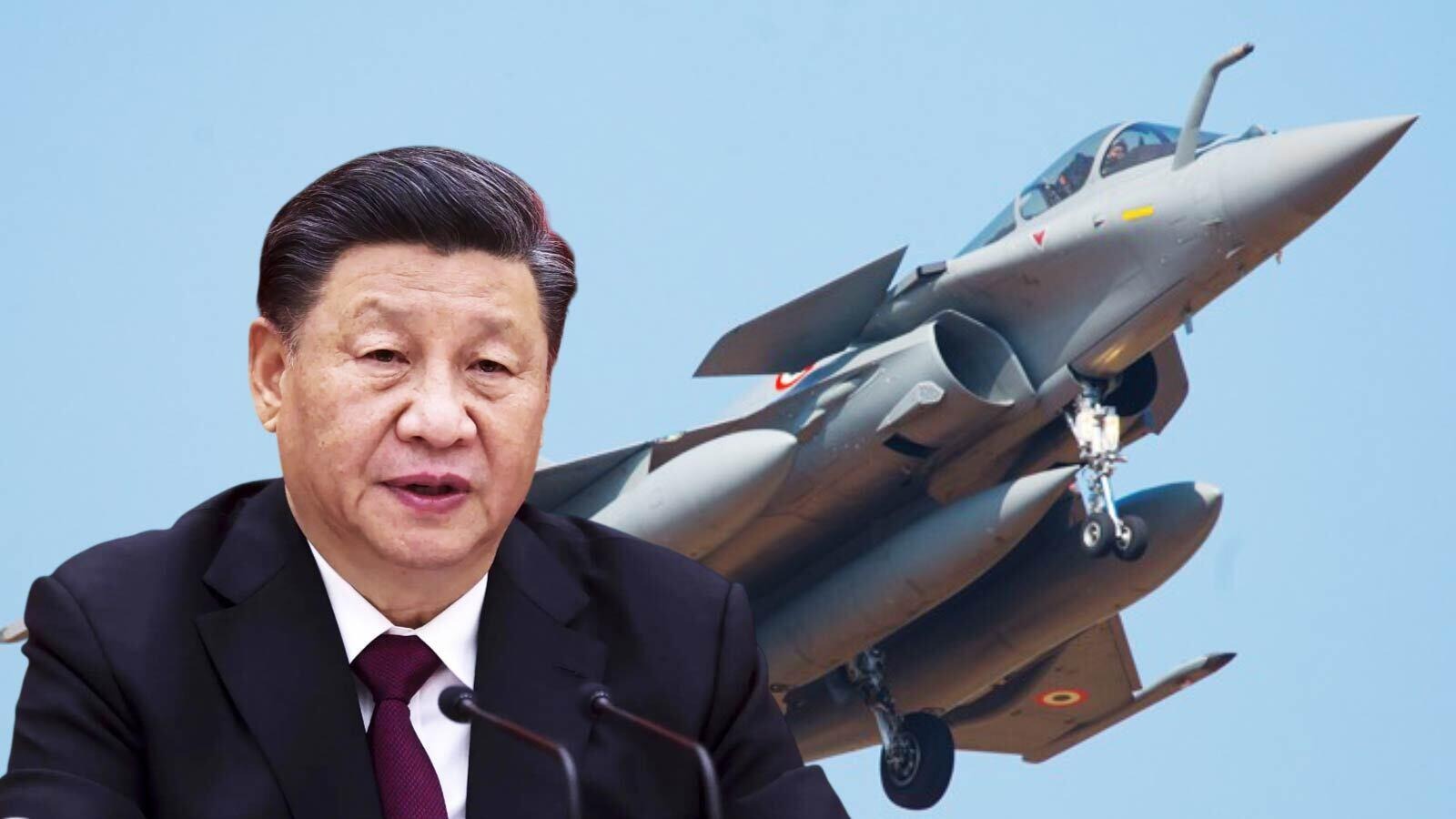
There is a stir in the global defense corridors as the two giants face each other for the first time in the skies over Egypt. China’s People’s Liberation Army Air Force (PLAF) had sent its most lethal and modern Shenyang J-16 strike fighter jets to the African country Egypt. The Egyptian Air Force has Rafale fighter planes of French origin, which are counted among the most dangerous 4.5 generation aircraft in the world. During this joint military exercise named ‘Eagles of Civilization’, when dogfight i.e. close combat was practiced between Chinese J-16 and Rafale aircraft, according to reports, Chinese pilots also internally considered Rafale’s agility and close-combat agility as better than their aircraft. This development has greatly increased the concerns of Dragon strategists and President Xi Jinping, because the Indian Air Force also has the strength of Rafale and China is constantly trying to assess how long its fleet will be able to survive in the Indian sky.
Historic clash between Dragon and Rafale lands in Egypt’s sky
The main objective of this joint exercise going on on Egyptian soil was to establish coordination between the air forces of the two countries, but the eyes of defense analysts were fixed on why China took its J-16 aircraft so far, covering a distance of more than six thousand kilometers. When China’s heavy and electronically equipped J-16 fighter jet came face to face with Egypt’s Rafale, a war-like situation was created in the sky. Rafale is known for its excellent payload capacity, Meteor missiles and amazing ability to strike beyond visual range. During the exercise, pilots from both the countries tried many tough maneuvers of medium and close range air combat. For the first time, Chinese pilots experienced the combat capabilities of this aircraft based on Western technology very closely. Although the Chinese media and defense circles have been touting the J-16’s long range and heavy weapons, the Rafale’s agility and turn radius during close-combat and dogfights have left Chinese pilots wondering how dangerous the French aircraft could prove to be in real combat.
India’s increasing strategic strength and Jinping’s increased tension
The strategic position of India and its Air Force is indirectly linked to the center of this entire incident. The Indian Air Force is already using Rafale aircraft and plans are underway to further increase their number in the coming times. Apart from this, countries like Pakistan are also close to Chinese technology and are continuously turning to Chinese jets, in such a situation, China wanted to understand at all costs how effective its J-16 is compared to Rafale’s electronic jamming, radar signature and dogfight skills. This exercise with Egypt has also given Beijing sleepless nights because during the simulated combat it became clear that Rafale’s ability to maneuver and take the lead in dogfight is unique. The Chinese military leadership, which had been trying to prove its airpower superior to Western countries for a long time, has now realized that its aircraft deployed near the Indian border need more technological improvements to overcome forces like Rafale.
Strategic conclusions and outline of future air warfare
This exercise was not just a meeting of the armies of two countries, but it was a glimpse of future air conflicts that will be fought on modern technology and accurate data. Chinese aircraft may have demonstrated their refueling and long-range strike capability, but the acceptance of Rafale’s agility at the level of pilots is proof that dominance of the skies cannot be achieved with heavy weapons alone. For air supremacy, the agility of the aircraft, skill of the pilot and accuracy of the combat system are most important. This exercise is very important from India’s strategic point of view because it has become clear that Rafale is still one of the deadliest aircraft in its segment, due to which Dragon’s uneasiness is going to increase further in the coming days.