 look news india

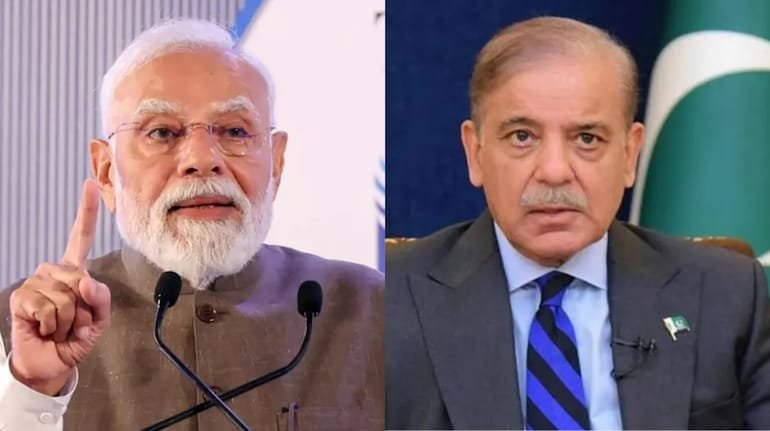
India’s two neighboring countries—China and Pakistan—have once again come face to face with a new conspiracy to attack Indian sovereignty and territorial integrity. In Islamabad, top officials of the foreign ministries of Pakistan and China met in the so-called ‘Pakistan-China Boundary Joint Commission’ formally launched and held its first inaugural meeting.
The meeting was co-chaired by Li Ya, Deputy Director General of Border and Ocean Affairs of the Ministry of Foreign Affairs of China and Bilal Mahmood Chaudhry, Director General (China) of the Ministry of Foreign Affairs of Pakistan. Describing it as a ‘historic milestone’ of bilateral relations, Pakistan claimed that this commission will work on border management, joint border surveys, cross-border trade and strengthening connectivity between the two countries. But as soon as the news of this commission became public, the Government of India immediately intervened and rejected it outright and termed it ‘completely illegal and baseless’.
Randhir Jaiswal, the official spokesperson of the Ministry of External Affairs (MEA), issued a very strongly worded statement clarifying India’s stand on this so-called Joint Commission. India made it clear that this commission has no legal or international justification.
Key points of the Ministry of External Affairs:
-
No shared limits: India’s position is clear and firm that no international border exists between Pakistan and China. The area that falls between the two countries geographically and legally is Jammu-Kashmir and Ladakh, an integral part of India.
-
Pakistan has no locus standi: Pakistan has no legal right over the Indian territory which it has forcibly and illegally occupied (PoK and Gilgit-Baltistan) since 1947-48. When that land does not belong to Pakistan, then it cannot form any agreement or commission on it with any third country.
-
Stop the gimmick of illegal occupation and vacate PoK: The Foreign Ministry gave a direct warning to Pakistan and said, “Instead of indulging in such theatrics, Pakistan should immediately vacate the Indian territories under its illegal and forcible occupation.”
-
No impact on sovereignty: Any so-called border cooperation between China and Pakistan on illegally occupied Indian territories is neither acceptable to India nor will it make the slightest difference to India’s sovereignty over these territories.
The root of this entire controversy is related to a 63 year old illegal agreement. Right after the India-China war in 1962, Pakistan adopted the so-called ‘China-Pakistan Border Agreement’ (Sino-Pakistan Agreement 1963) Had done.
Under this agreement:
-
Pakistan located in the Gilgit-Baltistan region of Pakistan occupied Kashmir (PoK). Shaksgam Valley About 5,180 square kilometers of strategic Indian land was illegally handed over to China as a ‘gift’.
-
Even at that time, India had strongly opposed this agreement at the United Nations (UN) and international forums and termed it illegal.
-
Article 6 of the agreement itself stated that whenever there is a final settlement of the Kashmir dispute, the boundary will be redrawn afresh with the sovereign country. Despite this, China and Pakistan have been continuously adopting construction work and border management tactics under the guise of this illegal agreement.
The legal and strategic dimensions of this disputed area can be understood through the following table:
| aspect of dispute | China-Pakistan’s claim/action | Constitutional and legal status of India |
| geographical location | PoK and Gilgit-Baltistan are considered as common border. | No border between Pakistan and China; This is Ladakh/Kashmir of India |
| 1963 agreement | Both countries considered the basis of demarcation | India never recognized it; This is completely ‘illegal and void’ |
| Shaksgam Valley (5,180 sq km) | China considers it as its sovereign territory | Indian territory, which Pakistan illegally handed over to China |
| new boundary commission | Formed for border survey, trade and connectivity | A failed attempt to legalize the occupation; completely unacceptable |
| CPEC Infrastructure | Karakoram Highway and Economic Corridor Construction | blatant violation of Indian sovereignty; India has been continuously registering protests |
According to defense experts and diplomatic analysts, the deep strategic and tactical interests of China and Pakistan are hidden behind activating the ‘Joint Boundary Commission’ at this time:
-
1. Attempt to get ‘global recognition’ of illegal occupation: Both countries are trying to show the world through joint commissions and formal meetings that there is a legitimate international border between them. By doing this they want to present illegal occupation as a ‘permanent status quo’ (Legitimise Illegal Occupation) in front of the United Nations and the global community.
-
2. Security of CPEC and Karakoram Highway: The $62 billion ‘China-Pakistan Economic Corridor’ (CPEC) passes directly through Gilgit-Baltistan and PoK. China is extremely nervous after the recent suicide attacks on Chinese engineers in Balochistan and Khyber Pakhtunkhwa. It wants to give official cover to the presence of its People’s Liberation Army (PLA) and Chinese security agencies in the region in the name of border management and joint patrolling.
-
3. Chinese Military Buildup in Shaksgam Valley: Recently, satellite images revealed that China is building new paved roads, helipads and military posts very close to the Siachen Glacier in Shaksgam Valley. Through this Boundary Commission, China wants to give legal status to this construction work.
-
4. Joint mechanism of ‘two-front war’ against India: The joint coordination between China and Pakistan at the western end of the Karakoram Pass amid the ongoing military tension along the Line of Actual Control (LAC) in eastern Ladakh is a deliberate conspiracy to increase the two-front threat to the Indian security apparatus.
The severity with which the Indian government has responded to this matter is indicative of New Delhi’s changing and aggressive foreign policy. After the removal of Article 370 from Jammu and Kashmir on 5 August 2019 and making Ladakh a Union Territory, India has reiterated the resolution passed in both the Houses of Parliament that the entire PoK and Aksai Chin are an inalienable part of India.
India has clearly indicated that no matter how many commissions Beijing and Islamabad form or make paper agreements, the reality of ground and international law will not change. India will not only continue to oppose any expansion of CPEC, but will also consider any third party interference in Gilgit-Baltistan and PoK as a direct attack on its sovereignty. India’s clear message is that China, which talks about peace on the border, will first have to learn to respect India’s sensitivities and territorial boundaries.