 look news india

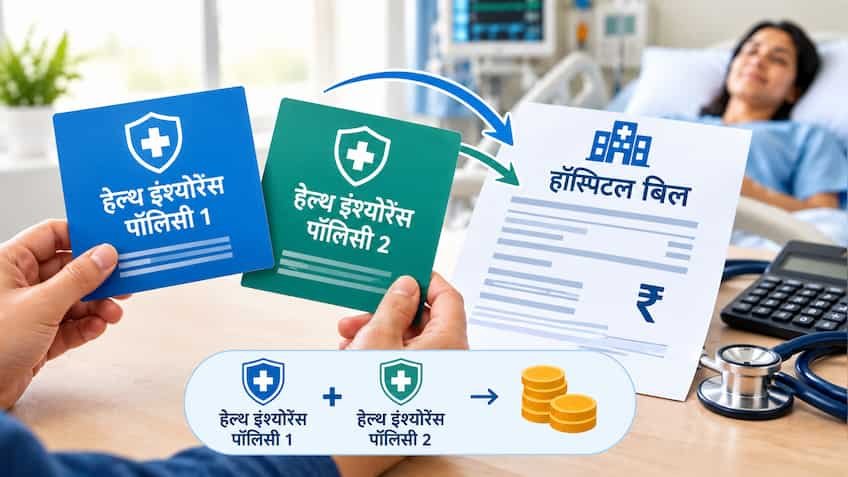
Sometimes the cost of treatment after hospitalization becomes so high that the sum insured of a single health insurance policy falls short. Many working people also have a personal or family floater health plan in addition to the group health insurance policy provided by their employer. In such a situation, this question comes up again and again whether a claim can be taken from two different health insurance policies for the same hospital bill?
The simple and clear answer to this is-Yes, you can take full advantage of two different health insurance policies for a single medical bill. As per the rules of Insurance Regulatory and Development Authority of India (IRDAI), any insured person has the legal right to use more than one policy to cover his actual medical expenses.
The basic principle of insurance ‘Principle of Indemnity’ applies while taking claims under multiple health insurance policies. The basic idea of this rule is that health insurance is meant to compensate for losses, not to make profits.
-
Actual spending limit: You can claim only that much amount from both the companies combined as is the actual bill of the hospital. For example, if the total hospital bill is ₹6 lakh, you can only recover a maximum of ₹6 lakh from both the policies combined, not a single rupee more than that.
-
Freedom to choose policy: Under IRDAI rules, the policyholder has complete freedom to choose which insurance company (primary insurer) he wants to settle for the first claim. No insurance company can force you to go to another company first.
To get payment of the same bill from two different policies, it is mandatory to follow a systematic procedure:
-
Selection of Primary Insurer: First of all decide to which insurance company to send the first claim. It is generally wise to go for corporate (group) health insurance first, so that the ‘No Claim Bonus’ (NCB) of your personal policy is protected.
-
Cashless or Reimbursement Claim: Get the claim settled through cashless facility or bill reimbursement from the first company. Suppose out of the total bill of ₹8 lakh, the first company passed ₹5 lakh based on its policy limit or sub-limit.
-
Get Claim Settlement Summary: After the claim is settled from the first company, ask for a formal ‘Claim Settlement Summary’ and ‘Attested/Certified Copies of the Original Hospital Bills’.
-
File a balance claim with another company: Now submit the reimbursement form, settlement summary of the first company, hospital discharge summary and attested bill for the remaining ₹3 lakh to the second insurance company. The second company will verify the documents and pay the remaining amount directly into your bank account.
If you have a normal mediclaim (indemnity plan) as well as any Fixed-benefit policy (like Critical Illness Cover or Personal Accidental Cover), the terms become even more beneficial:
-
In Critical Illness Policy, the entire sum insured of the policy is paid in lump sum as soon as the illness is diagnosed.
-
For example, if the bill for cancer or heart attack treatment is ₹10 lakh and your normal mediclaim covers the entire bill, your critical illness policy will still provide you with a separate full insurance cover (say ₹15 lakh). Bill deduction or hospital expenses are not taken into account in this.
There are some important precautions to be taken while claiming a dual policy so that your claim is not rejected:
-
Provide advance information: While taking a new policy, please enter the details of your existing old policies in the proposal form. Hiding information can cause problems at the time of claim.
-
Check Deductibles and Co-payments: Read the co-pay, room rent capping and deductible clauses of both policies carefully to keep out-of-pocket expenses minimal.
-
Adherence to deadlines: As soon as you receive the settlement summary from the first company, file the balance claim without any delay within the stipulated timeframe of the second company (usually 15 to 30 days).