 look news india

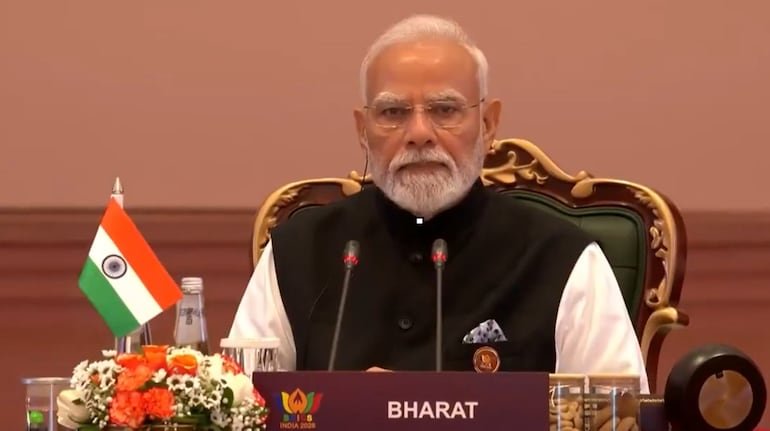
The historic ‘New Delhi Declaration’ has been officially issued with the full consent of all the member countries at the conclusion of the 18th BRICS Summit (BRICS Summit 2026) held in the national capital New Delhi. In this multilateral great brainstorming held under the chairmanship of India, the major emerging superpowers of the world have shown unprecedented unity on the issue of terrorism. In the New Delhi declaration, the BRICS leaders have condemned in the strongest terms the barbaric terrorist attack targeting innocent civilians and security personnel in Pahalgam, Jammu and Kashmir. Member countries have clearly underlined that terrorist acts in any form or purpose cannot be justified under any circumstances. This is being considered a major strategic and moral victory for India on the platform of global diplomacy against cross-border terrorism and the forces that provide safe haven to terrorists.
In the detailed declaration issued after the summit, special mention was made of the terrorist attack in Pahalgam, Jammu and Kashmir, expressing deep grief and condolences. The BRICS leaders expressed solidarity with the victims of the attack and their families and prayed for the speedy recovery of the injured. The joint statement made it clear that terrorism is the biggest enemy of humanity and to combat it, the international community will have to completely abandon double standards. The manifesto, without naming anyone, gave a strong message that it is essential to hold those forces responsible for terror financing, training and protection of safe havens at the global level.
This manifesto, prepared under the leadership of Prime Minister Narendra Modi, reiterated the common commitment of ‘Zero Tolerance’ for the complete end of terrorism. Consensus was reached on key points in the document:
-
Condemn all forms of terrorism: The declaration said that terrorism, whether inspired by ideology, religion or geography, is unforgivable and a gross violation of international law.
-
Hard hit on financial networks: A call was made to implement international standards of Financial Action Task Force (FATF) in letter and spirit and completely dismantle terrorist funding through illegal hawala network, cryptocurrency and money laundering.
-
Preventing misuse of digital platforms and new technologies: It was agreed to further strengthen technical and intelligence cooperation among BRICS countries to prevent terrorist recruitment, spread of radicalization and arms smuggling through the Internet, encrypted messaging apps, social media and drones.
-
Demand to finalize CCIT soon: India’s demand to pass the long pending ‘Comprehensive Convention on International Terrorism’ (CCIT) in the United Nations without any delay was again raised prominently.
Diplomatic analysts believe that the inclusion of clear and direct condemnation of the Pahalgam attack in the New Delhi declaration is a proof of India’s effective diplomacy. All major members like Russia, China, Brazil, South Africa, Iran, Egypt, Ethiopia and UAE have unanimously endorsed India’s security concerns. The signing of this document by Chinese President Xi Jinping and other leaders proves that when it comes to terrorism, it has become the compulsion and responsibility of every country to support India’s tough stance on global forums, despite regional political differences. Due to this, Pakistan, a country which is plotting terrorism from across the border, has once again suffered a huge diplomatic blow in the international community.
Apart from the common fight against terrorism, the ‘New Delhi Declaration’ also laid special emphasis on democratization of the global governance system. BRICS leaders advocated comprehensive structural reforms in the United Nations Security Council (UNSC), the International Monetary Fund (IMF) and the World Trade Organization (WTO). The member countries once again reiterated that developing countries like India and Brazil should get permanent membership in the Security Council, so that the realities of the 21st century can be properly represented. Without this, multilateralism will remain incomplete and ineffective.
The economic chapter of the manifesto approved a roadmap towards increasing bilateral trade in local currencies among member countries to reduce dollar dependence and protect against economic sanctions. It was said to accelerate work on pilot projects to interconnect ‘BRICS Pay’ and national digital payment systems (such as India’s UPI). Along with this, the resolve to provide financial assistance at concessional rates for infrastructure and renewable energy projects in developing countries through the New Development Bank (NDB) was reiterated.
The New Delhi Declaration of the 18th BRICS Summit proves that under the leadership of Prime Minister Narendra Modi, India is in a position to guide the agenda of the world today. While on one hand India vocalized the economic interests of the developing countries and the aspirations of the Global South on the global stage, on the other hand it also achieved complete success in uniting the world’s most powerful leaders on issues of its national security and regional sovereignty. The world’s common stance on the Pahalgam terror attack makes it clear that any nefarious act challenging India’s sovereignty and the security of its citizens will be strongly opposed across the world.