 look news india

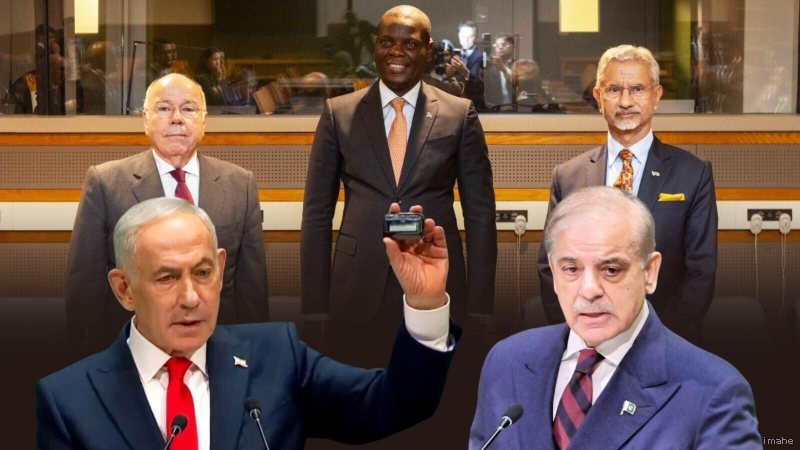
Geopolitical equations are changing rapidly at the United Nations and global forums. In this context, IBSA, the influential trilateral organization of India, Brazil and South Africa, has once again strongly advocated for reform and India’s permanent membership in the United Nations Security Council (UNSC), the world’s most powerful diplomatic forum. Amid high-level meetings held in New York and global diplomatic movements, IBSA countries have bluntly stated that the old system can no longer be dragged on by ignoring the real realities of the modern world. This tough ultimatum to immediately give India a permanent seat in the United Nations Security Council has brought a major turning point in global politics. Along with this, this historic meeting has also shown a mirror to Israel’s aggressive strategies on the smoldering situation in the Middle East and Pakistan which patronizes terrorism in South Asia.
UNSC reform and India’s permanent membership: IBSA’s shared and tough stance
There has been a debate going on in international diplomacy for a long time regarding the structure of the Security Council, but now the demand for change is not being suppressed. The IBSA Group has clarified that the current form of the United Nations Security Council (UNSC) reflects the reality of the twentieth century, while it is in dire need of comprehensive reform to meet the global challenges of the twenty-first century. It has now become completely unjust and illogical to deprive a country like India, which has the world’s largest population, a rapidly emerging economic power and is at the forefront of global peacekeeping, a permanent seat in the Security Council. IBSA countries have made it clear from the global stage that if the United Nations has to maintain its relevance and credibility, then developing countries and the Global South must be given proper representation in this supreme decision-making body. This demand is no longer just the voice of India alone, but has become a symbol of the collective struggle of the Global South.
Terrorism and regional stability: a direct diplomatic attack on Pakistan
Pakistan has been sharply reprimanded by the IBSA Forum on the issue of terrorism, which has long been the biggest enemy of peace and stability in South Asia. During the meeting, it was emphasized that terrorism is not acceptable under any circumstances and countries using it as a policy should be isolated globally. Referring to cross-border terrorism against India and conspiracies to spread regional instability, global powers were warned that double standards will no longer work. The countries that nurture terrorism will now have to give account of their every action. To eliminate this scourge that has become the biggest obstacle in the way of global security and economic development, all the responsible countries of the world will have to come together on one platform and take strict steps, making it clear that there will be no leniency on the issue of terrorism.
The smoldering crisis of the Middle East and blunt criticism of Israel’s policies.
IBSA countries have also expressed deep concern over the devastation and continuously deteriorating situation in the entire Middle East region, including Gaza and Lebanon. A strong message has been given from the global platform, reacting sharply to Israel’s military actions and ignoring international rules. There has been a demand to implement a ceasefire with immediate effect to stop the deaths of civilians, especially women and children, due to war and violent confrontation. Experts believe that the way the scope of conflict is increasing in the Middle East, both global peace and energy security are in danger. IBSA has made it clear that any lasting problem cannot be solved by the use of force, rather the only option is to return to the path of diplomacy, mutual dialogue and peaceful agreements.
New chapter of global diplomacy and strengthening of multilateral system
In today’s changing world, when geopolitical tensions, trade wars and resource wars are at their peak, the unification of forces like IBSA has become extremely important for global balance. This demand for reform in multilateral institutions like the United Nations is not just a formality, but an essential condition for the establishment of a just and inclusive world order. This ultimatum for India to get permanent membership in UNSC is a big message for all those countries of the world who are standing against dictatorial and totalitarian policies. In the future, it will be interesting to see how the Western countries and the current permanent members react to this collective pressure, but it is certain that India’s growing global threat and IBSA’s support will prove to be a milestone in deciding the future direction of international politics.