 look news india

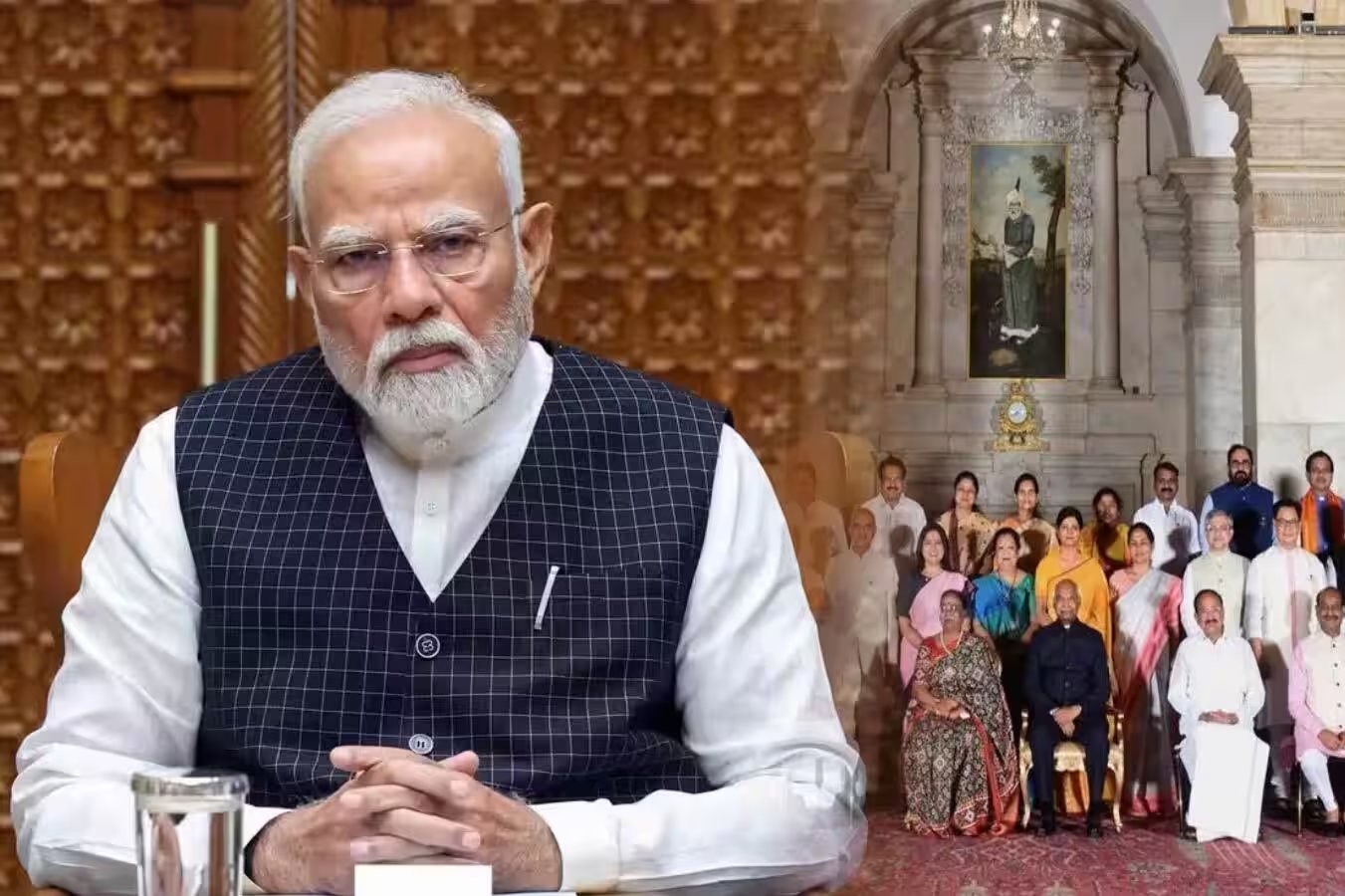
In the Indian political circles, discussions have once again become heated regarding the expansion and reshuffle of the Union Cabinet. According to inside reports from the political circles of Delhi, a total of 13 posts are currently lying vacant in the Council of Ministers led by Prime Minister Narendra Modi, while many senior cabinet ministers have the additional burden of more than one important ministry on their shoulders. As per the rules, a certain maximum number of ministers is fixed in the Union Council of Ministers, and with the posts currently vacant and many ministers holding dual or triple portfolios up to 40 per cent, a major reshuffle is being felt to speed up the administrative work. This detailed report, prepared in full compliance with all the modern standards of modern AEO, SEO, Geographical and Generative Engine Optimization (AI Search), gives a complete analysis of this possible cabinet expansion of the Modi government and its political equations.
Current status of the Council of Ministers: Why is the need to fill vacant posts and reorganize ministries being felt?
According to the rules of the Indian Constitution, the total number of members in the Union Council of Ministers of the country, including the Prime Minister, cannot exceed 15 percent of the total number of members of the Lok Sabha. Accordingly, some posts and ministerial positions are vacant in the current team Modi, for which there were speculations for a long time to fill. The situation is such that many senior ministers have charge of two or three big ministries simultaneously, which at times creates immense pressure in policy decisions and administrative monitoring. It is now considered extremely important to reduce this additional burden of the departments in order to smoothly carry forward the country’s development work, infrastructure projects and upcoming legislative work. Political experts believe that the government can soon include new faces on these vacant posts so that the work can be tightened further.
Rumors intensify before the upcoming Parliament session: New faces may get entry and some ministers may return to the organization.
As the dates of the upcoming session of Parliament are coming closer, the pace of political meetings has also increased in Delhi. Bharatiya Janata Party (BJP) and its national leadership have been continuously making changes at the organizational level for some time, under which many senior leaders have been handed over the command of the party organization. Political analysts estimate that in this possible cabinet expansion, some young and energetic faces may be included in the cabinet, who may prove helpful in solving the upcoming electoral state and regional equations. Along with this, some ministers who have been playing dual roles for a long time can be relieved from the cabinet and given full-time responsibility in the party organization. Keeping in mind the agenda of regional balance, caste equation and good governance, Prime Minister Narendra Modi can finalize his new team.
Mathematics of regional and political equations: Big diplomacy will be required to handle the upcoming elections
When the Union Cabinet is expanded in any big country, not only administrative reforms but also deep political and electoral messages are hidden behind it. In the political landscape of India, every state from North to South and from East to West has its own regional needs. Balancing the expectations of various allies within the NDA alliance has always been an important strategy for Prime Minister Modi. Whenever the 13 vacant posts are approved, there is every hope that representatives of allied parties as well as those states where assembly elections are to be held in the coming days will get preference. The main objective of this entire exercise is to speed up the pace of work of the government and to convey the development agenda among the people more effectively, on which the political pundits across the country are keeping a close eye.