 look news india

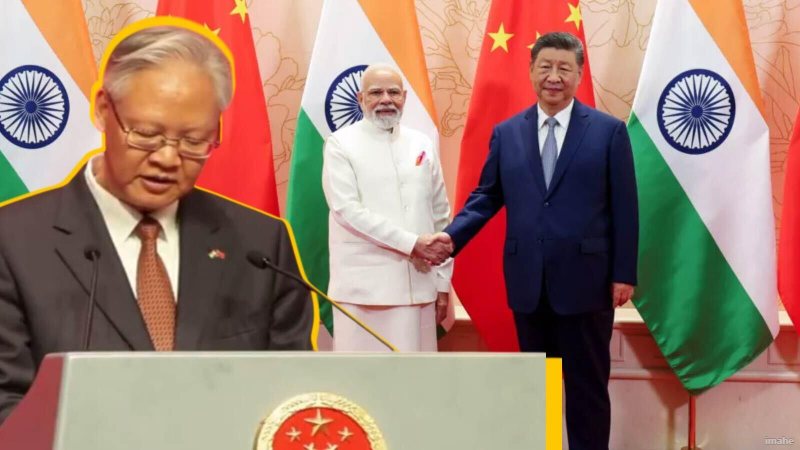
At this time, a very important statement giving a strong message in terms of diplomacy has come out from the diplomatic corridors between India and China. During a high-level event organized in the national capital New Delhi, the Chinese Ambassador posted in India has given a big statement regarding the relations between the two Asian superpowers. The Chinese Ambassador clearly underlined that India and China should view each other as development partners and strategic partners rather than as rivals or enemies. After this statement, which will decide the future of global politics and Asia, the murmur of melting the long-standing diplomatic ice between the two countries and bringing mutual business and political dialogue back on track has intensified. Let us take a complete and in-depth review of this high-profile statement, its geopolitical implications and the current equations in the relationship between the two countries.
This statement of the Chinese Ambassador and its meaning on the diplomatic front
Whenever it comes to relations between India and China, the relations between the two countries have gone through a very tense phase in the last few years due to border disputes, military standoff and trade imbalance. At such a sensitive time, the Chinese Ambassador’s statement to New Delhi that the two nations are not rivals but partners is being considered a part of well-thought-out diplomacy. Diplomatic experts believe that China has now understood well that Beijing cannot protect its long-term economic interests by ignoring a huge market and a growing global economic superpower like India. Through this statement, China has tried to indicate that it is essential for the two neighboring countries to work together to strengthen the voice of the Global South and realize the century of Asia.
Inevitability of dialogue amid border dispute and mutual distrust
Even though the Chinese Ambassador may have talked big about partnership and cooperation, the reality on the ground is that unless peace and stability is restored along the Line of Actual Control (LAC), it is impossible to establish real trust between the two countries. The Government of India has always taken a clear stand in its foreign policy that peace and harmony on the border is the first condition for the development of bilateral relations. Frequent meetings are being held between military commanders and diplomats of the two countries to completely resolve the ongoing standoff and military standoff in parts of eastern Ladakh. After this statement of the Chinese Ambassador, it will be very important to see whether Beijing is just paying lip service or is it ready to take any concrete and honest steps on the ground level to withdraw the troops and increase mutual trust.
Economic interdependence and compulsions of both the countries on the trade front.
Relations between India and China are not limited to strategic and tactical issues only, but both the economies depend on each other in many ways. India has to depend on China for the import of various raw materials, electronics components and solar panels for its industrial growth, manufacturing sector and infrastructure development. On the other hand, the Indian market is a huge source of profit for Chinese companies and tech giants. However, the Indian government has kept a close eye on Chinese investment keeping national security paramount and has rapidly promoted ‘Make in India’ and PLI schemes to promote domestic industries. Despite this, the bilateral trade worth billions of dollars between the two countries is a witness to the fact that even if they want to, the two countries cannot completely turn their backs on each other.
India’s independent foreign policy and China’s changing approach on the global stage
Today’s India is not the India of 1962, but under the leadership of Prime Minister Narendra Modi, it has emerged as a self-confident and independent decision-making superpower on the global stage. India has adopted the policy of ‘Multi-Alignment’ in its foreign policy, under which it takes decisions according to its national interests while strengthening its strategic relations with America, Europe, Russia and Japan. China understands very well that India cannot be suppressed or controlled, hence now diplomatic language has been softened and talks of partnership and dialogue are being talked about. If Beijing really cleans up the meaning behind these words and respects international laws and India’s sovereignty, the geopolitical landscape of Asia could completely change in the times to come and the two countries together could create a new history in global development.