 look news india

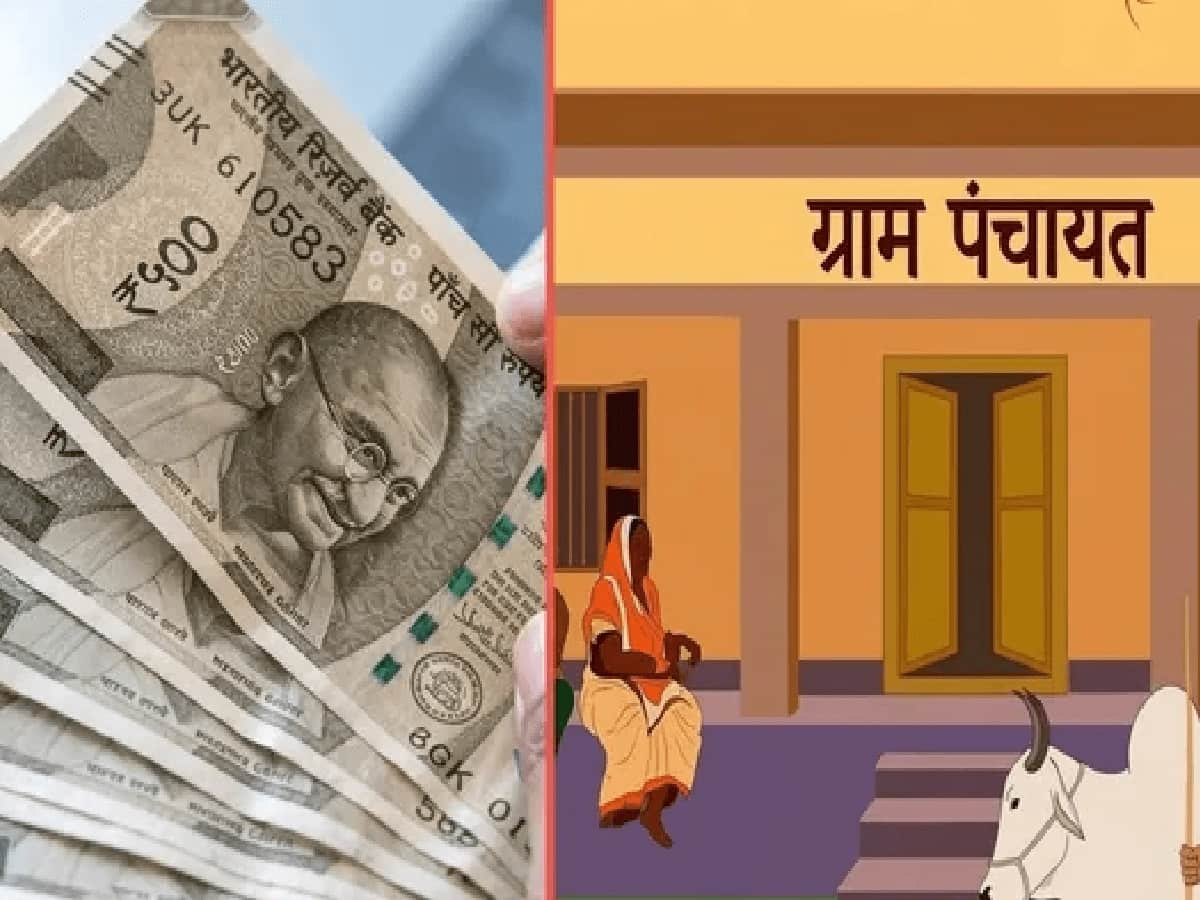
The Reserve Bank of India (RBI) has released a very important and eye-opening report regarding the economic health and self-reliance of Gram Panchayats, which are considered the backbone of the country’s rural development. In the second edition of the biennial report ‘Finances of Panchayati Raj Institutions’ released by the RBI on Thursday, November 19, the fact has come to light that the financial condition of the Gram Panchayats of the country has definitely improved over the years, but even today they are able to raise only 10 percent of their total revenue from their internal sources, while for the remaining 90 percent of the funds they have to completely meet the Central and State Governments. Those who are dependent on grants/transfers. The main theme of this edition is ‘Local Finance and Capacity Building in Rural India’, which highlights the need to increase income and strengthen administrative capacity of local bodies to empower grassroots democracy. This report is extremely relevant for representatives of lakhs of gram panchayats across the country, including Unnao, Kanpur and Lucknow in Uttar Pradesh, policy makers, economists and readers who keep an eye on rural development, as it presents the real picture of development funds coming to villages and its expenditure. Let us know in detail that RBI has conducted this study on the data of how many lakh Gram Panchayats, what are the main sources of income of Panchayats and on which development works their money is being spent the most.
The Reserve Bank of India has clarified that this biennial report has been prepared on the basis of in-depth analysis of balanced and certified financial data of about 2.25 lakh Gram Panchayats across the country during the period 2022-23 to 2024-25. The main objective of this study is to assess the actual financial position of Gram Panchayats and understand their role in sustainable and inclusive rural socio-economic development. The findings of the report show that the overall financial position of Gram Panchayats during the financial years 2022-23 and 2023-24 has become stronger than before and there has been an increase in the resources available with them. Despite this, the challenge remains on the self-reliance front, because about 90 percent of their total receipts are from grants and financial transfers from the Central Government and the respective state governments.
In this report of RBI, the status of own source revenue of gram panchayats has also been analyzed in detail. According to statistics, the contribution of earnings from own sources to the total income of Gram Panchayats is only 10 percent. Even in this 10 percent internal revenue, the share of non-tax revenue is major compared to local taxes, which mainly includes interest income from bank deposits, funds received under various Panchayati Raj programs and user charges collected in exchange for services at the local level. Experts believe that unless gram panchayats effectively develop tax and non-tax sources at the local level, it will be difficult to reduce their financial dependence on higher level governments.
While on one hand the details of the sources of income have been revealed, on the other hand the RBI report has also made it clear on what priorities the Gram Panchayats are spending the funds available with them. According to the report, the expenditure of Gram Panchayats has mainly been in accordance with the guidelines of the 15th Finance Commission and major national schemes of the Center and the state. The largest share of the total expenditure of Gram Panchayats, i.e. about 40 per cent, is spent on works related to basic civic amenities such as water supply and sanitation. This figure is proof that Panchayats continue to play a central role in providing clean drinking water and strengthening the sanitation system in rural areas. Overall, this RBI report emphasizes that for inclusive development of rural India, special attention needs to be paid to financial autonomy and capacity building of Gram Panchayats.