 look news india

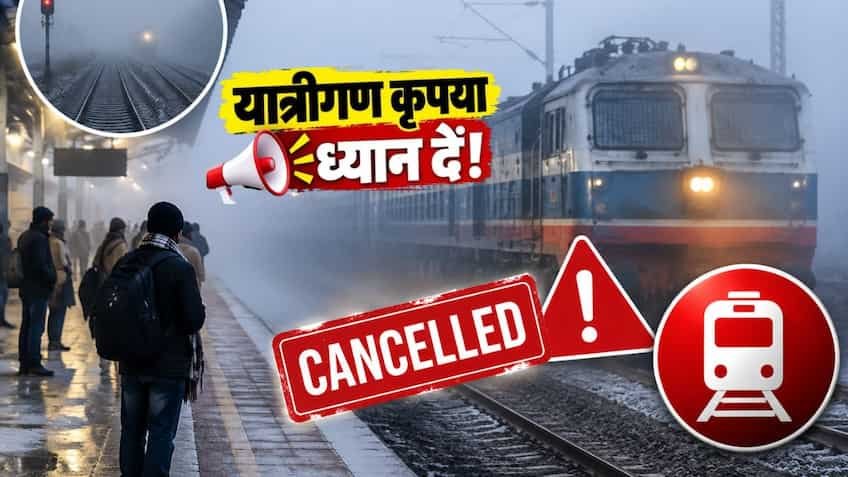
With the onset of winter in North India, Indian Railways has started advance preparations to prevent railway accidents due to dense fog and low visibility and to maintain the punctuality of trains. The Railway Administration has taken an official decision to cancel 16 important long distance Express and Garib Rath trains running on major railway routes of North India completely or for a limited number of days from December to March. This step is taken every year as a precautionary measure to reduce trains getting delayed by hours due to zero visibility during winters, causing huge inconvenience to passengers and safety risks. This decision will have a direct impact on daily and long distance passengers traveling between Uttar Pradesh, Bihar, Delhi, Punjab, Haryana, Uttarakhand and Jammu and Kashmir.
According to railway officials, due to low visibility on railway tracks during foggy season, loco pilots have to slow down the speed of trains significantly, due to which the timing of the entire network gets disrupted. In order to keep the operations organized, Railways has already identified these 16 trains in a phased manner and issued notification of their cancellation so that the passengers can make alternative arrangements for their journey in time instead of getting worried at the last moment. Booking of tickets for these dates is also being blocked on IRCTC system.
According to the schedule released by the Railways, the operation of the following 16 trains will remain closed on different dates from the first week of December to the end of February and the first week of March:
-
Ambala Cantt – Barauni Express: Canceled from 1 December to 27 February.
-
Barauni – Ambala Cantt Express: Canceled from 3 December to 1 March.
-
Kathgodam – Kanpur Central Express: Canceled from 7 December to 1 March.
-
Kanpur Central – Kathgodam Express: Canceled from 8 December to 2 March.
-
Garib Rath Express (Jammu Tawi – Kathgodam): Canceled from 6 December to 28 February.
-
Garib Rath Express (Kathgodam – Jammu Tawi): Canceled from 8 December to 2 March.
-
Malda Town – New Delhi (New Farakka/Model Town Express): Canceled from 5th December to 2nd March.
-
New Delhi – Malda Town (Model Town Express): Canceled from 3 December to 28 February.
-
Amritsar – Lalkuan Express: Canceled from 5 December to 27 February.
-
Lalkuan – Amritsar Express: Canceled from 5 December to 27 February.
-
Yoganagari Rishikesh – Jammu Tawi Express: Canceled from 7 December to 1 March.
-
Jammu Tawi – Yoganagari Rishikesh Express: Canceled from 6 December to 28 February.
-
Amritsar – Purnia Court Express (Public Service): Canceled from 1 December to 28 February.
-
Purnia Court – Amritsar Express (Public Service): Canceled from 3 December to 2 March.
-
Tatanagar – Amritsar Express: Canceled on scheduled days from December 2 to February 24.
-
Amritsar – Tatanagar Express: Canceled on scheduled days from December 4 to February 26.
If we look at the list of canceled trains, the highest number is of trains connecting Bihar, Eastern Uttar Pradesh and Punjab. Trains like Barauni-Ambala, Purnia Court-Amritsar and Tata-Amritsar are considered the lifeline of common workers, students and middle class. The cancellation of these trains will greatly increase the passenger pressure on other regular trains like Dibrugarh Rajdhani, Shramjeevi Express, Vaishali Express and Punjab Mail during the winter months.
Along with this, due to the closure of Kathgodam-Kanpur and Kathgodam-Jammutvi Garib Rath, tourists and local residents making religious and general journeys from Kumaon (Uttarakhand) region will also have to face difficulties in transportation. Railways says that to control the crowd of passengers, some special trains and additional coaches will be adjusted on the route as per requirement.
Apart from completely canceling trains, Railways is also implementing special safety measures for those trains that will run on the tracks in winter:
-
Fog Pass Device: GPS-based fog-pass devices have been installed in the train engines. This device gives audio-visual advance warning of incoming signals, level crossing and neutral section to the loco pilot 500 meters in advance.
-
Lime marking on detonators and tracks: In case of zero visibility, firecrackers (detonators) are used on the tracks before the signals, the sound of which makes the driver aware of the proximity of the signal. Also, retro-reflective strips have been installed on the signal poles.
-
Determining speed limit: A protocol has been set to limit the maximum speed of trains to 60 to 75 kilometers per hour during extremely dense fog so that in case of any emergency, the train can be stopped at a safe distance.
Railway administration has advised passengers planning to travel during winter season to take special precautions:
-
Refund of already booked tickets: Passengers who have made advance reservations in these 16 canceled trains, there is no need to panic. For passengers booking e-tickets online through IRCTC, the full fare will be automatically refunded directly into their original bank account without any clerkage charges. Whereas passengers with counter tickets can take full refund from the PRS counter as per the prescribed rules after the scheduled departure time of the train.
-
Be sure to check live running status: In winter, the routes of many trains are diverted or they are partially canceled (short-terminated). In such a situation, before leaving home for the station, make sure to check the live running status of the train on the website or app of National Train Inquiry System (NTES).
-
Railway Helpline 139: For any inconvenience, train status or queries, passengers can contact the 24×7 integrated helpline number of Indian Railways. 139 You can get information by calling or SMS.