 look news india

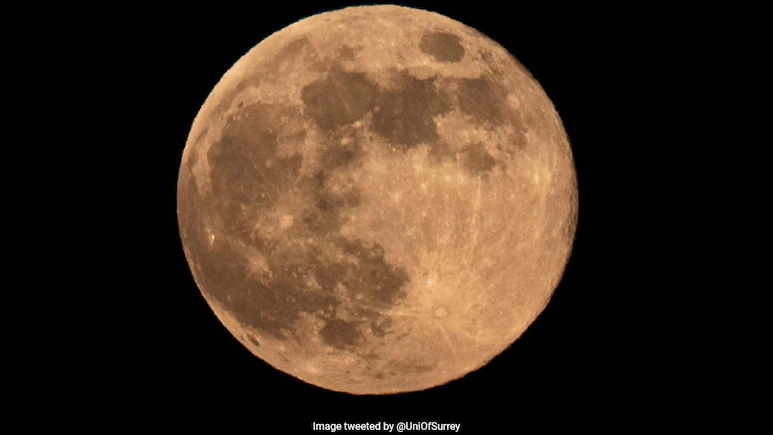
This week of November 2026 has been very special for those interested in astronomy and events in the sky, because during this time, the full moon called ‘Beaver Moon’ and the astronomical position of the Moon reaching relatively close to the Earth (Perigee) in its elliptical orbit have attracted people’s attention. According to the astronomical calendar, the peak time of this month’s full moon was on 24 November 2026, while the Moon reaches its closest point (perigee) to the Earth in its orbit on 25 November, due to which special curiosity is being seen among the spectators regarding the brightness and size of the Moon in the surrounding evenings. When the moon rises above the horizon after dusk, it appears more majestic and larger in relation to the atmospheric layers present in the atmosphere and the surrounding buildings and trees.
According to astronomers, the Moon does not revolve around the Earth in a completely round but elliptical or elliptical orbit, due to which its distance keeps changing. On an average, the distance of the Moon from the Earth is considered to be around 3,82,900 kilometers, but in the case of perigee, this distance comes down to around 3.60 lakh kilometers. When the Full Moon occurs near the Moon’s perigee, it is colloquially called a ‘supermoon’, making it appear slightly larger and brighter than the average or farthest (apogee) Full Moon. However, it is also important to note that visibility varies depending on actual astronomical time, local sunset and moonrise times, and clear weather conditions, rather than viral claims on any one evening, and on November 25, the Moon appears near 99-100 percent illuminated just after the full Moon (waning gibbous).
When many people look at the sky in the evening, they see the moon shining near the horizon as unusually large, which is called ‘Moon Illusion’ in astronomy. In fact, when the moon is near the horizon, our eyes compare it with familiar objects like trees, mountains, pillars or buildings, causing the brain to perceive its size as larger, whereas when it reaches higher in the sky, the same moon appears to be of normal size. No special expensive equipment is required to see this sight, just the sky should be clear, there should be an open view away from the bright artificial lights of the city or high obstacles, and if desired, the craters and shadows of the moon’s surface can be seen more closely with ordinary binoculars.
Full moons have been called seasonal and cultural names in different parts of the world, such as the November full moon being called the ‘Beaver Moon’ in North American traditions associated with preparation for winter. At the same time, from an astronomical point of view, it is a part of the natural orbital motion, the main effect of which is on the tides of the sea (especially the spring tides formed around the full moon and new moon). According to scientific organizations, being close to the Moon does not have any unusual effect on the energy or geological movements within the Earth, hence it is always useful to keep a clear distinction between facts and folklore while watching astronomical events in an exciting and informative way.
In Uttar Pradesh and entire North India including Lucknow, Kanpur, Varanasi, Prayagraj, Ayodhya and Gorakhpur, people are naturally curious about this astronomical discussion that comes immediately after Kartik Purnima and Dev Diwali. When the sky is clear in the evening amidst the mild chill of winter, watching the shining moon from rooftops or open spaces becomes a peaceful and relaxing experience for families and youngsters. Such events related to nature and astronomy give us an opportunity to pause from the everyday hustle and bustle and feel the vastness of the sky and the rhythm of time.