 look news india

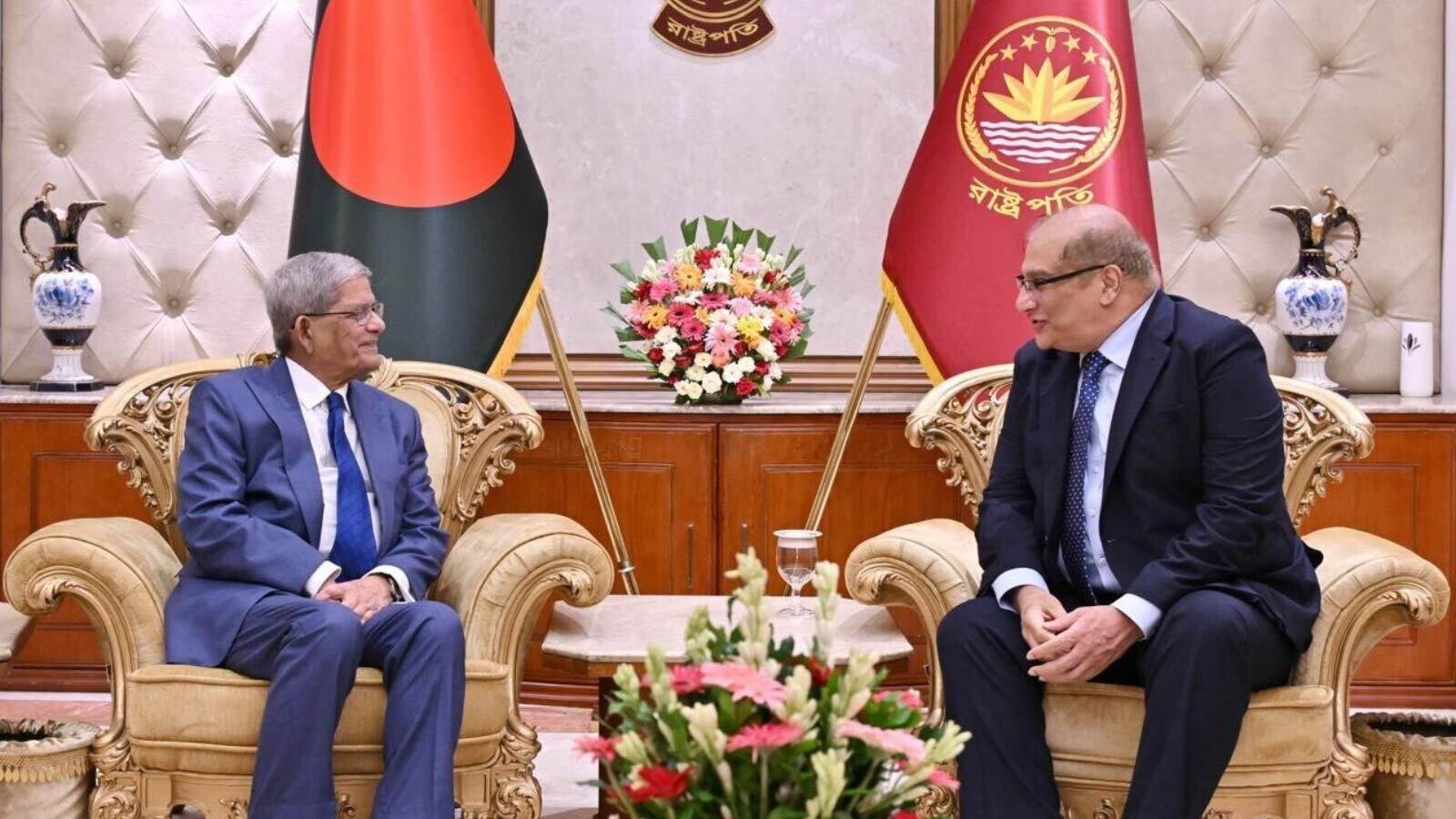
These days, once again a huge upheaval is being seen in the equations in the geopolitical corridors of South Asia, where on one hand the diplomatic distance seems to be increasing between India and Bangladesh after the interim political changes, while on the other hand, the murmur of increasing closeness between Dhaka and Islamabad has intensified. According to recent political developments, strong preparations are underway to take bilateral relations with Pakistan to a new level amid the new political changes in power and possible leadership of Bangladesh. In this connection, an important and strategic message has been sent by the Rashtrapati Bhavan of Bangladesh to the Prime Minister of Pakistan Shahbaz Sharif, which has set diplomatic experts on edge. There is a lot of discussion about the secret plan of Tariq Rehman, who is working behind the scenes behind this entire incident, and the secret plan of the new government, under which an attempt is being made to forget the old history of regional diplomacy in South Asia and create a new front.
The historic and dramatic developments in Bangladesh politics in recent months have changed the direction of the country’s foreign policy. The equations of power in this country, which once had very close and intimate diplomatic relations with India, have now completely changed, the effect of which is clearly visible on the mutual cooperation between the two countries. In such a situation, the new government and its policy makers have started trying to diversify their strategic priorities. Under this policy, Dhaka is now moving rapidly towards normalizing relations with Islamabad on the economic, strategic and cultural front, leaving behind the decades-old bitterness and historical wounds of the 1971 liberation war. Pakistan also does not want to miss this opportunity because it is always looking to strengthen its relations with a strategically important country like Bangladesh to avoid being diplomatically isolated in South Asia.
It has become a common discussion in the political circles of Dhaka that the incoming or new government there has prepared a big and well-planned plan with Pakistan, the center of which includes opening trade routes, increasing defense cooperation and making diplomatic maneuvers in the name of reviving the platform of South Asian Association for Regional Cooperation (SAARC). This new plan of Tariq Rahman and the strategists close to him is based on the belief that Bangladesh should reduce its traditional diplomatic dependence on India and create a balance with other countries at the regional level to build its independent and strong global identity. Under this strategy, several rounds of secret and formal meetings have been held in the last few weeks between the officials of the Pakistani High Commission and the new power center in Dhaka, in which consensus seems to be reached on serious issues like restoration of direct flights and resumption of maritime trade.
This latest message sent by the Bangladeshi President to Pakistan Prime Minister Shehbaz Sharif is not just a courtesy letter, but it is being considered as a formal roadmap for the future deep strategic alliance between the two countries. In this message, it has been talked about promoting mutual cooperation between the two countries, scheduling visits of high level delegations and supporting each other on the forums of the Muslim world. For the Pakistani rulers, this message is no less than a major diplomatic victory because for the last several decades, Pakistan’s penetration in this area under the influence of India had become almost negligible. The Shehbaz Sharif government has also warmly welcomed this message and instructions have been given to the Foreign Ministry of Pakistan to intensify bilateral talks with Dhaka so that Pakistan, which is facing economic crisis, can get some relief on the diplomatic front and can improve its lost credibility to some extent.
The growing closeness between Bangladesh and Pakistan is believed to have the most direct and serious impact on India’s strategic and national security. This kind of escalating diplomatic rift with Pakistan by a neighboring country located just to the east of India can pose a big challenge to New Delhi’s security arrangements, because Dhaka’s cooperation has always been important for India in terms of security of North-East States and stability of border areas. Apart from this, Pakistan’s intelligence agency ISI has been using Bangladeshi soil for anti-India activities in the past, hence Indian strategic experts are extremely worried that after the coming of the new government, Bangladesh may once again become a safe haven for anti-India forces. In the coming days, it will be very interesting to see how India handles this changing development with its diplomatic acumen and what long-term impact this new geopolitical equation of South Asia has on regional stability.