 look news india

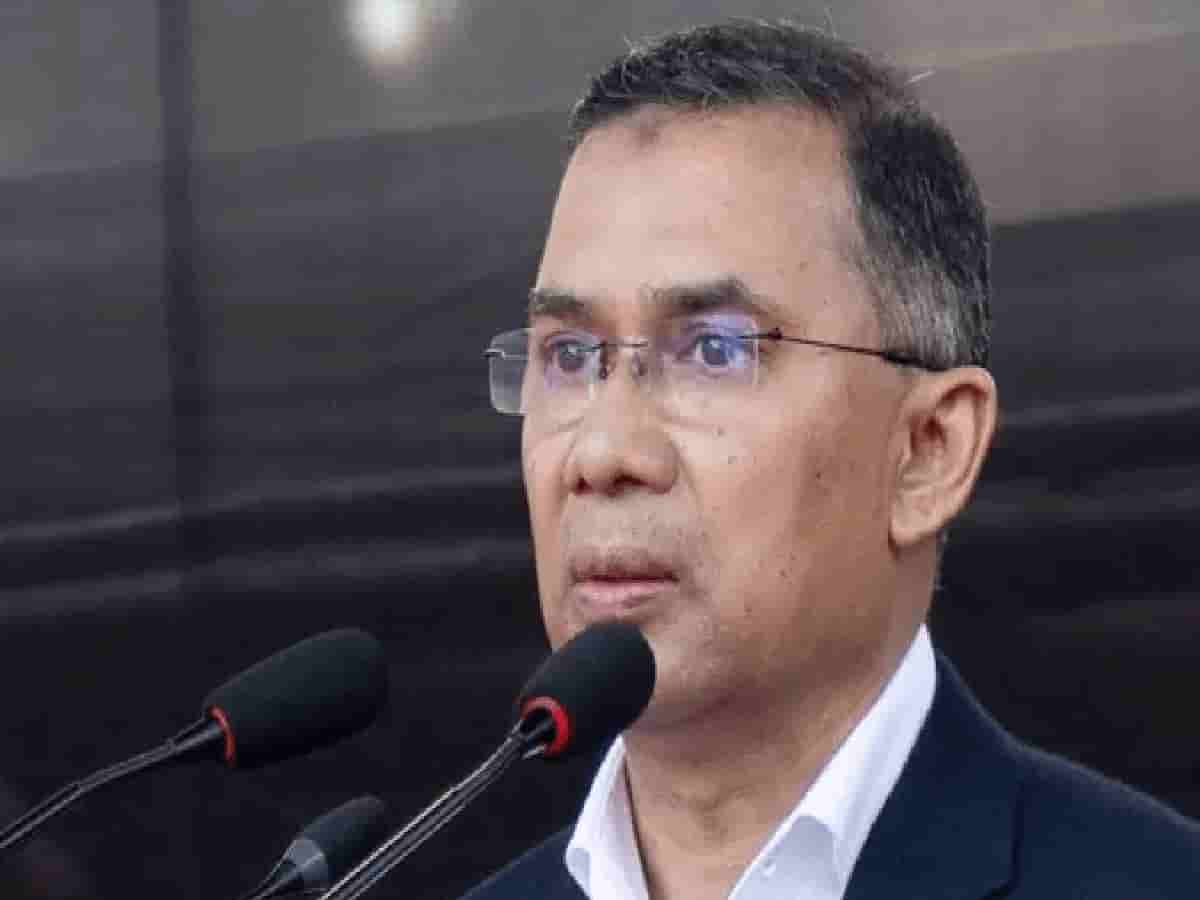
A very important development has come to light in the corridors of international diplomacy and regional diplomatic relations, under which Prime Minister of neighboring country Bangladesh Tariq Rahman will not personally attend the upcoming 18th BRICS summit to be hosted by India. There was a lot of speculation and discussion for the last few days regarding whether the top leadership of Bangladesh has received a formal invitation for this global forum or not. Meanwhile, Bangladesh’s Minister of State for Foreign Affairs Humayun Kabir has given a sensational and clear statement completely clarifying the situation in front of the media. While talking to the media, the Minister of State has bluntly claimed that his country’s Prime Minister Tariq Rehman has not received any personal or direct invitation for this prestigious BRICS summit, hence no question of his attending this conference arises. After this official statement came out, a new debate has started regarding the geopolitics of South Asia and the diplomatic equations between India and Bangladesh, because experts believe that both the presence and absence of neighboring countries on global forums have diplomatic significance.
Raising the curtain on this entire controversy, Bangladesh’s Minister of State for Foreign Affairs Humayun Kabir explained in detail that the nature and context of the invitation sent by India was different. Responding to sharp questions from journalists, he said, “After all, who informed you that our Prime Minister was invited for the BRICS summit? Has the Bangladesh government or our Prime Minister’s Office received any such direct invitation? The truth is that our Prime Minister has not been invited.” The Minister clarified that the invitation received was actually in his capacity as the current Chairman of the Bay of Bengal Initiative for Multi-Sectoral Technical and Economic Cooperation (BIMSTEC) and not as a bilateral or special BRICS invitation in his capacity as Prime Minister of Bangladesh. However, he also clarified that since the invitation was in his capacity as the head of the Organization for Institutional and Regional Cooperation, Bangladesh will not be completely absent at this important global forum, rather an official high-level delegation from the country will reach New Delhi to participate in the summit, but Prime Minister Tariq Rahman himself will not visit.
The 18th BRICS Summit is being organized on 12 and 13 September 2026 at the state-of-the-art and grand cultural center ‘Bharat Mandapam’ in the capital of India, New Delhi, which is a symbol of India’s growing diplomatic and economic strength in the current global scenario. The central theme of this year’s highly prestigious global summit is ‘Building for Resilience, Innovation, Collaboration and Sustainability’, with special emphasis on strengthening mutual technical, financial and strategic partnerships between emerging and major economic organizations of the world. Top heads of state, heads of government and high level delegations from international organizations from many major countries around the world are expected to reach New Delhi to participate in this mega diplomatic hosting by India. This summit is being considered very important in terms of global peace, economic stability and multilateral cooperation, where there is every possibility of wide-ranging discussions on serious issues like common strategy against terrorism, digital economy, and alternative financial systems.
According to reports in regional and international media including The Daily Star, Bangladesh’s Minister of State for Foreign Affairs Humayun Kabir’s statement comes at a time when various aspects of diplomatic dialogue and regional diplomacy between the two countries are being closely monitored. Political analysts believe that even though Prime Minister Tariq Rehman is not personally present at the summit, India’s presidency at a global platform like BRICS and its efforts to create diplomatic balance with neighboring countries will play an important role in deciding the geopolitical future of South Asia. Experts on regional cooperation and international relations also say that participation of countries in multilateral fora through BIMSTEC is a normal and regular part of international diplomacy, which would not be entirely appropriate to be seen as some kind of political distance. In the coming days, it will be interesting to see what important agreements are signed between India and other global leaders during the BRICS summit and in what new direction regional diplomacy moves forward.