 look news india

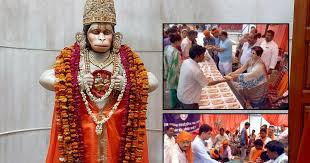
News India Live, Digital Desk: The culture and traditions of Lucknow, the city of Nawabs, are famous all over the world, but the ‘Bada Mangal’ here is an example of communal harmony and unwavering faith which is not seen anywhere else. This festival, celebrated on every Tuesday of Jyeshtha month, has become the identity of Lucknow. In the hot afternoon of Jeth, when Bhandaras of ‘Hanuman ji’ are set up on every street and intersection of the city, the entire city seems drenched in devotion to ‘Bajrangbali’. But do you know how this tradition started and why it is also called ‘Budhwa Mangal’?
The foundation of ‘Bade Mangal’ was laid during the era of Nawabs.
There are many historical stories prevalent about the beginning of Bade Mangal. It is said that ‘Janab Alia’, mother of Nawab Wajid Ali Shah of Awadh, had laid the foundation of this tradition. It is believed that he had made a vow in the Hanuman Temple (Old Hanuman Temple) located at Aliganj in Old Lucknow that he would get a son. After the vow was fulfilled, the Nawab put a mark of the moon on the peak of the temple and started the Bhandara on Tuesday of Jyeshtha month. From then till today, both Hindu and Muslim communities together celebrate this festival with great enthusiasm.
Mythological story: When Hanuman ji broke Bhima’s ego
According to religious beliefs, Mars of Jyeshtha month is also related to the Mahabharata period. Hanuman ji and Bhima met in this month. When Bhima became proud of his power, Hanuman ji took the form of an old monkey and spread his tail in Bhima’s path. Even after using all his strength, Bhima could not move the tail of that old monkey. When Bhima realized the truth, he asked for forgiveness. Because of giving darshan in old age, Jyeshtha’s Mars is also called ‘Budhwa Mars’.
Symbol of Lucknow’s Ganga-Jamuni culture
Bada Mangal of Lucknow is not just a religious event, but a great festival of social unity. The new and old Hanuman temple of Aliganj, the reclining Hanuman ji (near the mound mosque) and the Hanuman Setu temple are thronged by devotees. Not only the devotees distribute the Prasad of Puri-Vegetable, Sharbat and Bundi in the stores, but people of every religion ensure their participation in it. The atmosphere remains resonating with the chants of ‘Jai Shri Ram’ and ‘Bajrangbali’ in the pandals set up on the streets of the city.
When are the Big Mars in 2026?
This year, a total of four major Mars are falling in the month of Jyeshtha. Devotees get relief from troubles these days by reciting Hanuman Chalisa, Sunderkand and chanting Bajrang Baan. According to astrologers, worshiping Lord Hanuman during these days reduces the effects of Mangal Dosh and Saturn’s Sadesati. Lucknow Municipal Corporation and Police Administration have also made strict traffic and security arrangements in view of the events of Bade Mangal so that the devotees do not face any inconvenience in darshan.