 look news india

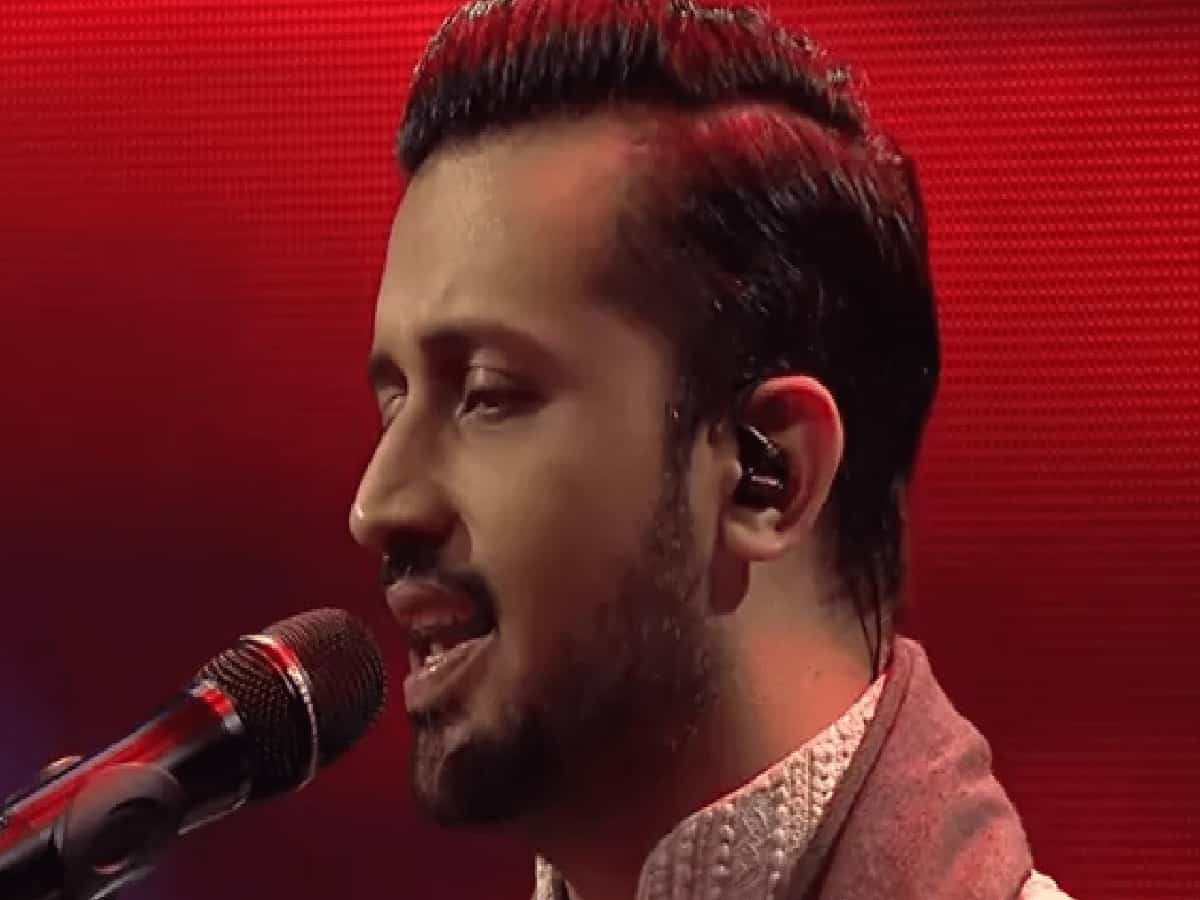
An unexpected and unique scene was seen yesterday at the historic Attari-Wagah Border located on the India-Pakistan border, which has created a stir on social media. Bollywood actor Ayushmann Khurrana and actress Sara Ali Khan had reached Attari border in Punjab for the promotion of their newly released spy-comedy film ‘Udta Teer’. Both the actors were busy promoting and talking about their film amidst the Border Security Force (BSF) soldiers and thousands of patriotic spectators present there, but suddenly a familiar and spiritual voice echoed from the other side of the border which attracted everyone’s attention. The 11 year old evergreen qawwali ‘Tajdaar-e-Haram’ sung in the voice of famous singer Atif Aslam from Pakistan started playing. The fast and velvety tune of this qawwali pushed Sara and Ayushmann’s voices into the background within a few moments. As soon as the video of this entire incident came on Twitter and Instagram, it went viral within no time and became the biggest topic of discussion among music lovers of both the countries.
The incident took place when Ayushmann Khurrana and Sara Ali Khan were sharing about the story and characters of their film in front of the media personnel and audience cameras. Both the stars were greeting their fans and sharing the patriotic atmosphere with the security forces. At the same time, the sounds of Coke Studio’s Qawwali started being heard from the big speakers installed on the other side of the border i.e. towards Wagah. At first no one understood from where this music suddenly started, but as soon as Atif Aslam’s aalaap and the words of ‘Tajdaar-e-Haram’ started floating in the air, smiles appeared on the faces of the people present there. It is clearly visible in the video how this music being played from across the border during the Bollywood promotion changed the direction of the entire atmosphere. Social media users are re-sharing this clip and saying that no matter how much tension and diplomatic tension there is on the border, music has its own power and world.
The qawwali tune that created a stir at the Wagah Border is no ordinary song but one of the most successful creations in modern music history. Atif Aslam lent his voice to ‘Tajdaar-e-Haram’ as the opening track of the eighth season of ‘Coke Studio Pakistan’ in the year 2015. As soon as it was released, this song broke all the historical records of views on YouTube and became the first Pakistani song to be viewed millions of times. When Atif Aslam, moving away from his rock and pop style, presented this traditional Sufiana Kalam with modern instruments and guitar-tabla fusion, it became heard in every household across the borders even in India. Even after 11 years have passed, the freshness and spiritual depth of this song has not diminished at all, direct evidence of which was seen at the Wagah Border.
‘Tajdaar-e-Haram’ is a highly sacred Sufiana Naat and Qawwali originally inspired by Urdu and Persian poetry. In literal sense, ‘Tajdar-e-Haram’ means ‘the king who wears the crown of the holy place (Haram i.e. Mecca-Medina)’. Historically, this timeless Qawwali was first made famous across the world by the famous Qawwal duo Sabri Brothers (Ghulam Farid Sabri and Maqbool Ahmed Sabri) in the 1960s. Atif Aslam truly paid tribute to the musical legacy of the Sabri Brothers by singing this classic composition in 2015. The underlying sentiment of this Qawwali is a very humble, emotional and spiritual plea (prayer) to the Prophet. In this, a helpless person appeals to God and His messenger for mercy and spiritual intercession to get relief from the worldly difficulties, troubles and sorrows of his life. Because of this spirituality and pain of words, this Qawwali goes straight to the heart of the listener of every religion and class.
This video captured at Attari-Wagah border has sparked a positive and emotional debate in the internet world. While sharing the video on X, a user wrote that while on one hand Bollywood was promoting its film, on the other hand Pakistan made the atmosphere musical by playing Atif’s Qawwali. Many Indian users commented that art, music and words do not require any visa or passport. Atif Aslam has millions of fans in India who still save the Bollywood songs sung by him in their playlists. This qawwali echoing across the border fencing made people realize that no matter how deep the political and strategic distance is between the two countries, the common cultural heritage and sweetness of music remains a means of connecting the hearts of the people on both sides.