 look news india

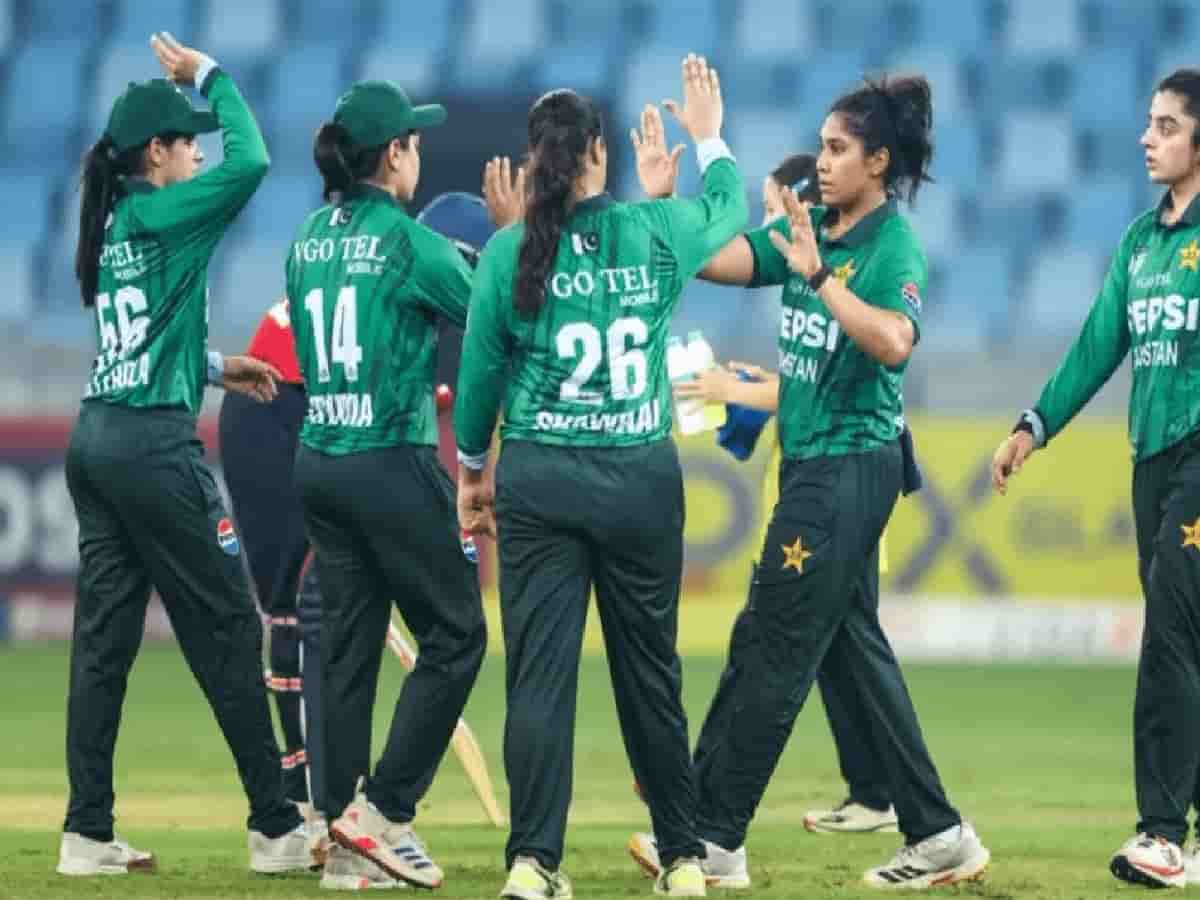
The Pakistani team has suffered a major unexpected setback in the women’s cricket competition of the Asian Games 2026 held in Japan. The team’s most experienced wicketkeeper and left-handed opening batsman Muniba Ali has left the tournament midway due to her mother’s suddenly deteriorating health and returned to her country. The entire cricket world is sympathizing with the player in this hour of family emergency, but from the technical point of view of the game, this has proved to be a big blow to Pakistan’s title hopes.
Sources in Pakistan Cricket Board (PCB) have made it clear that no other player will be sent to Japan as replacement in place of Muniba Ali. This decision has been taken keeping in mind practical and time limitations. The cricket format of the ongoing Asian Games is based on a straight knockout system and the abbreviated competition will be fully concluded by September 22. In such a short time, it was logistically impossible for a new player to arrange visas, international air travel and then landing on the Japanese grounds without practice, due to which the team management has taken the difficult decision of traveling further with the existing squad.
Muniba Ali is considered the backbone of the Pakistani women’s cricket team. His experience in the dressing room has always been an inspiration for the young players. The Pakistani batting line-up was seen struggling continuously in the recently concluded Women’s Asia Cup in Dubai, United Arab Emirates, but in that entire tournament, Muniba was the only batsman who played a half-century for the team. His technically sound batting has been putting pressure on the opposing team’s bowlers from the very beginning.
Not only this, Muniba’s leadership abilities were also greatly appreciated in recent months. In July, when Pakistan’s regular captain Fatima Sana was representing Birmingham Phoenix in ‘The Women’s Hundred’ league in England, the reins of captaincy in the bilateral T20 series against Sri Lanka were on the shoulders of Muniba Ali. He not only kept the team organized on that difficult tour but also impressed everyone with his quick decision-making ability on the field. Now that the team is facing the pressure of knockout matches in Japan, Muniba’s absence will be sorely missed strategically on the field.
After Muniba Ali returned home, a major change had to be made immediately in the team composition. To fill this void, the biggest responsibility has fallen on wicketkeeper-batsman Gul Firozha. In the important match played against Thailand, Firozha not only took the gloves behind the wickets but also took the important responsibility of starting the innings. This is not the first time Gul Firozha has been tested in the top order.
Gul Firoza’s recent track record looks in his favor. In the recent Asia Cup, she was mainly batting at number three, but before that in the T20 World Cup, she got the experience of opening the innings along with Muniba Ali. In his last league match played against Netherlands, Firozha proved that he has the ability to play long innings on the big stage by playing an explosive and patient inning of 63 not out. Now only Firozha’s opening partnership in the semi-final and possible final matches will decide whether Pakistan reaches the podium in the Asian Games or not.
In the absence of Muniba, Pakistan defeated Thailand by three wickets in a very thrilling and close match in the quarter-final match and secured its place in the semi-finals. Due to heavy rain just before the match, the outfield was completely wet, due to which the umpires had to reduce the match to 11 overs per team. Pakistan captain Fatima Sana won the toss and decided to field first so that the opposition team could be restricted to a minimum score.
Fatima Sana herself took the lead in bowling and gave the first blow in her second over. However, the Thai team counter-attacked in the middle overs. In the seventh over of Umm-e-Hani, Nannapat Koncharoenkai scored 14 runs by hitting two consecutive boundaries. Fanita Maya scored 15 runs in 16 balls, but seeing the shortage of overs, the team management ‘retired’ her so that runs could be scored quickly. Captain Narumol Chaivai increased the run pace by hitting a six and a four as soon as he came, but Sana made a comeback and trapped Nannapat LBW on a personal score of 49. Thailand posted a strong and challenging score of 91 runs in the stipulated 11 overs.
The target of 92 runs was not easy in this match of short overs. Shawal Zulfikar got off to a bright start but as soon as he was out in the fourth over, Thailand’s spinners started to take control of the match. Off-spinner Onicha Kamchomphu bowled lethally and took three consecutive wickets, while Suliporn Laomi sent Ayesha Zafar to the pavilion after giving just three runs in two overs. Pakistan team suddenly came under huge pressure and needed 44 runs to win in the last four overs, while the required run rate had crossed 11.
At this critical juncture, Captain Fatima Sana took charge. He turned the tables on Kamchomphu by hitting three fours and a skyscraper six in a single over. In the same over, Eman Fatima also hit a six, taking a total of 25 runs from that over. Sana played a stormy inning of 21 runs. After his dismissal, the match dragged on till the last over, but Tooba Hasan took the pulse of the team by hitting a four and a six. Four runs were needed to win in the last over, which the batsmen completed with two balls remaining by intelligently taking a single and Pakistan booked the ticket for the semi-finals.