 look news india

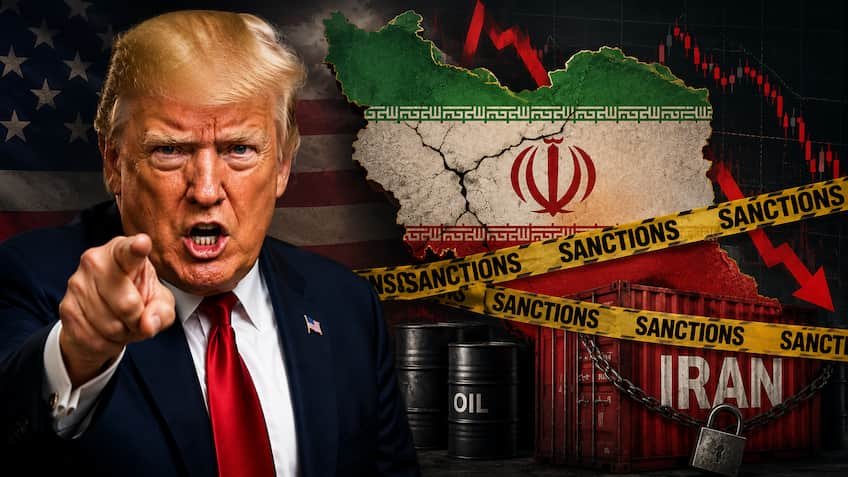
Amidst the ongoing tension and geopolitical confrontation in West Asia, America has launched the largest and most aggressive economic siege ever against Iran. US Treasury Secretary Scott Besant, while officially announcing ‘Operation Economic Outcast’ on the instructions of President Donald Trump, has termed it as ‘Economic D-Day’ on the economic front.
The direct objective of this new policy is to completely isolate Iran’s economy and end its financial lifeline by completely cutting off its global trade contacts. America has clearly warned that strict secondary sanctions will be imposed on any foreign country, bank or company that does business with Iran and they will be shown the way out of the US dollar clearing system.
What is ‘Operation Economic Outcast’ and America’s ‘zero-leakage’ stance?
According to the US Treasury Department, this is not just a routine sanctions announcement, but a comprehensive international financial blockade. Under this operation, the US administration has prepared a map of all the means and networks that Iran has been using to evade international sanctions, launder money and raise funds secretly.
-
Action on Global Networks: The US Office of Foreign Assets Control (OFAC) has sanctioned nearly 60 global entities, ships and individuals linked to illegal missile and nuclear technology purchases, cyber attacks and oil smuggling.
-
Strict warning on the Strait of Hormuz: The US has warned global shipping companies that paying any tax or toll to Iran for safe passage through the Strait of Hormuz will be considered a violation of US sanctions.
-
Ultimatum to third countries: Teams of US officials are contacting allies and partner countries around the world and giving them a specific timeline to end all their financial dealings with Iran.
America will attack directly and decisively on these 6 important areas
Under ‘Operation Economic Outcast’, the US has identified 6 key pillars supporting Iran’s economy and expanded the scope of secondary sanctions on them:
-
Crude Oil & Shadow Fleet: To reduce Iran’s oil exports completely to zero, its ‘Shadow Fleet’ (network of secret tankers carrying illegal oil) has been tightened. Ships delivering oil to Chinese refineries and middlemen have been blacklisted.
-
Digital Assets & Crypto: Virtual currency and digital assets platforms being used by Iran to evade international banking sanctions are being tracked and blocked.
-
Gold & Precious Metals: A complete ban has been imposed on international transactions through gold transfer against foreign assets to stop the sharp fall of the local currency (Rial).
-
Aviation Sector: Civil and military aviation companies, supply of aircraft spare parts and networks related to transportation of weapons or cash through air routes have been targeted.
-
Shipping and Sea Transportation: Strict restrictions have been imposed on Iran’s state and private maritime shipping networks, container logistics and cargo movements operating from ports.
-
Advanced Technology & Cyber Network: Legal action has been taken against operators who procure high-tech components used for missile and drone technology and conduct cyberattacks on critical US and global infrastructure.
What will be the impact on the global economy and oil market?
The US Finance Minister has clarified that banks around the world are being given a short cure period to separate from Iran, but if any big financial institution continues to violate the rules, then major punitive action can be taken against it this week.
On the other hand, this aggressive economic attack has created huge uncertainty in the global energy market, due to which crude oil prices are rising. Iran has also made it clear that it is ready to respond to this ‘economic war’, which is likely to further deepen the tension in West Asia in the coming days.