 look news india

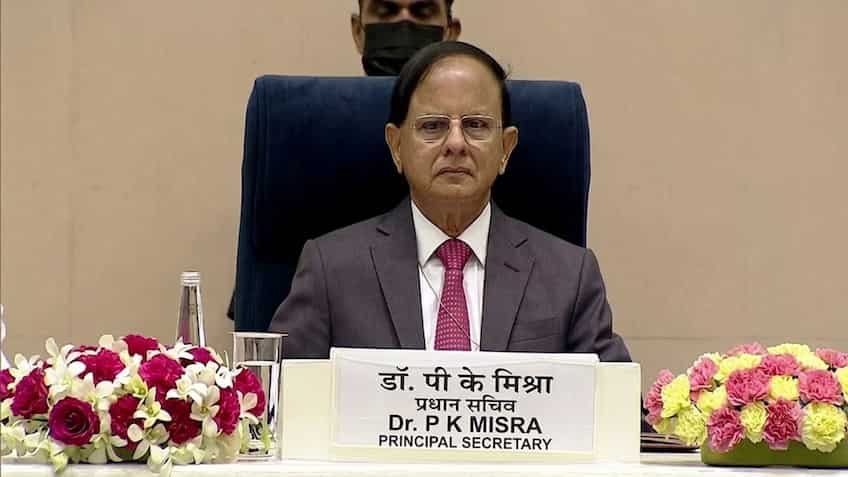
Discussing the impact of the global trade system and emerging modern technologies, Dr. P.K., Principal Secretary to Prime Minister Narendra Modi. Mishra has presented a serious analysis of the global economic scenario in an important address. He underlined that the unprecedented spread of Artificial Intelligence (AI) and modern digital technologies has created huge uncertainty for traditional businesses. Additionally, stringent tariff barriers (customs duties) and strategic export controls (export restrictions) being adopted by various countries have created unprecedented pressure on the global supply chain.
Dr. P.K. Mishra clarified that although Artificial Intelligence is opening up new opportunities for productivity and innovation, its rapid growth has created policy and practical instability for the corporate world and industries.
-
Breakdown of traditional models: Sectors like traditional manufacturing, software services and BPO are rapidly changing due to AI automation. Companies are finding it difficult to decide which technologies will remain relevant in the next three to five years.
-
Pressure on Labor Market: The proliferation of AI has increased the demand for restructuring of high and medium skilled jobs, forcing industries to invest heavily to continuously re-skill and up-skill their workforce.
-
Data Sovereignty and Privacy: Cross-border digital trade has become more complex and unpredictable due to different data security regulations being enacted by different countries.
Expressing deep concern over the growing trend of protectionism in global trade, the Principal Secretary said that many developed economies are erecting heavy tariff and non-tariff barriers, giving priority to their domestic interests.
-
Geopolitical tensions and trade walls: Import duties in key markets in the US, Europe and Asia are increasing global logistics costs.
-
Abuse of export controls: Export restrictions being imposed on cutting-edge semiconductors, critical minerals, high-end computing chips and dual-use technologies are fragmenting global supply chains.
-
Impact on developing countries: These restrictions and strict trade rules are directly impacting emerging economies, which have to pay additional costs for essential technical equipment and raw materials.
The Principal Secretary cautioned international forums that excessive dependence on a single source or country can bring the entire economy to a standstill in any global crisis.
-
Supply Chain Resilience: The COVID-19 pandemic and recent regional conflicts have proven how important it is for multilateral delivery mechanisms to be flexible and multi-dimensional.
-
Trusted Partnerships: Countries need to make trade agreements not just on the basis of cost efficiency, but on the basis of strategic trust and transparency.
-
India’s role in ‘China Plus One’: He indicated that in this era of global instability, India is emerging as a stable, reliable and democratic manufacturing hub, which can provide stability to global supplies.
In conclusion of his address, Dr. P.K. Mishra stressed that India is adopting a balanced and forward-looking approach to deal with these global challenges.
-
Encouragement to Domestic Manufacturing: Domestic production of critical components is being increased through initiatives like Production Linked Incentive (PLI) Scheme and India Semiconductor Mission (ISM) to minimize the impact of external shocks.
-
Development of Responsible AI: India is playing a leading role in setting global standards for the ethical, safe and inclusive use of Artificial Intelligence.
-
Accelerating trade agreements: Amidst global trade uncertainties, India is rapidly pursuing bilateral Free Trade Agreements (FTAs) with various developed countries so that Indian exporters can get secure and stable overseas markets.