 look news india

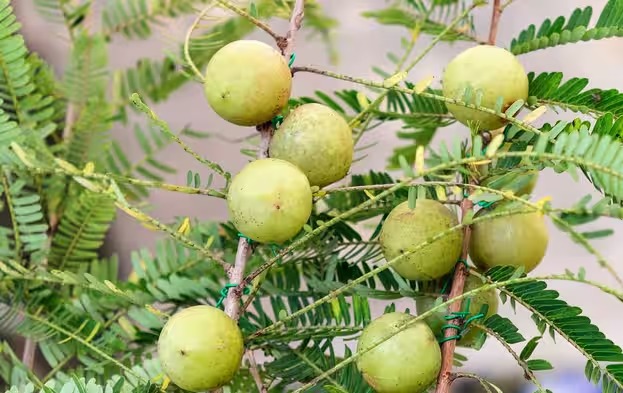
The tradition of worshiping nature in Sanatan Hindu religion is centuries old, and in our country there are many such trees and plants which are considered to be the abode of Gods and Goddesses and are duly worshipped. Among these, along with Tulsi, Peepal and Banyan, ‘Amla Tree’ is also considered a very high and sacred place. Especially on the ninth day of Shukla Paksha of Kartik month, which is known as ‘Akshay Navami’ or ‘Dhatri Navami’, there is a tradition of worshiping the Amla tree. According to religious texts and mythology, the protector of the world, Lord Shri Hari Vishnu and Mother Lakshmi reside in the Amla tree. On this day, by eating food and worshiping it while sitting under the shade of Amla tree, one attains inexhaustible virtue, which never decays or gets destroyed. In this era of modern lifestyle, where people are moving away from their culture, such holy festivals give us the precious message of staying connected to our nature and environment.
There are many ancient mythological stories associated with the worship of the Amla tree. According to a popular legend, once Goddess Lakshmi set out to tour the earth, on the way she wished to worship Lord Vishnu and Lord Shiva. Since at that time Goddess Lakshmi did not have Tulsi for the worship of Lord Vishnu and Belpatra for the worship of Shiva, she observed that the Amla tree contains the properties of both Tulsi and Bel. Mother Lakshmi had worshiped the Amla tree considering it to be the form of Vishnu and Shiva, due to which both the gods were pleased and appeared before her. Since then, it is believed that the person who worships the Amla tree in the month of Kartik and offers milk to its root, there is never any shortage of happiness, prosperity and wealth in his house. Apart from this, there is another belief that Amla fruit is very dear to Lord Vishnu because its origin is considered to be full of properties similar to nectar.
On this holy festival of Kartik month, people wake up early in the morning, take bath etc. and wear clean clothes to perform worship. After this, go to the Amla tree planted in a clean place and irrigate its roots with water. Roli, Akshat, Kalava, incense, lamp, scent, flowers and naivedya along with seasonal fruits and whole dishes are kept in the puja thali. First, raw milk or Ganges water is offered to the root of the tree, and then the cotton thread or Kalava is wrapped around the trunk of the tree, circling it at least 7 or 108 times. During this time, prayers are offered for the happiness, peace and health of the family. After the puja is over, there is a tradition of sitting under the tree and feeding the Brahmins or donating food, clothes and gooseberry to any poor and needy person. It is believed that eating food under a tree on this day cures physical diseases and transmits positive energy.
Apart from religious and mythological beliefs, Amla has also been considered no less than a boon in modern medical science and Ayurveda. In the great texts of Ayurveda, Amla has been described as an excellent chemical and immunity enhancing fruit. It contains abundant amounts of natural Vitamin C, antioxidants, iron and calcium which help in strengthening our digestive power, keeping hair black and thick, making the skin glowing and keeping the body cells healthy. Consuming Amla in the cold season of Kartik month keeps the body energetic and warm from inside. When we connect religious faith with something that is beneficial to both the environment and health, it makes our lifestyle more balanced. This festival of Akshaya Navami teaches us that there is some deep scientific and healthy secret hidden behind each of our traditions.