 look news india

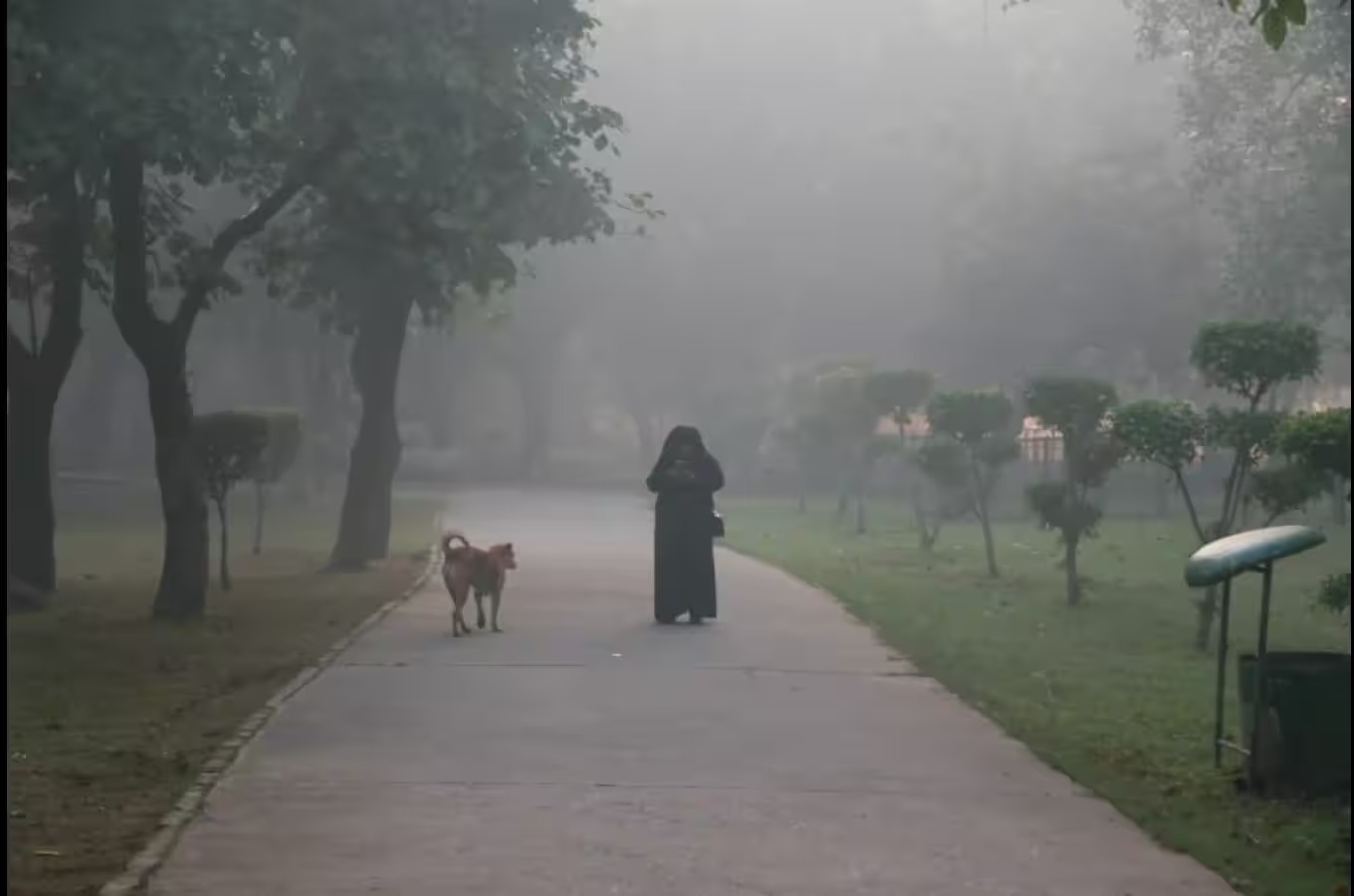
The Commission for Air Quality Management (CAQM) has taken a big step to make the system to deal with air pollution in Delhi-NCR and surrounding areas more stringent and result-oriented. Under the instructions issued on November 20, 2026, the Commission has asked to prepare an annual action plan for the year 2027, in which a mandatory reduction in the pollution level by at least 15 percent and a target of taking it to 20 percent has been set. The most important thing about this initiative is that instead of merely making a list of measures on paper, the emphasis has now been on measurable results on the ground and fixing personal accountability of the responsible officials.
According to the instructions of the Commission, the governments of Delhi, Haryana, Uttar Pradesh and Rajasthan will have to prepare a detailed annual action plan at the state and municipal corporation level as well as at the district level for the first time. In these schemes, the names and positions of the officers responsible for each district will be clearly recorded, so that it is clear which officer is responsible for which work and which target.
In the past years, there has often been a criticism regarding the action plans issued for air pollution control that the steps taken by various departments are mentioned, but the target of reducing pollution in any concrete percentage or the direct accountability of any particular officer is not fixed. The new framework of CAQM is being looked at to overcome this shortcoming. When the names and designations of officers are fixed at the district level, monitoring of work will be easier and lapses or deficiencies can be identified and corrective action can be taken on time.
The Commission has also clarified that the Annual Action Plan to 2027 should include sector-wise actions, clear timelines, monitoring parameters and measurable targets. It aims to achieve a tangible improvement of 15 to 20 per cent in the annual average levels of key parameters such as AQI, PM 2.5 and PM 10 by 2026. Experts believe that unless local administrations make accurate assessments and regular updates of pollution sources in their areas, long-term improvements will remain challenging.
CAQM has directed States to comprehensively include all major and local sources of pollution in district and state level action plans. These include vehicular smoke, road dust, industrial activities, construction and demolition work, solid waste management, stubble burning, diesel generator sets, cremation grounds and other local sources. Different targets and timelines for each region will ensure that action is not limited to emergency restrictions, but continues throughout the year.
In air quality management, emphasis has also been laid on adopting a shared approach of airshed i.e. geography and air flow, because air does not recognize any administrative boundary. Dust or smoke rising in a district or city also affects the air of surrounding areas, hence coordinated and regular monitoring has been made the backbone of the scheme.
The issue of air quality remains extremely sensitive in the NCR districts of Uttar Pradesh as well as in the entire state amid urbanization, road construction, industrial expansion and increasing vehicles. This model also sends a message to the residents of big urban centers like Lucknow and other districts that pollution control now needs to be implemented with set targets and accountability rather than being treated as a routine formality. When a clear action plan and list of responsible officers are prepared at the district level, it is easier for local citizens and civic organizations to know what steps are being taken at which level.
At the administrative level, this system will motivate the District Magistrates and related departments to prepare the emission list of their respective areas, update it from time to time and make proper use of resources as per the set targets. It is expected that coordination at the ground level will improve and negligence will reduce.
Prolonged exposure to bad air causes respiratory diseases, asthma, bronchitis, heart problems and seriously impacts the health of children and the elderly. If the levels of PM 2.5 and PM 10 are reduced by 15 to 20 percent in 2027, it will increase the chances of common people getting relief in everyday life. The impact of a year’s solid preparation can be more visible, especially during the winter months when slow wind speeds and falling temperatures allow pollutants to accumulate closer to the surface.
In the coming times, it will be important to see how quickly and transparently the state governments and district administrations implement this directive. This step of CAQM definitely indicates that in the fight against pollution, concrete results and accountability are now being kept at the center, going beyond policy announcements.