 look news india

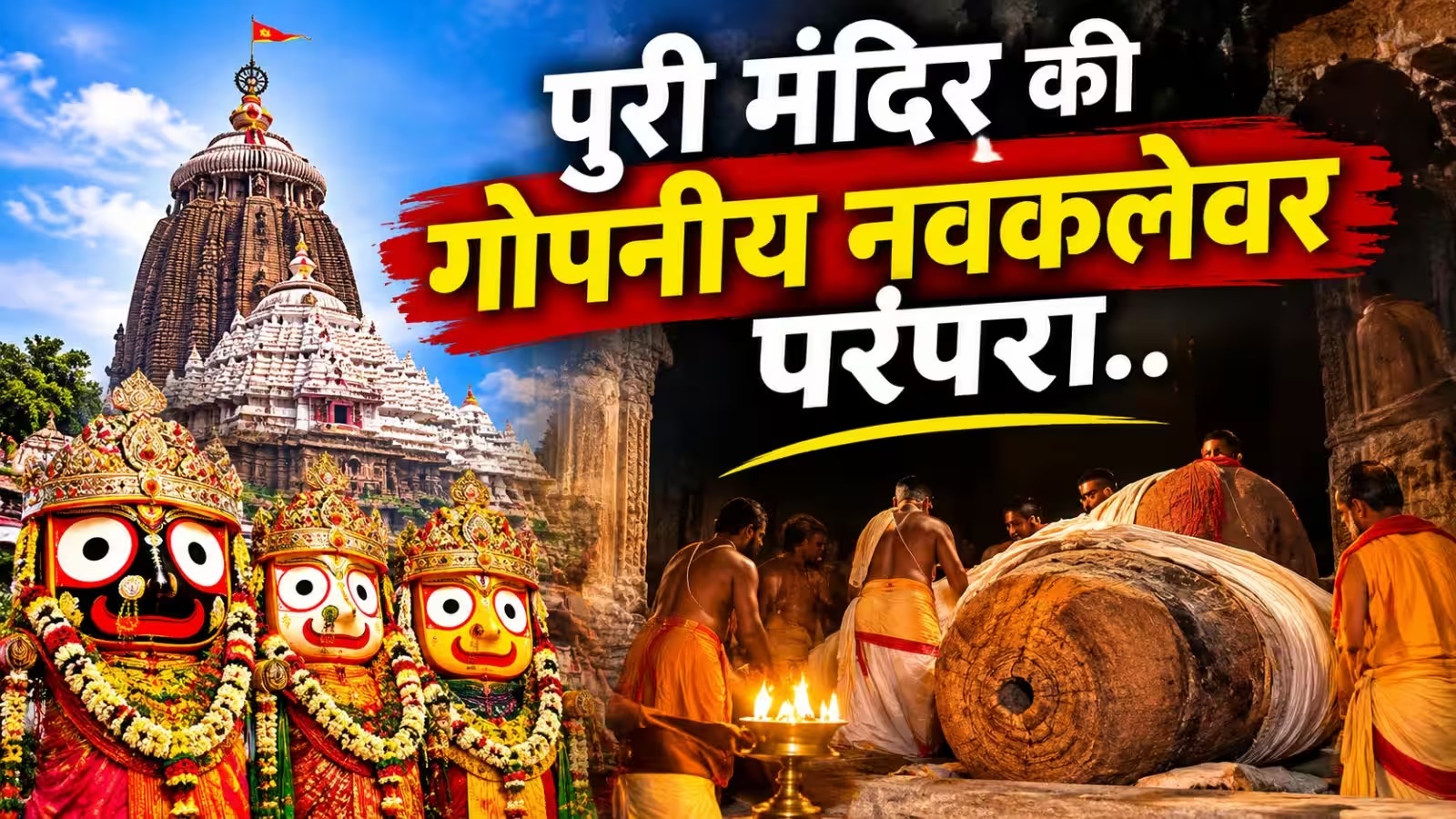
The religious traditions of the world famous Shri Jagannath Temple in Puri, Odisha are known for their philosophical meaning, secret rituals and historical continuity. One of the most special and rare rituals is ‘Navaklevar’ (new complexion or new body), under which the wooden idols of Lord Jagannath, Lord Balabhadra, Goddess Subhadra and Sudarshan Chakra are renovated. According to religious belief and philosophy, just as the soul sheds old clothes or body and assumes a new form, in the same spirit, new idols are consecrated in place of the old wooden idols. This event does not take place every year, but takes place at fixed intervals based on the Hindu calendar and astronomical date calculations, in which an interval of 12 to 19 years is generally seen, while the 12-year cycle is also popularly discussed.
The timing of Navakalevar ritual is believed to be associated with a particular position of the Hindu calendar, specifically Adhikamas (Malamas) in the Ashadha month or the coincidence of two Ashadha months. To maintain the balance between the solar and lunar years, there is a provision of Adhikamas in the calendar, and when this coincidence occurs, the ritual of Navakalevar is performed as per the temple tradition. According to historical and archival accounts, Navakalevaras have been held in the modern period in 1912, 1931, 1950, 1969, 1977, 1996 and 2015. This makes it clear that its interval does not remain the same every time, but can vary between 12 to 19 years according to almanac calculations.
Formal preparations for Navakalevar begin during the month of Chaitra, with the ‘Banajag Yatra’ undertaken in search of sacred Neem trees—called ‘Daru’ or ‘Daru Brahma’. Daitapati, Vidyapati and a team of designated servants and craftsmen associated with the temple identify suitable trees on the basis of traditional rules, signs and scriptural characteristics. The scriptures and temple traditions mention details regarding the number of branches, color of the bark, surrounding environment and specific symbols such as conch, chakra, plough, or lotus for the daru tree of each vigraha. After selection of suitable trees and ritual worship, they are respectfully cut and brought to Puri in special chariots and vehicles, where new idols are carved by the craftsmen.
The most sensitive and confidential phase of Navakalevar is related to Vigraha creation and transfer of ‘Brahma substance’ from the old Vigrahas to the new Vigrahas. The sensitive processes involved in carving and consecrating the idols are carried out in strict secrecy and within prescribed rules, with no entry of outsiders or unauthorized people. According to tradition, at midnight, amidst utmost secrecy and discipline, the ‘Brahma substance’ from the old idols is installed in the new idols, after which the old wooden idols are ritually buried in Koili Baikuntha located in the temple premises. There is no public explanation outside about the real nature of this element, due to which this tradition remains a subject of deep curiosity among devotees and researchers.
After the completion of Navakalevar, when the Rath Yatra starts with new idols, lakhs of devotees from India and abroad including Puri witness this historical and spiritual moment. This tradition is not limited to religious rituals only, but also keeps alive the wood craft art of Odisha, the system of temple administration, collective participation and the philosophical idea of change and rebirth. These periodic renewals show how ancient traditions are passed down from generation to generation through discipline, secrecy and collective faith.