 look news india

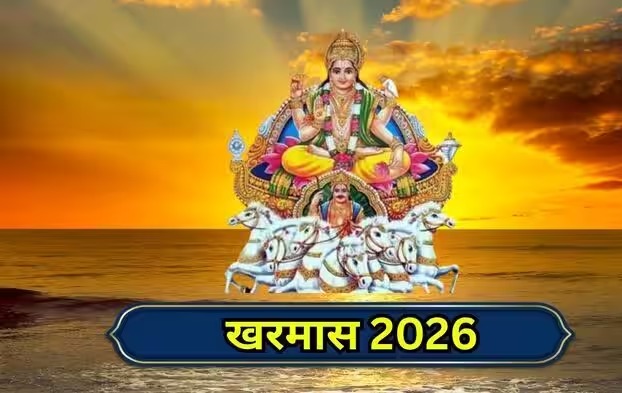
According to Hindu calendar and astrological calculations, Kharmas is going to start as soon as Sun God enters Sagittarius on 16th December in the last month of the year 2026. According to the Panchang details, Kharmas will be in effect with Dhanu Sankranti on Wednesday 16th December 2026 around 10:20 to 30 AM (Various Panchang mention the time as 10:21 to 10:29 AM). This period lasts for about a month and ends with the Sun entering Capricorn on the night of 14 January 2027, while the auspicious time and festival of Makar Sankranti will be celebrated on 15 January 2027. According to religious tradition and astrological beliefs, during Kharmas there is a pause on auspicious rituals like marriage, housewarming, mundan, engagement and upanayana, while special importance is given to devotion, chanting, penance, charity and worship of Sun and Lord Vishnu.
According to astrology, whenever the Sun transits in the zodiac signs owned by Lord Jupiter—Sagittarius and Pisces, that period is called Kharmas. Kharmas occurs twice a year: first between December and January when the Sun is in Sagittarius, and second between March and April when the Sun enters Pisces. In ritualistic and astrological beliefs, the auspicious strength and favorable position of both Sun and Jupiter are considered important for marriages and major auspicious events, and it is traditionally prescribed to postpone major auspicious functions during the transit of Sun in Jupiter’s sign. At the same time, this incident is also prevalent in mythology that the Sun God, while giving rest to the horses of his chariot, yokes the donkeys (Khar) to the chariot, due to which the speed of the chariot slows down and that month is called Kharmas.
According to the traditional calendar and the beliefs of the priests, it is advisable to postpone many auspicious and new beginning related activities during the period of Kharmas. Among these, the important ones are marriage, engagement or marriage ceremony in many families, house warming in a new house, Bhoomi Pujan or beginning of new construction work, Mundan Sanskar of the child and Janeu or Upanayan Sanskar. In many areas, there is a tradition of postponing new business or big property deals till after Makar Sankranti for auspicious time. However, there may be differences in family and regional customs, hence it is advisable to consult your kulpurohit or a qualified astrologer regarding any particular ritual or step required.
Experts in astrology and theology say that instead of considering Kharmas as an inauspicious month, it should be considered a time for introspection, spiritual practice, service and worship of God. During this period, offering water (Arghya) to the Sun God from a copper vessel every morning after bathing, reciting ‘Om Suryay Namah’ or Aditya Hridaya Stotra, and worshiping Lord Vishnu and performing fasting rituals like Ekadashi and Purnima are considered virtuous. There is special significance of donating food, blankets, woolen clothes or sesame-jaggery to the needy during the winter season, and festivals like Mokshada Ekadashi, Geeta Jayanti and Margashirsha Purnima also fall during this period. At the same time, practical activities such as regular studies, jobs, daily business, travel and medical treatment continue as normal.
This period is also celebrated with different names and traditions in different parts of the country, like in South India it is called Dhanurmas or Margashirsha where there is a special trend of morning prayers and devotion to Lord Vishnu. The sequence of auspicious times starts again after the Sun enters Capricorn on the night of 14 January 2027 and Kharmas ends with Makar Sankranti on 15 January. Families who wish to perform marriages, house warming ceremonies or other auspicious functions in December generally prefer dates before December 16 or wait for auspicious dates after Makar Sankranti.