 look news india

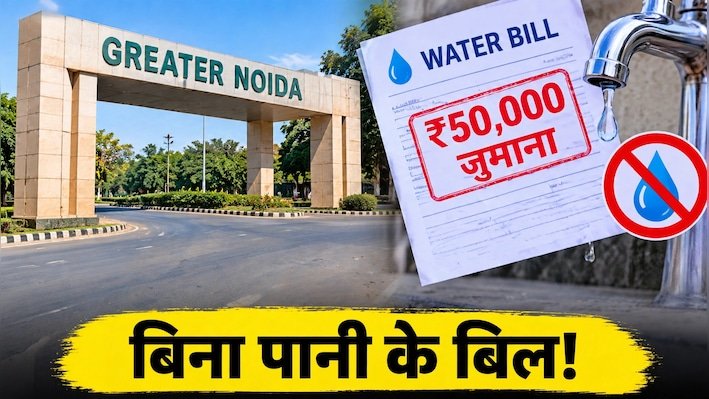
The Consumer Commission has given a very important and precedent-setting decision, protecting the rights of consumers against the arbitrariness of government authorities and agencies. Greater Noida Industrial Development Authority (GNIDA) located in Gautam Buddha Nagar, Uttar Pradesh has found it difficult to collect water bill from an allottee without supplying and using water. The District Consumer Disputes Redressal Commission has taken a strong stance terming the functioning of the authority as ‘serious deficiency in service’ and unfair trade practice. In its order, the Commission has directed the Greater Noida Authority to pay a compensation of Rs 50,000 to the victim consumer for the mental torture and legal expenses. Along with this, orders have also been given to cancel the arbitrary and outstanding water bills issued by the authority with immediate effect. After this decision, there is a wave of happiness among thousands of allottees of Greater Noida, Noida and Yamuna Expressway area, who were troubled for a long time with the bills being sent without basic facilities.
This entire matter is related to allotment of plots and houses in a residential sector of Greater Noida. The complainant allottee had got the property allotted by the authority, but due to non-completion of construction work or absence of active water connection, no water was being used there. Despite this, the Water Department of Greater Noida Authority was continuously issuing water bills in the name of the allottee and huge interest and penalty were also being added on it. When the allottee made several rounds of the authority’s office and gave written applications to get this wrong bill rectified and cancelled, the officials pressurized him to collect the dues instead of solving his problem. Troubled by this indifference of the authority, the aggrieved consumer approached the District Consumer Commission for justice and lodged his complaint with evidence.
During the hearing of the case, the complainant’s advocate presented all the documents and evidence before the Commission, from which it became clear that neither water supply had been started in the concerned premises nor even a single drop of water had been spent by the consumer. On the other hand, the representative of the Greater Noida Authority could not present any concrete evidence before the Commission to prove that water supply was made to the allottee or the bill was prepared on the basis of meter reading. After hearing the arguments of both the parties, the bench of Chairman and members of the Consumer Commission made a strong comment and said that when the service has not been provided to a citizen, then charging any kind of fee or penalty from him is completely illegal and arbitrary. The Commission said that the responsibility of government institutions is to provide facilities to the general public and not to torture them mentally by making them visit offices unnecessarily.
The Consumer Commission, in its final order, has given clear instructions to the Greater Noida Authority to cancel all the unfair water bills imposed on the allottee and the interest charged on them with immediate effect. Further, a compensation amount of Rs 50,000 has been ordered to be paid within the stipulated time limit to compensate the complainant for mental agony, financial hardship and litigation expenses. The Commission has also warned that if the compensation amount is not paid within the stipulated period, the authority will also have to pay additional interest on this amount. Besides, instructions have also been given not to create any hindrance due to this controversial bill in NOC or other works related to the allottee’s property.
Legal experts and RWA officials believe that this decision of the Consumer Commission will prove to be a big example for thousands of property owners in Delhi-NCR, especially in cities like Greater Noida, Noida and Lucknow, who are handed bills without giving possession or without starting the water-sewer facility. Often common citizens fear the long process of government departments and pay wrong bills, but this decision has proved that conscious consumers can get their rights through legal means. Experts have advised that if a person receives a water or electricity bill without usage, he should first lodge a written complaint with the concerned department and keep the acknowledgment and if no solution is found, he should raise his voice in the consumer forum.