 look news india

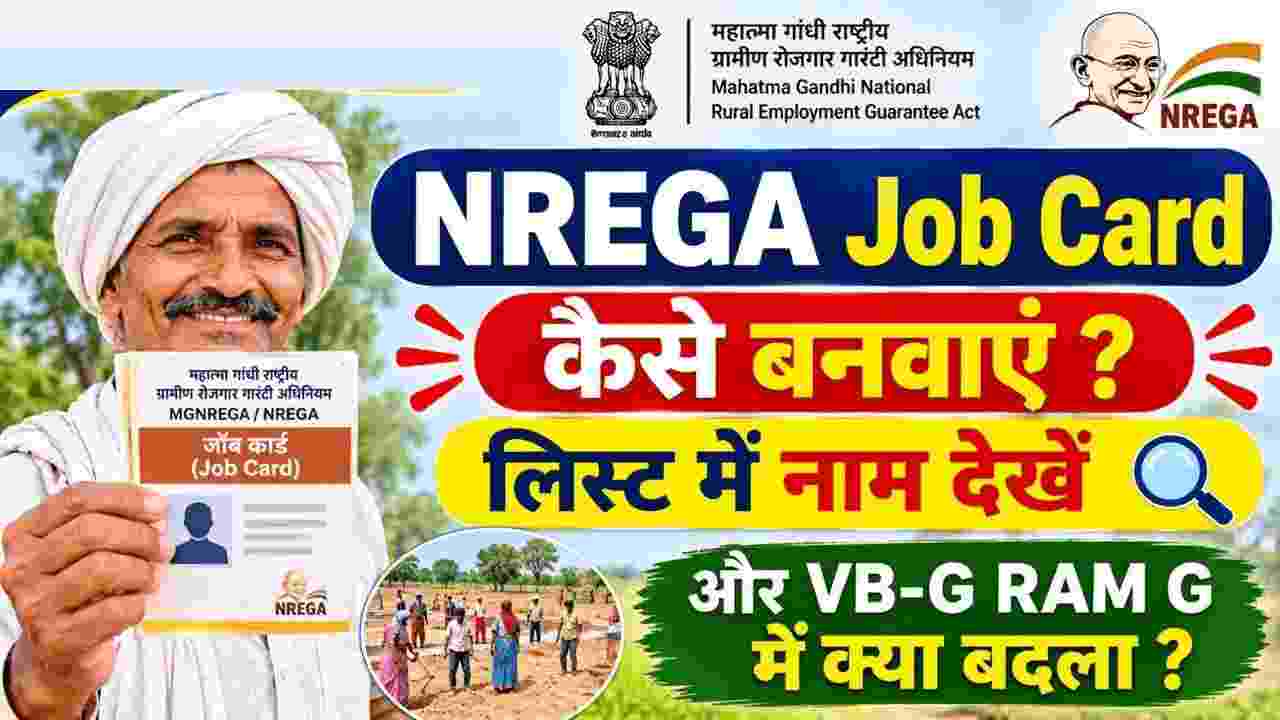
New Delhi/Lucknow (Utility and Rural Development Desk): The biggest historical change has taken place in the year 2026 in the Rural Employment Guarantee Scheme, which is considered the backbone of the livelihood of crores of rural families of the country. Under the new law notified by the Ministry of Rural Development of the Central Government, from July 1, 2026, the old ‘Mahatma Gandhi National Rural Employment Guarantee Act’ (MGNREGA) will now be replaced by ‘Viksit Bharat – Guarantee for Employment and Livelihood Mission (Rural)’ i.e. VB-G RAM G (Viksit Bharat – Guarantee for Rozgar and Ajeevika Mission) [Gramin]) has been implemented in the entire country. After this major policy change, many questions are arising in the minds of workers in rural areas – such as whether their old NREGA job card is still valid, how to make a new job card 2026, how to check your name in the online list and what rules have changed regarding wages and working days in the new scheme. Let us understand this entire process and new rules in detail in easy language.
The new Rural Employment Scheme VB-G RAM G has been designed in line with the goal of ‘Developed India @2047’, in which many revolutionary changes have been made. The first and biggest change is that now every rural family has been given the legal right to 125 days of guaranteed employment in a financial year instead of 100 days, i.e. 25 straight days of additional work. The second major change is regarding wages, under which the minimum wage rates have been increased to ensure that the daily wage in any state is not less than ₹ 300 per day. The third important change has been made in the interest of farming – a seasonal pause of 60 days has also been included in the scheme to ensure that there is no shortage of laborers in the fields during the peak agricultural season of sowing and harvesting of crops. The fourth change is that now the work will not be limited to just digging the soil, but will focus on four key areas – water conservation, rural roads and infrastructure, livelihood-related warehouse-haat markets and climate-friendly construction. The fifth change is related to transparency, in which face authentication, biometric verification and geo-tagging have been made mandatory to prevent fake attendance.
According to the clarification issued by the Ministry of Rural Development, those families who already have the old MNREGA job card, there is no need to panic. Until the state governments issue new ‘Gramin Rozgar Guarantee Cards’, the old job cards will remain completely valid and work will continue to be available on them. However, a mandatory condition for this is that Aadhaar-linked e-KYC and DBT verification of bank account of all adult members registered in the card should be completed. Beneficiaries whose e-KYC is pending should immediately visit their Gram Panchayat or nearest Public Service Center (CSC) and get it updated through biometric or face authentication so that the payment of wages does not stop.
Any rural household with adult members (18 years of age or older) willing to do unskilled manual labor can apply for the new job card. Keep in mind that only one job card is issued in the name of a family, which includes the names and photographs of all the eligible adult members of the family. To get a new job card, you can go to your Gram Panchayat head, Gram Rozgar Sevak or Panchayat Secretary and fill the application form. Apart from this, you can also register online at your nearest CSC center or through UMANG app. At the time of application, a copy of Aadhaar card, passport size photograph, ration card or residence certificate, current mobile number and bank passbook of the head or working member (which is linked to Aadhaar) of all adult members of the family has to be submitted. Free job card is issued within 15 days after verification of details by the Gram Panchayat.
If you want to check whether your family name is included in the new list or not, there is no need to visit the block or panchayat for this. First of all the new official portal of the Ministry of Rural Development vbgramg.dord.gov.in Go to. Click on the ‘Analytics & Reports’ option given in the upper menu of the homepage and then select ‘State Report’. After this select the name of your state (like Uttar Pradesh, Bihar, Rajasthan, Madhya Pradesh etc.) on the screen. In the next step, select the financial year 2026-27 and then select your district, block and gram panchayat name respectively. As soon as you select the Panchayat, many options will open in front of you, out of which click on ‘Job Card / Employment Register’. Now the list of registered families of your entire village will open on the screen with job card number and name of the head. By clicking on your name or job card number, you can see the details of your family members, number of days worked and full account of money credited to your account and can also download it in PDF form.