 look news india

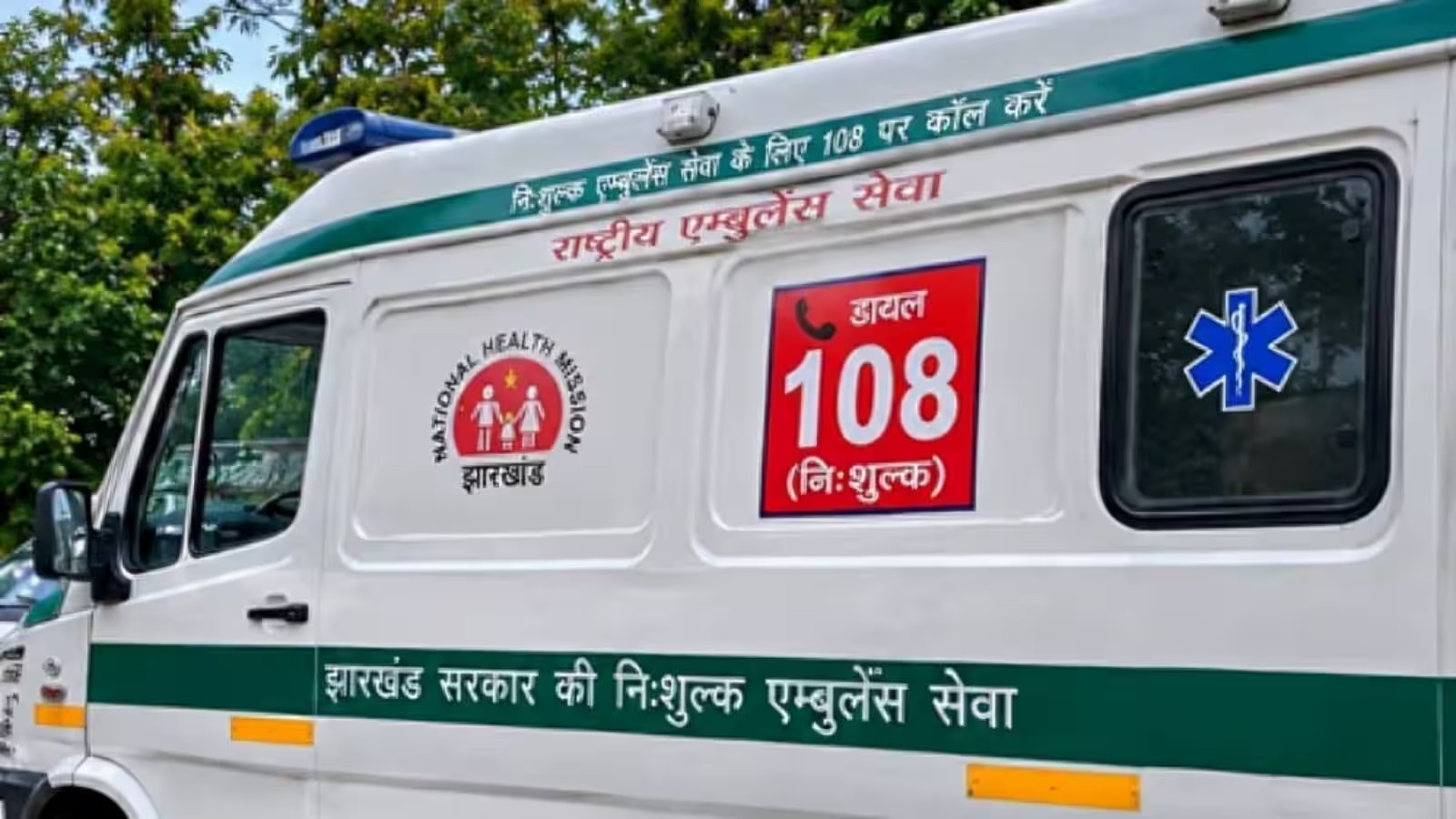
The indefinite strike by the employees of 108 ambulance service, considered the backbone of emergency health services in Jharkhand, has plunged the medical system across the state into deep crisis. Due to this work boycott which started from the night of 18th November, the injured in road accidents, pregnant women going for delivery and serious patients are facing huge difficulties in taking them to the hospital on time. The direct impact of this strike is visible from the demonstration outside the National Health Mission office in Namkum, Ranchi to areas like Dhanbad, Hazaribagh and Potka.
The situation at the ground level remains challenging with the number of ambulances available being very less compared to emergency calls. Many families are forced to resort to e-rickshaws, autos or expensive private vehicles, due to which the financial burden on the poor and rural sections has suddenly increased. On one hand, the employee union is adamant on issues related to outstanding salaries and working style, while on the other hand, the Health Department has adopted a strict stance and has taken steps towards alternative arrangements and legal action.
The biggest resentment of the drivers and emergency medical technicians who went on strike under the banner of Jharkhand Pradesh Ambulance Employees Union is regarding the salaries pending for months. According to reports, the employees have raised the issue of not receiving salaries since July and August, and have also alleged salary cuts and irregularities in records. The union says that despite several talks and assurances, when no concrete solution was found, they had to take the step of stopping work.
The demands of the employees include not only payment of dues but also basic facilities like job security, minimum wages, EPF, ESIC, insurance and annual bonus. Representatives of the union also claim that assurance was given to resolve the problems till Chhath festival, but even after the deadline, the demands remained unfulfilled. For this reason, the employees’ union has made it clear that the strike will continue until a concrete decision is taken on their demands.
After the strike prolonged and the problems of the patients increased, the state government and the health department have adopted a tough stance. The Health Department has prepared a proposal to implement the Essential Services Maintenance Act i.e. ESMA on the striking employees, the file of which has been sent to Health Minister Dr. Irfan Ansari for approval. Under the departmental process, after the approval of the Minister, this proposal is to be sent to the Home Department for final approval, so that ESMA can be implemented for six months till alternative arrangements are made.
Health Minister Dr. Irfan Ansari has given a strict warning after the emergency meeting, saying that any kind of playing with the lives of patients or blackmailing will not be tolerated. He clarified that if any patient dies due to strike or pressure, strict legal action will be taken against those responsible including filing of murder case. Along with this, preparations are also being made to take action by identifying the employees found allegedly involved in disrupting the service.
108 ambulance service is considered lifesaving in remote and rural areas of Jharkhand, where means of private transportation are limited. Due to some ambulances already being closed in many blocks and service being disrupted due to the strike, the worries of the patients in the villages have increased further. Patients and attendants coming from areas like Dhanbad and Giridih said that due to non-availability of ambulance, they have to spend huge amount for private vehicles.
Reaching the hospital on time has become the biggest challenge for pregnant women, elderly people and relatives of emergency patients. In many districts, the local health administration has tried to keep other ambulances of government centers alert, but it does not seem easy to completely fill the void created by the breakdown of the regular 108 network. For common people, this situation is taking a toll on both health security and pockets.
The Health Department has indicated that if the deadlock is not resolved through talks, alternative arrangements will be implemented for the convenience of patients. Emphasis is being laid on schemes like hiring private ambulances if needed, arranging new drivers through a new agency and providing ambulance facilities up to the Panchayat level. The aim of the administration is that emergency medical transport should not come to a standstill under any circumstances.
In the coming days, everyone’s eyes are on whether a middle path is found between the government and the employees’ union or whether services are restored through ESMA and alternative arrangements. At present, the patients of Jharkhand and their families hope that administrative steps and dialogue will soon reach a concrete result, so that emergency health services can resume functioning.